
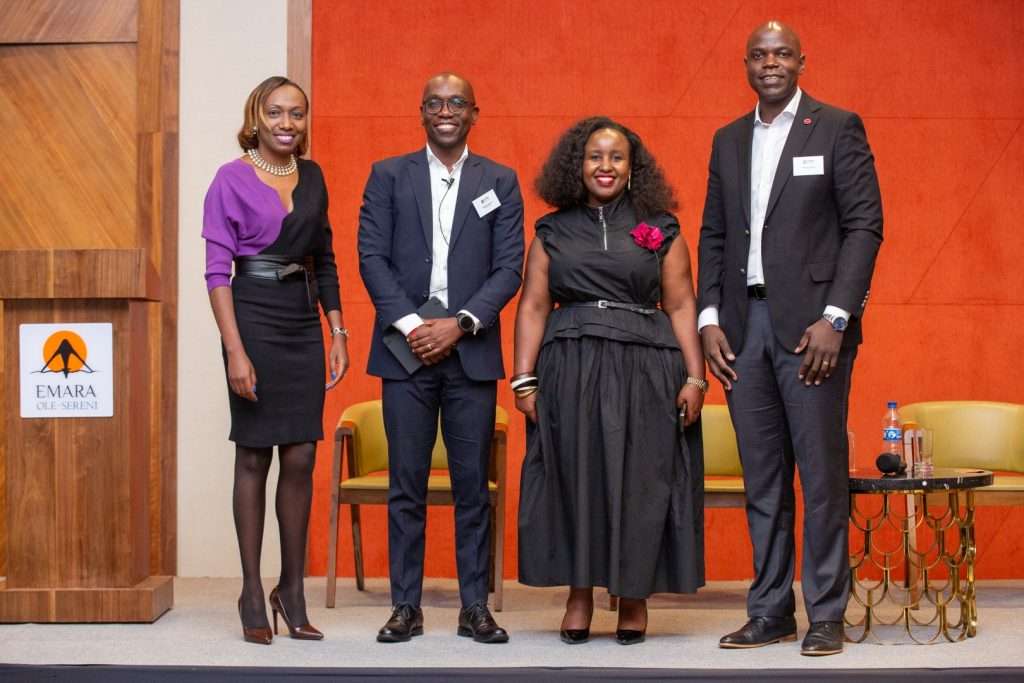
Faith Nkatha Gitonga, Russell Akuom and Moses Okundi shared their insights into the importance of local development at the CITO East Africa launch.
In a panel discussion titled Homeground advantage – CITOs driving growth through local innovation, three leading IT executives discussed how East Africa is primed to deliver African solutions for African problems.
They were speaking at the CITO East Africa launch, held at Emara ole Sereni, in Nairobi, where 100 CITOs gathered for the first of many events serving IT leaders in the region.
Understanding the problem
Russell Akuom, the CIO at Nation Media Group, Kenya, spoke about how in a Premier League game he’d watched the weekend before the event, Arsenal could not beat Chelsea, because Chelsea had homeground advantage. “I have an example that really brought this home for me. I worked at a bank, and we had a problem that between the 29th of the month and the second of the next month, there were consistently very long queues and calls to the contact centres were almost double. We couldn’t keep throwing more resources at the problem and hiring more people. So we went out to the team to try to get insights.”
It emerged that all these queues and all these call centre queries were to resolve the reauthentication of customer SIM cards. Everyone had a SIM card, but not everyone had a phone – so to access banking services at month-end, they would switch their cards between phones, requiring authentication each time. Once this was understood, the IT team was tasked with building a solution for self-authentication for feature phones.
“The queues reduced significantly, the calls were reduced by 90 percent and there was even an unintended consequence. Two factory managers told me that during that first month after implementation, productivity went up because factory workers didn’t have to leave for two to three hours to access their funds. So that was a key lesson in localising and understanding what our customers were going through as they interacted with our products.”
The empowerment of women
Faith Nkatha Gitonga, interim country director at the Tony Blair Institute for Global
Change, emphasised that it’s important to be aggressive and intentional about developing and supporting homegrown technology. “One area to focus on is low-resource languages. It’s unbelievable to think how little data we have on Swahili. And if Africa is to get a voice, and achieve the innovations we’re trying to get to like e-citizen, AI, or chatbots, where we need to ask a localised question, then we have to have homegrown technology to be able to answer it,” she said.
She added that research shows that women adopt technology last, but that when she was involved in setting up an SME hub, so many women were curious about how to set up a digital business or to manage their finances using technology. “You have to think about women-led startups. I think there’s an opportunity for the people in this room to spend time understanding women, and if we are doing procurement, if there isn’t one women-led business lined up, then don’t close on it.”
Why not in Kenya?
Moses Okundi, the CITO of Absa, Kenya, spoke about how he’d seen Microsoft come to Kenya and set up a technology hub, recruiting Kenyans to build products that are used globally, and said that he’d seen Google and Amazon Web Services do the same. This made him look at organisations in Africa to see if they were doing anything similar.
“Absa has servers around the world, in places like India and Prague, and I thought why not have a hub in Nairobi? What would the business case for that look like? So I visited the hyperscalers to see what they’d done and thought that there was an opportunity here. So we started with a pilot, and since then, the hub has been growing, servicing Absa’s various needs from a technological perspective. We’re very keen on homegrown talent.”
He adds that some of the things that have worked in Kenya can be adopted in other markets outside the country, such as microlending, digital banking, cross-border trades and stock finance, which he says is “life” for Absa Kenya.
“The reality is that through technology, we can build solutions for African problems, and the best person to do that is the African, who is acutely aware of the challenges and opportunities here, and is interacting with templates and examples of what can work in the African space and be replicated elsewhere.”
The three executives showed that East Africa is already solving its own problems, and that with intentionality and local talent, continued growth in this space is inevitable.