
FNB's Dr Mark Nasila tells CIOs to start asking what customers actually need

post-title

Speaking at the CITO East Africa Pitch Parade at Capital Club East Africa in Nairobi, Dr Mark Nasila, chief data and analytics officer at FNB South Africa and author of two books on artificial intelligence, made the case that Africa's relationship with technology needs to change, from adoption to ownership.

Dr Mark Nasila, chief data and analytics officer at FNB South Africa has been tracking big data and AI since around 2010, when it became clear that companies like Google and Facebook were not simply building platforms. By 2018 and 2019, one thing stood out to him about AI specifically.

“Other technologies came and basically expanded, or they came and scaled. This technology specifically reimagined things. At the centre of that reimagination is the future of work and organisations looking at what they can offer,” he said

His first book, African AI, grew from that observation. He argues that Africa's default response to new technology has been to wait for it to arrive from elsewhere and then adopt it.

“We in Africa wait for technology to be discovered, and it's actually a good way of how innovation works, we call it innovation by iteration or by analogy. But the gap between the potential we have and the potential of what has been pre-developed is what we are going to miss if we just adopt this technology as is,” he added.

His second book, Mastering Sovereign Artificial Intelligence, takes that argument further. Mark frames AI as the new form of industrialisation, drawing a direct parallel to how raw material exports historically left Africa with the by product rather than the value.

“The equivalent we are talking about with AI is data. Manufacturing intelligence and using it to drive decisions, the process of it has got much more benefit than the output itself. The person who owns the factories will create intelligent output that will help drive efficiency and create jobs,” he explained.
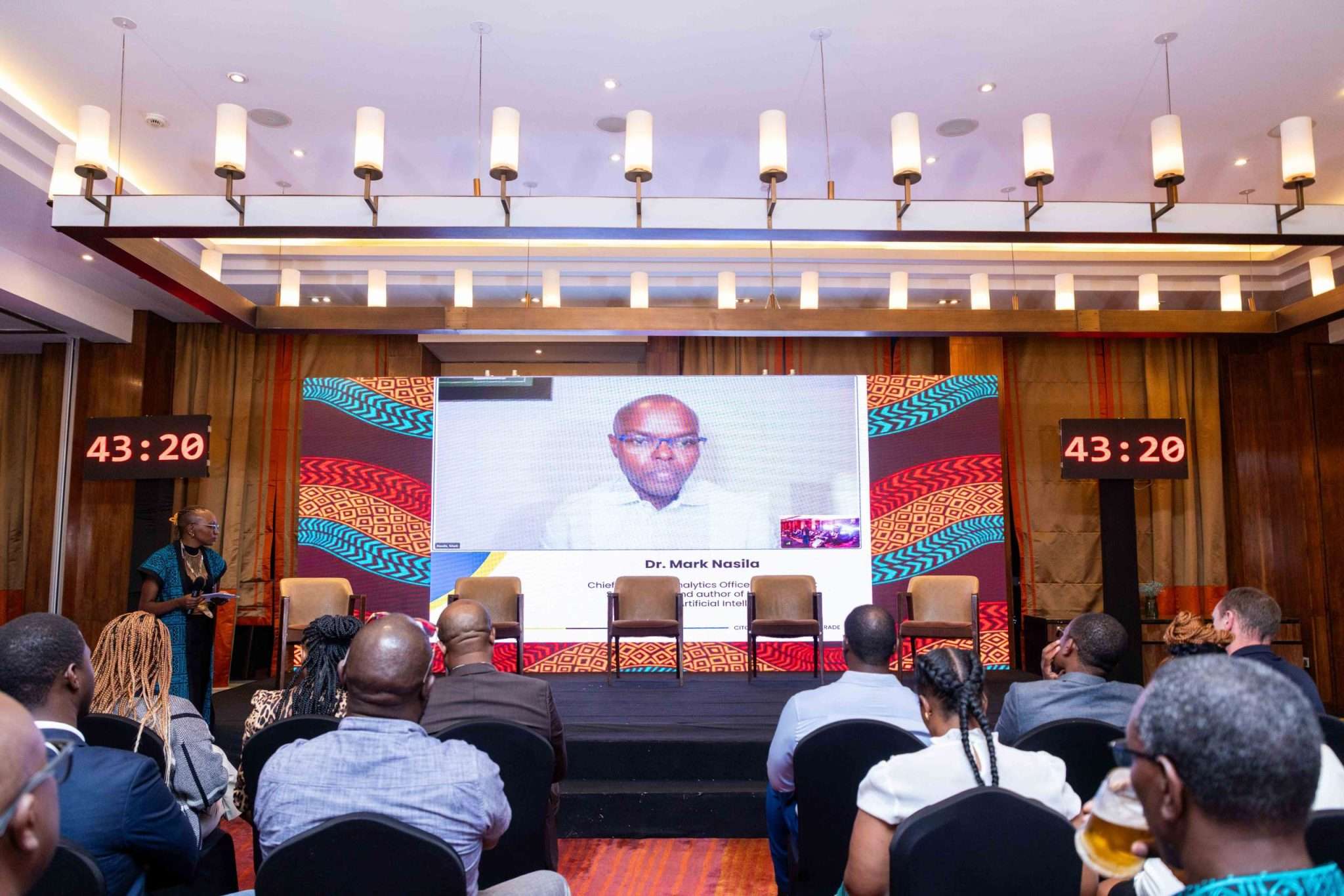
For the CIOs and CITOs in the room, his message was about where the conversation needs to move after four or five years spent debating model sizes and generating use cases. An estimated 47 percent of AI projects are expected to be dropped by the end of next year.

“Have clarity on your customer needs so that you can pick the right technology. Do not send the question of value outside of your organisation. Let that question sit with the inefficiency, ineffectiveness and opportunities for innovation that lie within,” he said.

His closing point brought the argument back to people. Only six percent of organisations are currently realising the value they expected from AI, and Mark’s explanation is consistent with everything else he said.

“Start by asking yourself the strategy and the objective. What is it that AI cannot do? And start sufficiently training people to move there, so that when AI implements the task, they are able to be productive with what AI cannot do. The AI strategy becomes a people strategy,” he said.


 

Related articles

AI questions and swift buzzer set the pace at inaugural Pitch Parade 

At the inaugural CITO East Africa Pitch Parade at Nairobi’s Capital Club, ten partners had exactly four minutes each to pitch solutions to nearly 100 tech executives. Throughout the night, CIOs were treated to a catalogue of solutions ranging from agentic AI to wealth management solutions.

Build AI around local priorities, says IALE institute CEO Dr Allen Mutono

At the CIO of the Future Summit held at the Dar es Salaam Serena on 11 September, Dr Allen Mutono delivered a keynote address that challenged IT leaders to think carefully about how AI is deployed in African organisations. He also urged CIOs to equip their teams for an AI-enabled workplace while keeping human judgement at the centre.

IT heads weigh in on cybersecurity's talent problem 

A 2025 PwC report placed knowledge and skills gaps among the top challenges organisations face when implementing AI for cyber defence. Mpesa Africa’s head of cybersecurity Tim Theuri, Ecobank Uganda’s head of IT Juliet Kyomugisha and WASREB’s head of IT Brenda Anzagi weigh in on the challenge of finding talent in IT.

Fix policy gaps before scaling AI, CIO Summit panellists say

At the recent CIO of the Future Summit held in Kampala, Uganda, participants identified AI as one of their main concerns with loopholes in AI governance emerging as one of the greatest hindrances towards its effective use.

Clearer data governance frameworks dominate discussions at CITO Summit

When Ecobank Uganda's Juliet Kyomugisha, Nation Media Group's Russell Akuom and AAR Hospital's Ibrahim Juma took to the stage at the CITO East Africa Data and Cybersecurity Summit to report back from the roundtable sessions, the consistent message was that implementation is the hard part of data governance.

PwC Kenya’s Jamila Aroi urges leaders to build cyber resilience

The first-ever CITO East Africa Data and Cybersecurity Summit took place at the Villa Rosa Kempinski Nairobi on 17 July. During the event's keynote address, Jamila Aroi, partner for technology consulting at PwC Kenya, urged business and technology leaders to develop the ability to withstand, recover from and adapt to cyber incidents. 

CIOs tackle governance and cyber resilience at CITO Summit 

As CIOS weighed in on topics of data access, governance, cyber security and cyber resilience at the CITO East Africa Data and Cyber Security Summit held at Villa Rosa Kempinski Nairobi, it was apparent that human actors have a bigger role to play than the tech. 

Tanzania's tech leaders set agenda at CITO East Africa chapter launch

Over 35 CIOs and technology leaders from across Tanzania gathered on June 11 in Dar es Salaam to help shape the future of the country's technology leadership community. The inaugural CITO East Africa Tanzania Summit served as an agenda-setting forum, creating space for candid discussions on the priorities that will define the community in the months ahead.

The rise of East Africa’s CITO community

The Uganda edition of the CITO East Africa Summit began as a room full of technology leaders comparing operational challenges. By the end of the evening, the conversation had evolved into a discussion about community, collaboration and the need for CIOs across East Africa to stop working in isolation.

Top