
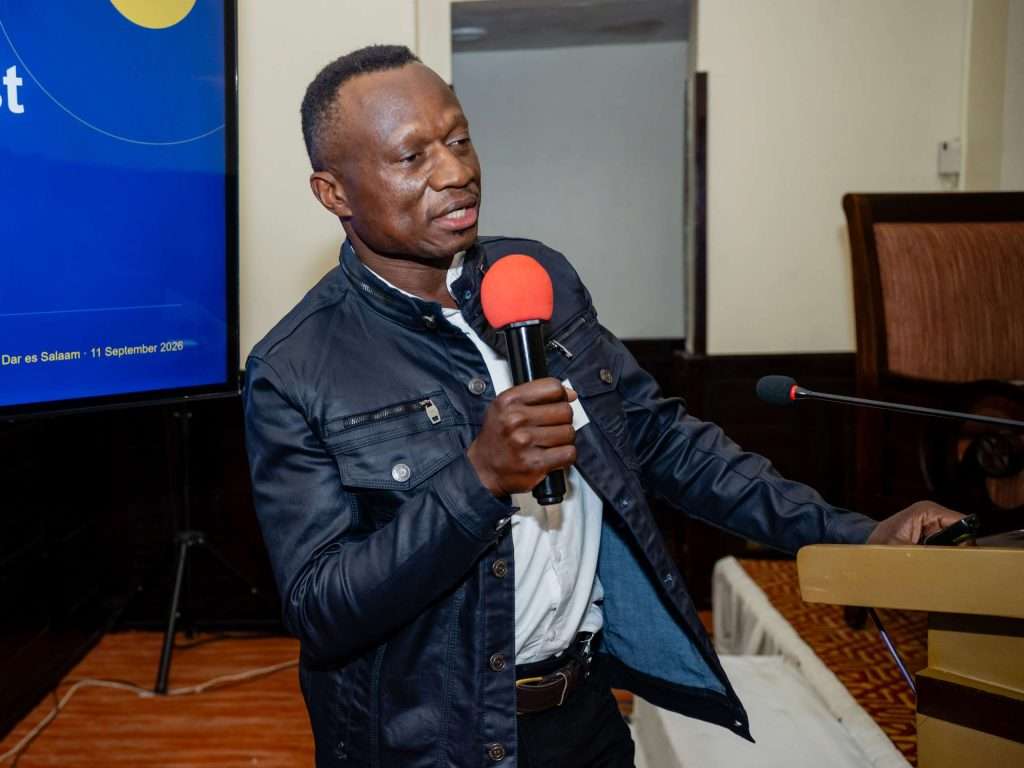
At the CIO of the Future Summit held at the Dar es Salaam Serena on 11 September, Dr Allen Mutono delivered a keynote address that challenged IT leaders to think carefully about how AI is deployed in African organisations. He also urged CIOs to equip their teams for an AI-enabled workplace while keeping human judgement at the centre.
AI adoption in Africa cannot simply follow the priorities of other markets. For Dr Allen Mutono, CEO of the IALE Institute and author of The AI Toolkit, the value of AI depends on whether organisations can apply it to their own context, with the right data and a clear understanding of what they want the technology to achieve.
“What we have learned in the process is that the use of AI is only possible when it's arranged according to the context, along with the awareness of the individual who is using it, and allowing the right data to be able to perform a task efficiently. Therefore AI for our African conditions will be different from the AI that is being developed or used in other geographies of the world,” Allen said.
Context, he argued, should determine what African organisations use AI to accomplish. Rather than simply adopting systems because they are available elsewhere, he pointed to outcomes such as better health services and education, as well as systems that can improve people’s economic wellbeing.
Allen described the move from prompting chatbots towards agentic AI, where systems can be assigned goals and workflows and then operate with a degree of independence within the guardrails set by their users.
“With agentic AI, you have agents that can work independently because you set the guardrails, you set the goal, you actually assign them models and give it what good will be, and you can work autonomously, and you can have multiple agents,” he said.
Rogue agents
But autonomy also introduces new risks. Allen warned that AI agents can be vulnerable to hijacking, including situations where an agent assigned to carry out a task could be used to access an organisation’s digital assets.
“AI agents, they're very good, very smart but can be very dangerous. They're also open to prompt injection. You have an agent that's supposed to be doing some emails on your behalf, but instead is infiltrated by another agent and now has access to your digital assets,” he said.
For Allen, the implications extend beyond technology teams. AI is becoming what he described as a fourth factor of production alongside capital and labour, while the nature of work itself can now be divided between humans and machines, with human-machine collaboration as the third layer of work.
“AI has allowed us to look at work as a collection of tasks, not as a specific job. That requires a multidisciplinary approach,” he said.
As he sees it, this means identifying where AI can handle analysis and number crunching while people focus on work that requires judgement and responsibility. Allen said the third category, where humans and machines work together, is particularly important for creating outputs and controlling policies.
“Bucket A is the work that you, the CIO, does as a human being. Then you have bucket two, which is work that can basically be performed by an AI model, and this work will be the analysis, the number crunching, the pattern cognition. Then you have bucket three. The most essential one is the hybrid of human and the machine, and that is where you spend your time,” he explained.
The five human Cs
The transition will also require organisations to prepare their people. Allen argued that CIOs need to train teams to understand what AI can do within their environments and to identify useful applications, while also addressing the use of AI tools that employees have adopted without oversight.
For all the capabilities AI can bring, Allen ended by drawing a firm line around what remains uniquely human. He identified five competencies that he believes machines cannot possess, placing those qualities at the centre of leadership.
“There are five competences that are unique to humans. These are courage, curiosity, creativity, communication, and compassion, which machines cannot have,” he said.