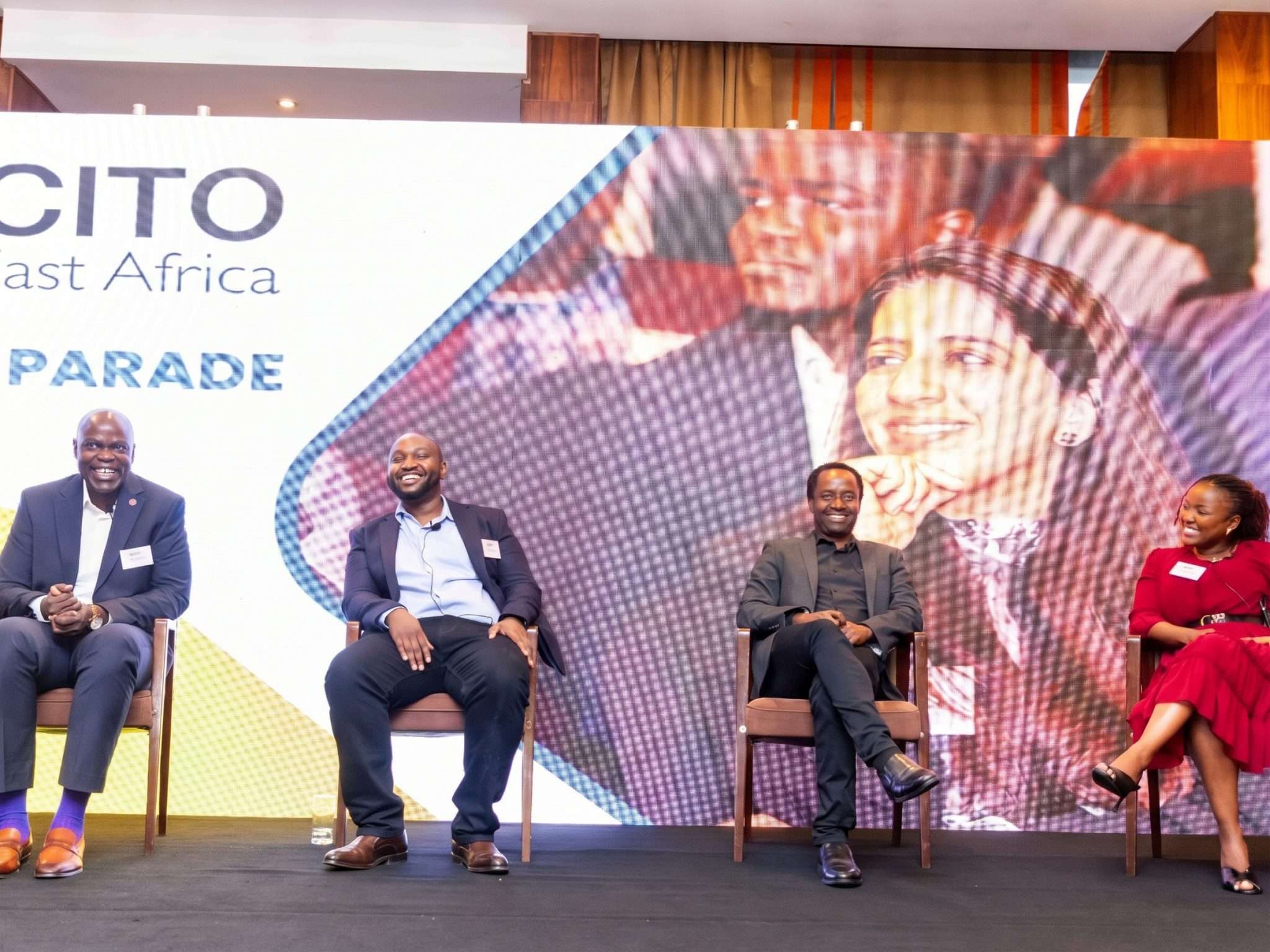
At the inaugural CITO East Africa Pitch Parade at Nairobi’s Capital Club, ten partners had exactly four minutes each to pitch solutions to nearly 100 tech executives. Throughout the night, CIOs were treated to a catalogue of solutions ranging from agentic AI to wealth management solutions.
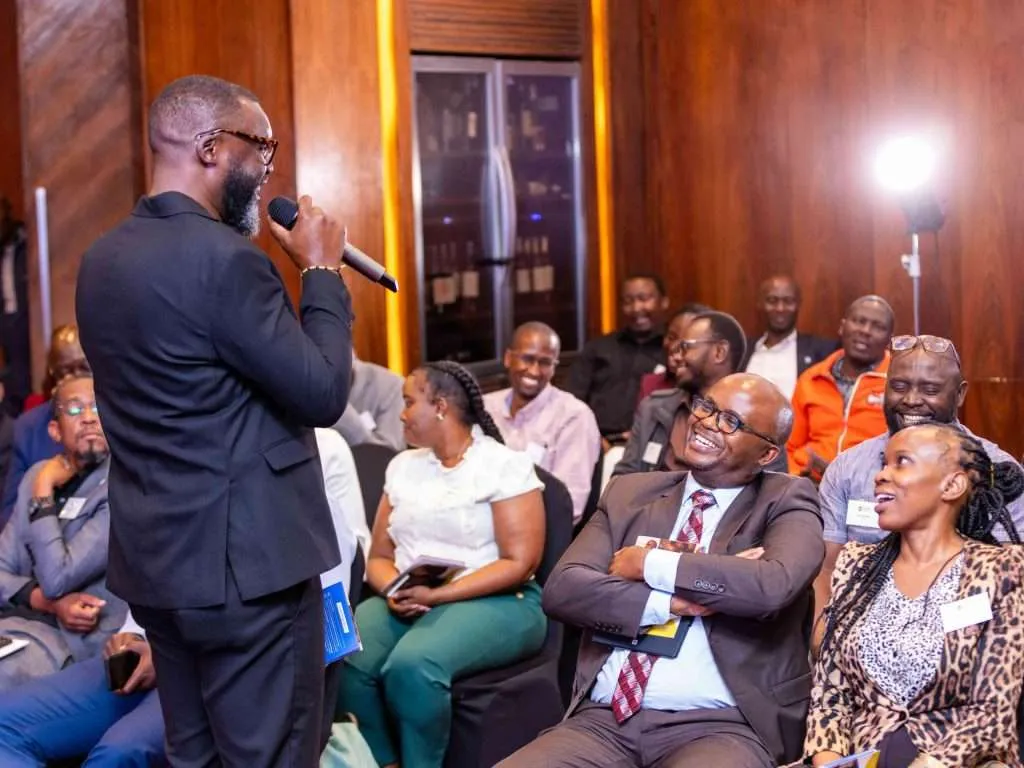
As the sun set over Nairobi’s skyline, the screens came on at the Capital Club for CITO East Africa’s inaugural CITO Pitch Parade. Master of ceremonies and comedian Nick Odhiambo warmed up the audience of regional CIOs before community manager Sandra Mulluka officially opened the evening.
First on stage was Soft Consult director Ezekiel Njoroge, who set the tone for the first round on operational integration. His pitch offered CIOs an intelligent solution that also combined all their important operations in one place.
Soon after, Joseph Nduhiu, CEO of Mwasuki Technologies, took the stage. His pain point was that technical teams often measure activity rather than actual business outcomes, leaving executive boards uncertain about ROI. While his solution centred around measurement, Joseph also had a nugget for IT professionals in the room:
“Boards are especially interested in confidence about the long term feature of a decision. When you, as an IT professional, present metrics that talk to long term capability of the organisation those ones tend to do better,” he said.
Absa Bank Kenya CTO Moses Okundi’s pitch took a different turn as he presented Absa Next, a unified mobile application designed to merge everyday financial management with personalised lifestyle features into an adaptive digital experience.
Irene Njogu, founder of EconoImpact Africa, maintained the same trajectory as she presented a solution aimed at helping attendees manage their personal wealth. Irene especially encouraged participants to start their retirement planning early.
“There’s really no best time to start thinking about your old age. You can start building your retirement plan as early as when you can, regardless of how long you’re going to live. So, if you start at 20, the better, because you have a longer time to actually work on it. But it also doesn’t mean that you can’t start at 40 or 50. Only that it will be a bit steeper,” she said.
Infrastructure and physical security
After a brief breather, Malose Mabusela, head of business development and marketing at MakwaIT, opened the second pitch session. Malose focused on the operational blind spots created by fragmented monitoring tools within Kenya’s strict regulatory landscape.
“As Kenya accelerates its digital and AI adoption, the associated risks are also growing. Organisations need continuous monitoring, incident reporting and resilient systems, as required by policy,” he said.
Ben Oduor, head of channel and partnerships at Africa Data Centres (ADN), then took the stage and emphasised the need for trusted data centres, presenting ADN as a safe home for data.
While Ben focused on physical infrastructure, Henny Schlebusch, IT director at GardaWorld Africa, reframed physical security monitoring from a passive cost centre into an active operational tool.
Last to present in the second session was Ronnie Maina, operations director at TBM Kenya. Ronnie introduced the TBM CFO-CIO Check, presenting a three-part framework centred on baseline risk assessment, AI and data governance, tech economics, and cyber resilience.
He especially insisted on the intersection between good data and AI effectiveness.
“AI is ineffective if your data setup is incomplete. Your data must be established and governed before you can build AI models,” he said.
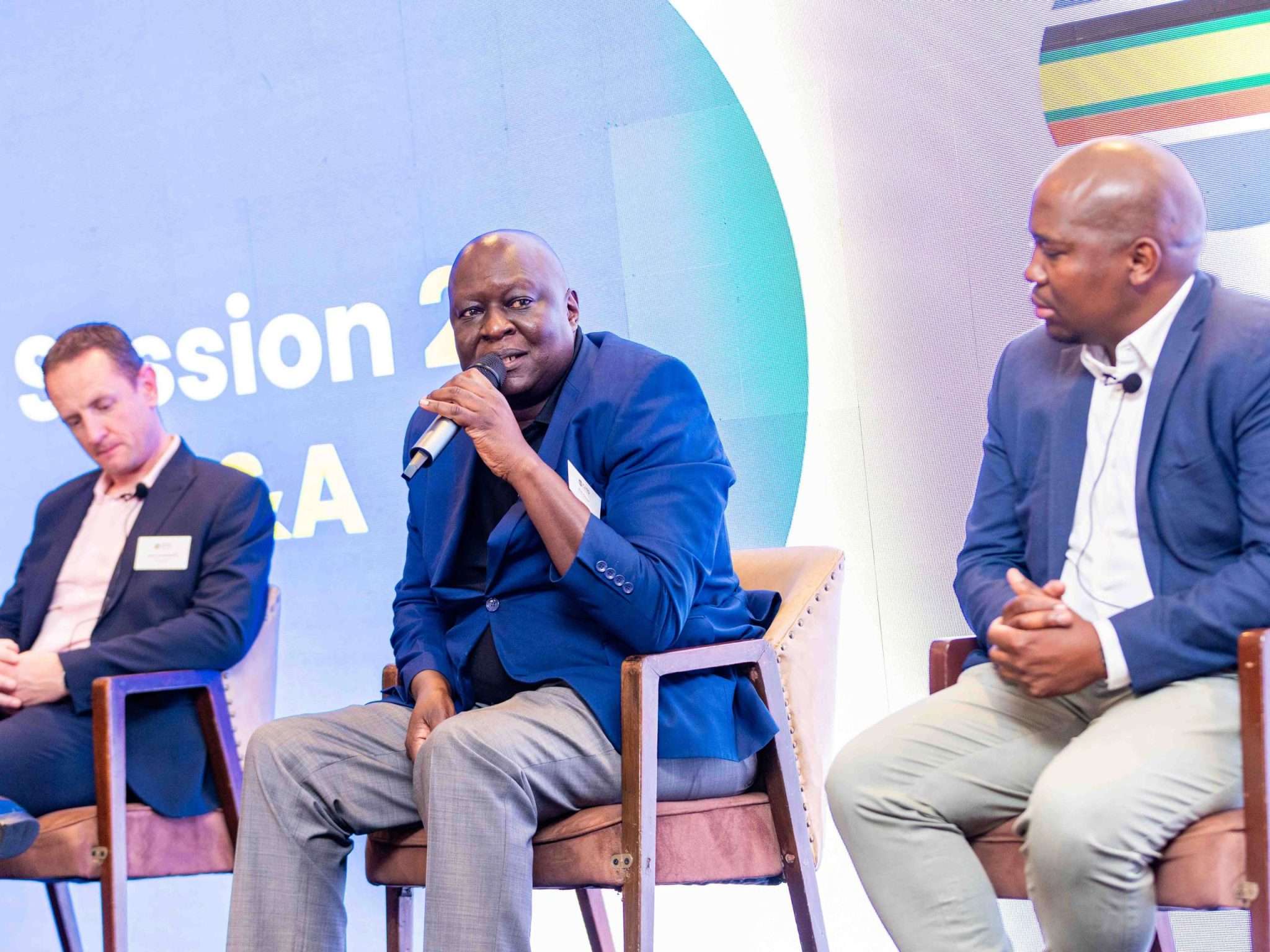
Despite the variety of pitch topics, the floor Q&As revealed what was truly on the minds of attending CIOs, with nearly every question steering straight back to AI integration and value. Presenters had just one minute to defend their solutions before the relentless buzzer cut them off mid-sentence. Fortunately, those unfinished answers served as perfect conversation starters for networking later in the evening.
Extracting value from AI
Attendees had not heard the last of AI as PwC partner and technology lead Laolu Akindele, alongside colleagues Darren Osore, manager and technology lead, and Amanuel Assefa, lead AI and data engineer, gave a showcase on agentic AI.
The team focused on the “AI value realisation problem.” According to PwC’s research, while 82 percent of regional organisations participate in AI pilots, the vast majority struggle to translate those trials into measurable business value.
“The question is no longer 'Have we started AI?' It is 'Are we creating measurable business value?'”
The question of value was further emphasised by Dr Mark Nasila, chief data and analytics officer at First National Bank South Africa and author of African Artificial Intelligence and Mastering Sovereign Artificial Intelligence, during his keynote address. Mark argued that even though AI has reduced the amount of time spent doing things, that does not necessarily translate into value. To him, value is measured through the outcome and not the activity. Mark further urged CIOs to look beyond traditional tech upgrades and focus on how AI fundamentally redefines customer value.
“In previous instances of modernisation tech was applied and iterated on original value propositions. What this tech is doing is changing the meaning of the value proposition you offer to citizenry. It’s offering convenience, proactiveness and insights. Thus, it’s important for CIOs to have clarity of the value they want to deliver from AI. They must also have clarity on customer needs so that you can deliver value,” he said.
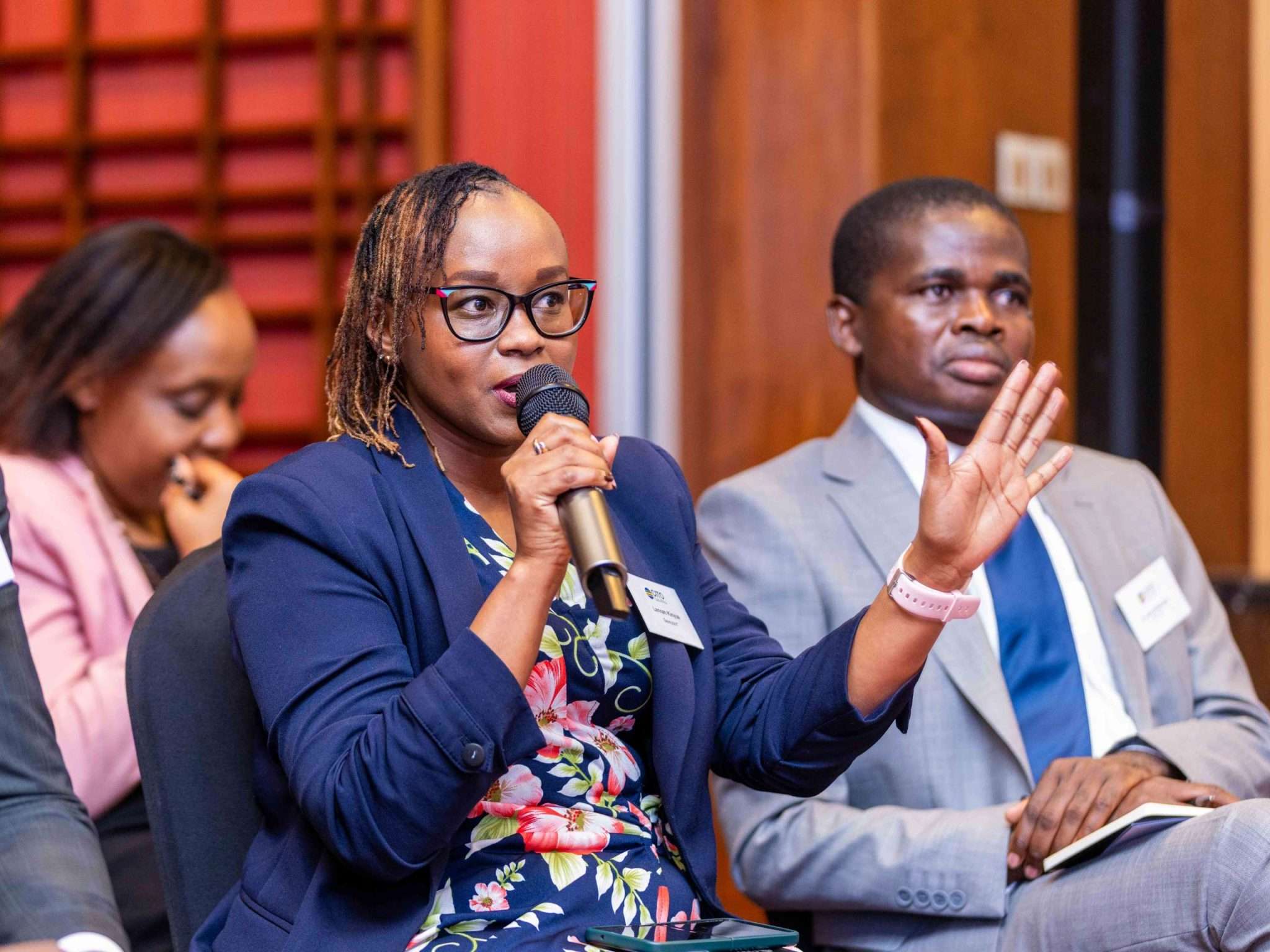
The same theme carried on to the panel discussion featuring Alex Siboe, CIO at Stanbic Bank Kenya, Anastacia Chege, head of technology risk and security at Kenya Airways, Joylynn Kirui, head of information security at Prime Bank, and Mark Oyier, director of IT at Safaricom. While they all began by reacting to the keynote address, they also brought a different perspective to the AI discussion.
To begin with, Alex opined that there was still more revolution to expect in AI.
“What is driving the AI is the hardware side. So the application side has not matured as much. Of course, Gen AI has contributed a lot, and there’s a lot of change in productivity, but for me, I think it’s very difficult to predict what will happen from a tech perspective. I believe in a few years’ time they’ll come up with something that will revolutionise AI,” he said.
Mark on his part brought the audience’s attention to the fact that there are still not enough resources to support computation.
“When you think about it, we still struggle with a lot of computation. I’ve been in a situation where you know we’ve been forced to hold all our data within the country, but we don’t have enough computers to be able to do proper AI. So I think that’s still a sticking point,” he said, adding that there was a need to look into options like liquid cooling at data centres.
While most people focused on the functionality and productivity of AI, Anastacia raised an ethical concern.
“There have been a lot of ethical issues in terms of teenagers asking about certain dosages of drugs and some have actually passed on. So we need to also look at that cognitive balance between AI and how far we are going to develop it,” she said.

Joylynn advised tech leaders to adopt a zero-trust approach when integrating AI, warning of incidents where models generated insecure code. However, she praised recent strides made by developers to stay ahead of security risks.
“What we’ve seen is the evolution of DevSecOps. The same tools developers use right inside their IDEs are now flagging security vulnerabilities in real time, allowing teams to patch them immediately,” she explained.
Her mention of DevSecOps sparked a moment of comic relief when the MC seized on the technical jargon for a bit of lighthearted banter, leaving the room with a hearty laugh to close out the night.