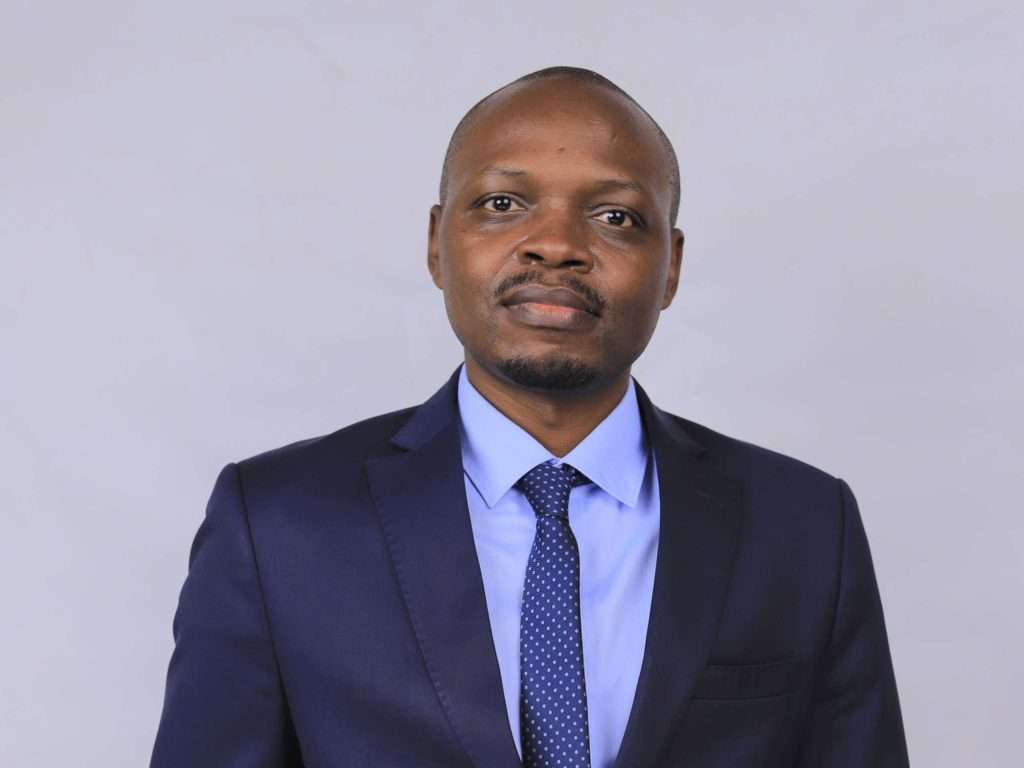
David Muheirwe, head of IT at Finca Uganda, has spent 20 years building the systems that put banking in the hands of millions. He reflects on his career journey and what the future holds for CIOs.
In 2014, Finca Impact Finance was scouting for its next African market and settled on Imo State, in South-East Nigeria. David Muheirwe was among staff flown into Nigeria by the company to help set up technology infrastructure for the new arm. Locals had warned them that in Nigeria, businesses must run on a generator as the primary source of electricity, but David's team took the warning lightly.
"We were like, this is Nigeria talk. We arrived there, and lo and behold, the whole city was running on generators and our attempts to run our systems using the main grid was futile,” he recalls.
Worse was to come. A colleague from Tanzania, unfamiliar with the state, wandered too far from the group one evening and got lost on his way back to the hotel. Police on patrol stopped him, decided he didn't look local and, at a time when fears of bombings in the north were running high, arrested him.
"They asked him where his colleagues were, then they came to the hotel where we were staying and rounded up everybody. Some of us were lucky that we were staying on a floor that they didn't come to, but there was a lot of breaking of doors and several of our colleagues were arrested. It took three days and then finally our Nigerian counterparts were able to pull some strings, and once the whole story was clear that these guys are okay, they were released. I don't think we went back to the office for like a month," he narrates.
The experience, strange as it sounds, left David with lessons on cultural differences and problem solving that he still uses today.
"The cultures are different, and how you interact with those people is totally different. However, the problems in terms of tech were pretty similar. If you were exposed to a specific problem in one place, you were able to solve it elsewhere. I was able to transfer knowledge from country to country in many of the places I went to,” he says.
Where it all began
David’s journey to the top IT office at Finca Uganda began in a lecture hall at Makerere University. An undergraduate computer science class there now holds about 500 students, fivefold the number when David joined to study the same course.
"We were among the first cohort to pursue the course at Makerere University," he says.
Even so, David almost didn't take the course. He had always assumed he would study business, until his internet café changed his mind.
"I always thought I would do a business degree. However, I had been running an internet café business and had a lot of interaction with tech. By the time I finished high school, I just veered towards tech," he explains.
Shortly after graduating, he landed a job as a systems administrator at a manufacturing company.
"Fewer graduates meant fewer places to compete for and more places willing to take a chance on us. It did really give us an advantage. We all found places where we could be placed," he says.
A knack for solving problems
Four months into the new job, he was promoted to IT manager when the incumbent left. However, beyond a manager who left at the right time, was something else at play.
"I remember one time the head of HR told me 'someone comes to you with what they think is a difficult problem that they are struggling with, but you have a way of solving that problem so easily and providing a valuable solution," he says.
That reputation travelled with him. Four years later, an opening as a technology project manager for Africa at Finca took him into microfinance, and with it, across the continent.
"I got exposed to implementing banking solutions in different African countries and we did a number of interesting projects from core banking, agency banking solutions, mobile banking and mobile money integrations and ATM partnerships. It was an interesting period," he recalls.
Of the 20 to 30 projects he has worked on, though, his proudest came from the time as the technology project manager on assignment at Finca DRC.
"I still find the agency banking in DRC to be the most valuable. The solution has continued to be in use since 2011 when we deployed it. We were just tech guys, but the business guys transformed that into a solution, and it's pretty much the primary ecosystem in which Finca DRC serves its customers," he says.
More than 1,000 agents now run off a platform he helped implement as a young project manager who didn't yet know what it would become.
Leadership in modern age
For the last 5 years at FINCA Uganda, the questions in front of him have changed because the building phase, as he sees it, is largely behind him.
"We aren't building a lot of stuff anymore. We kind of have the foundation in place. What we're trying to do is to utilise that & gain more value from what we’ve built," he says.
Less building does not mean less worry. The pressure has simply moved elsewhere, and it explains why his work can keep a bank's technology head up at night.
"What keeps me awake is really the worry of fraud through cyber because we are banks, meaning that we keep money, and everyone is invested in the money," he reveals.
He is also unusually attentive to the limits of his own market. More than 70 percent of Finca's transactions now happen through mobile channels, and it would be easy to build a strategy that assumes every customer is connected and literate enough to use them. He is careful not to make that mistake.
"Many of our clients have limited digital awareness and so digital literacy is an important aspect of our proposition. Also understanding that internet access is a hindrance for some people. We also have to keep the new data protection laws in mind."
Meeting those challenges takes a team, and David has been deliberate about building one. As long as the people he hires are willing to work and have a positive attitude, he gives them room to be themselves.
"I always look for people that I can get along with, who have a positive attitude towards work," he says.
That team is also getting younger, a generational shift David is candid about.
"There's a mixture of very energetic people who push themselves. You also find some that need a bit more coaching and they are quick to do what they are told," he notes.
The younger hires can also surprise him. One recent recruit looked inexperienced on paper but proved the opposite within months and was quite agile at solving problems that come along the way.
The CIO of the future
That lesson, that problem solving matters more than credentials, shapes his view of where his own role is heading. David is cognisant of how fast the CIO's job is evolving, and believes the CIO of the future must be able to anticipate change and adjust quickly.
"It's basically the CIO that is a problem solver. You're going to be faced with changing dynamics in your job, and your value will be in removing pain points or road blocks for your colleagues, the organisation and ultimately the customers. You must also be someone that has a baseline framework for how you operate and when the environment changes you adjust the framework. One who looks at the problem as opposed to the processes, this way you start with the end in mind and can even anticipate future needs of the business," he explains.
AI is one such change, and he says leaders must strive to understand it despite the emerging concerns from its rapid evolution. Interestingly, he is not too worried about pressure to adopt an AI strategy, since most of the vendors for the solutions he utilises are already folding AI capability into their products.
His main concern is governance. He cites a recent industry survey that scored financial institutions 2.6 out of five on AI readiness, with governance the weakest area.
"That means that people are already using these tools in the organisation but there's no governance framework on how they should use it, who's responsible for the output, and when they should rely on the decisions that AI recommends," he notes.
Giving back and teeing off
Away from the office, David finds joy in professional volunteering. He is a founding board member of the Project Management Institute's Uganda chapter, which started with 25 members and has grown to over 1,400, with more than 2,700 certified project management professionals passing through its programmes.
"It just pleases me to see something that came just by volunteering knowledge and experience has grown. It is something that I have enjoyed," he says.
His other outlet is golf, which he picked up two and a half years ago despite never being much of a sportsman beyond some lawn tennis at school. What draws him is not the scenery or the social ritual so much as the structure underneath: a good round depends on sticking to rules that don't bend for you, stance, swing type, making decisions about which club to use at which distance, how to avoid obstacles, compensating for weather & course conditions, how to recover from poor shots.
"Any sport you get involved in will definitely help you with execution discipline, because to attain a certain objective, you have to follow the rules & contend with constraints. It helps connect people as well," he says.