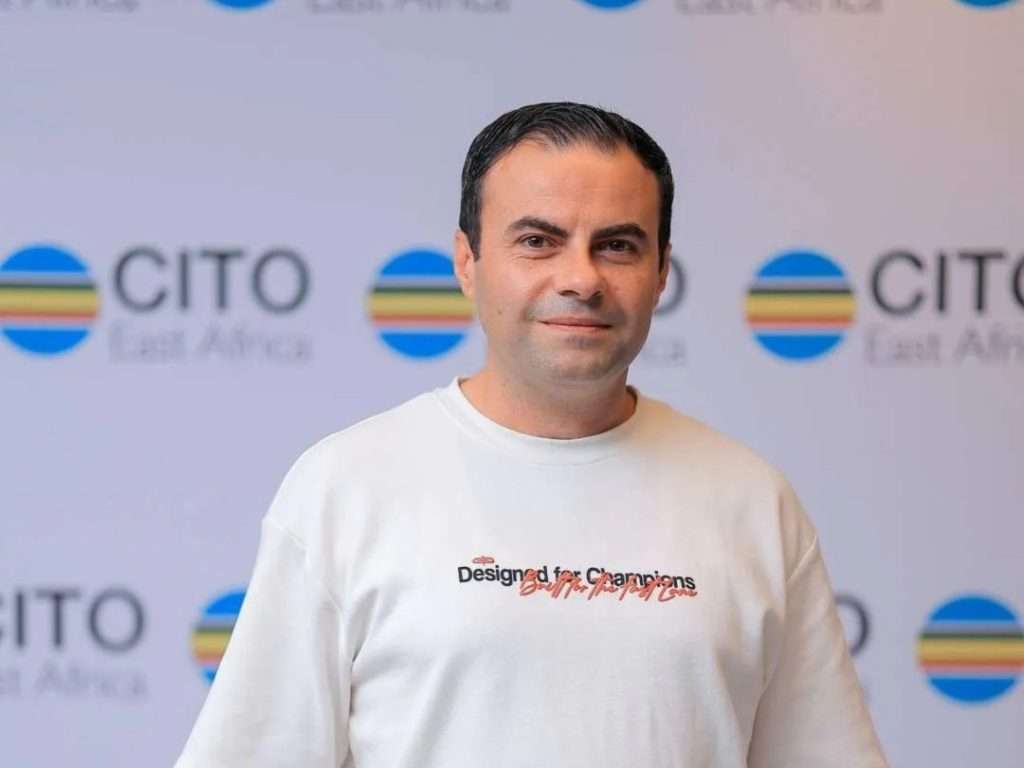
While Hariss International’s Dani Bachour admits the transition to his new position has been overwhelming, his journey, he believes, equipped him to steward Hariss to a future where AI power meets irreplaceable human creativity.
When Dani Bachour started his career in the early 2000s, conversations around AI and machine learning were still in their early stages, confined to rooms in Silicon Valley and computer labs in universities. Dani’s career in technical support and administration took him to Syria, Jordan and Russia before moving to Uganda to join Hariss International in 2014. By then considerable milestones had already been made in the field of AI. In the years that followed, the developments kept coming and soon enough generative AI and large language models ceased to be a prediction and became a reality.
Meanwhile at Hariss, Dani moved slowly but steadily up the career ladder. His journey recently culminated into his appointment to the position of head of IT at the giant food and beverage manufacturer, one of Uganda’s top companies.
The transition
Dani became Head of IT at Hariss International at a moment when conversations around AI have moved beyond the labs and into boardrooms. Over the last five years, IT managers have moved from just being task managers to being decision makers. In today’s world, Dani and his colleagues in IT leadership must decide what technology is best and how such technology marries with business strategy and affects the future of a company.
The weight of the transition and the demands of the new position are not lost on Dani and he is candid about it.
"Previously, I used to lead a team of five people, and now I am leading nine people as we expand. With more ability comes more responsibility. It's overwhelming, but at the same time, it is exciting. I used to deal with servers, networks, switches, and computers, but now it's more about reporting, leading a team, managing, guiding, and communicating with management in an open, professional way," he says.
Fortunately, Dani remains alive to the challenge and optimistic that his background and the more than a decade experience will come in handy as he navigates the new position.
"My strong foundation and background in technical details will assist me in looking at things differently from an IT management perspective," he explains.
Even though Dani is optimistic that he has what it takes for his new role, he also appreciates the place of learning especially in a fast evolving field like IT and is willing to explore learning opportunities when he can find them.
“I came from a pure technical background and am now entering business management. I want to see how other Heads of IT and CIOs operate and align IT with business," he says.
Making tough decisions
One of the most important factors that Dani has to make when making decisions in his new role is cost.
Dani’s reframing from cost centre to strategic asset is important in his new position especially because he has seen firsthand the implications of cost on business operations.
“IT is considered one of the most costly departments, which is why you keep fighting with CFOs. A CFO looks at the spending and wants to know how much the solution benefits them. No CFO wants to spend money on a solution that is only utilized five percent to 10 percent,” he explains.
However, Dani believes that once IT properly utilises its resources, it helps cut costs for the companies.
Leveraging AI in business
As a result, Dani is a strong supporter of AI due to its cost cutting abilities which is evident in the analogies he chooses to explain his views on AI.
“Instead of running a penetration test that might take a month with a human team, you can automate that process with AI and get results in a maximum of one week. However, compared to human penetration testing, you will notice a gap because human beings will creatively find new vulnerabilities from nowhere that AI, which is only trained on existing data, might miss,” he explains.
Dani also sees AI as a cost reduction tool that can significantly reduce the cost and scope of work required by humans. Moreover, other than saving costs, Dani recognises the input of AI in decision making.
“Rather than dig through thousands of lines of logs for hours, you can tell AI to look for a certain pattern, and it might find the information in 30 minutes. It's like a more advanced, intelligent search engine that works across all departments, not just IT, but you still have to verify its results because there is room for mistakes,” he reveals.
However, Dani is quick to point out that human input is still important when leveraging AI for business decisions.
"I believe AI in cybersecurity is something very unique and powerful," he says. "I don't believe AI is going to replace human beings, because creativity comes from people,” he says.
At Hariss, the groundwork for deeper AI integration is already laid out, as Dani reveals, and the company is forward looking.
“The production lines themselves are fully automated. From the preforms that create the bottles, to filling, labeling, and packing, it is entirely automated.”
As the new Head of IT, Dani is now at the centre of decisions about where the company goes next. For example, Hariss is considering embedding AI into its financial department, with cybersecurity also on the horizon. That management is taking the security question seriously is something Dani does not take for granted. "Management is very concerned about security, which is encouraging," he says.
While Dani is candid about how overwhelming his transition has been, he is positive that he is capable of creating cutting edge cost cutting solutions for Hariss by combining AI and human creativity.