
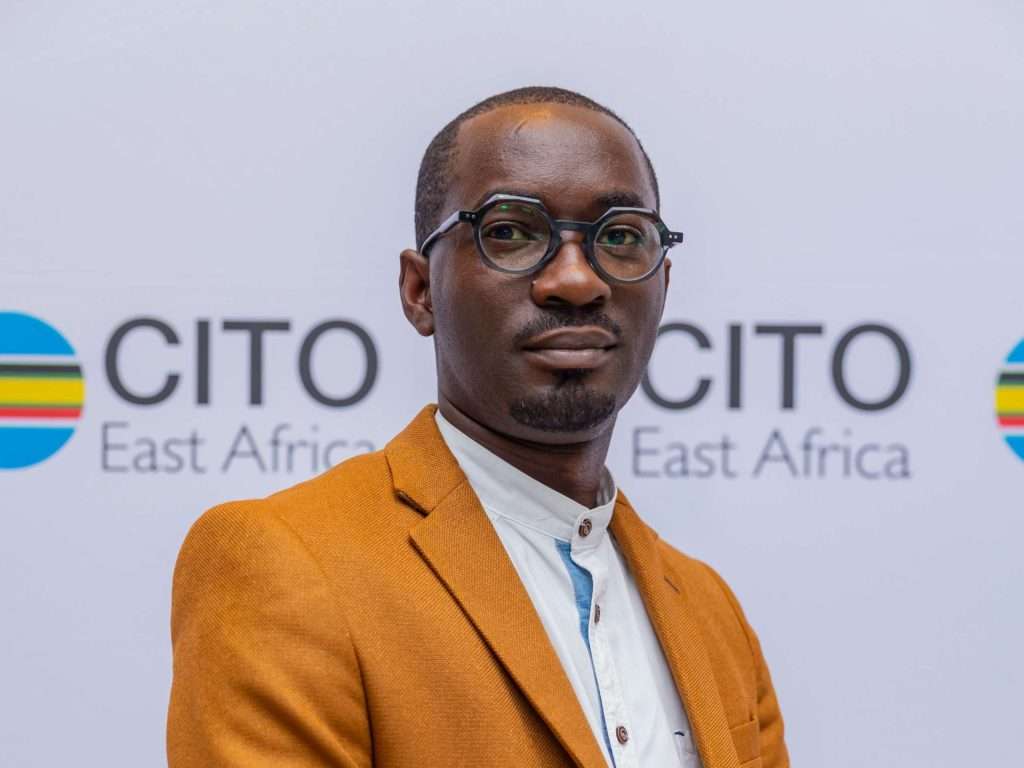
For Polycarp Mugizi, system downtime is never just a technical glitch, it has real human consequences. As a result, Polycarp has made it his purpose as a leader to ensure that his team is always committed to finding solutions. For him, no problem is unsolvable given sufficient time and resource.
A woman walks into a bank branch in Arua, in northwestern Uganda, hoping to secure a small loan to pay her teenage daughter’s school fees. The network is down, and she goes home empty-handed. Her daughter is forced to stay out of school, setting off a tragic chain of events that leaves the young girl vulnerable, molested, and pregnant.
To Polycarp Mugizi, the IT person who couldn’t fix the network issue is to blame for the girl’s predicament.
It’s a hypothetical scenario, but one that Polycarp uses to illustrate the real human stakes of IT downtime to his team.
“I tell them, you either have to know how to solve something or know someone who knows,” he says.
The scenario also aptly captures his style of leadership and problem-solving mindset. In his department, throwing up hands in defeat is never an option.
“My colleagues will tell you that I am a leader who loves pushing people to their true potential. I tell my guys that there is no saying 'we can't,” he says.
Polycarp is the CTO at ASA Microfinance Uganda, a subsidiary of ASA International. The organisation serves entrepreneurs in hard-to-reach, underserved rural areas with an exclusive focus on women.
Inside Polycarp’s world
At the organisation, Polycarp’s role is mainly to ensure that the company can reach its clientele with ease.
“In this business, our number-one priority is to reach the customer. For a technology leader like me, my job is to empower our frontline staff to serve clients even outside the office, and to ensure customers can access financial services whether my team is physically there or not,” he explains.
Reaching these clients means developing practical tools, such as USSD-based mobile solutions tailored for basic feature phones rather than requiring expensive smartphones.
A second critical pillar of his work is safeguarding the organisation's IT assets.
“As we deploy these solutions, we must deliver them securely to ensure we never expose our customers,” he emphasises.
Keenness on cybersecurity is especially important in the age of AI, which Polycarp describes as a double-edged sword.
“It brings tremendous speed and insight. What used to take months can now be done quickly but it also powers sophisticated cyberattacks. Adopting it is essential, but as technology leaders, we have to keep our eyes wide open and maintain clear corporate policies so office data isn't compromised,” he says.
As one who encourages growth among his staff, Polycarp has allowed the use of AI at ASA. However, under his leadership, the company has also adopted strict measures to govern how AI is used.
Leadership beyond the boardroom
Having been in leadership for a while now, one of Polycarp’s toughest ongoing challenges is sourcing and retaining top tech talent in a competitive market.
“Finding good technology professionals is hard, but keeping them is harder. We have to build local capacity, which involves going directly to higher education institutions, bringing young talent in, and developing them ourselves,” he says.
Mentorship has been one of the ways Polycarp gives back to society since he credits mentorship as having played a major role in his career growth.
“My biggest accomplishment is the growth of the people I’ve mentored along the way. Someone held my hand when I started, and I’m doing the same. Even when people move on to other organisations, I make it a point to keep following up with them,” he says.
Outside the boardroom, Polycarp is intentional about striking work-life balance and spends his free time co-running a local athletic facility with friends.
“The capacity I’m building ensures operations continue seamlessly whether people are watching me or not. When I go on vacation, I want to truly be on vacation.”