
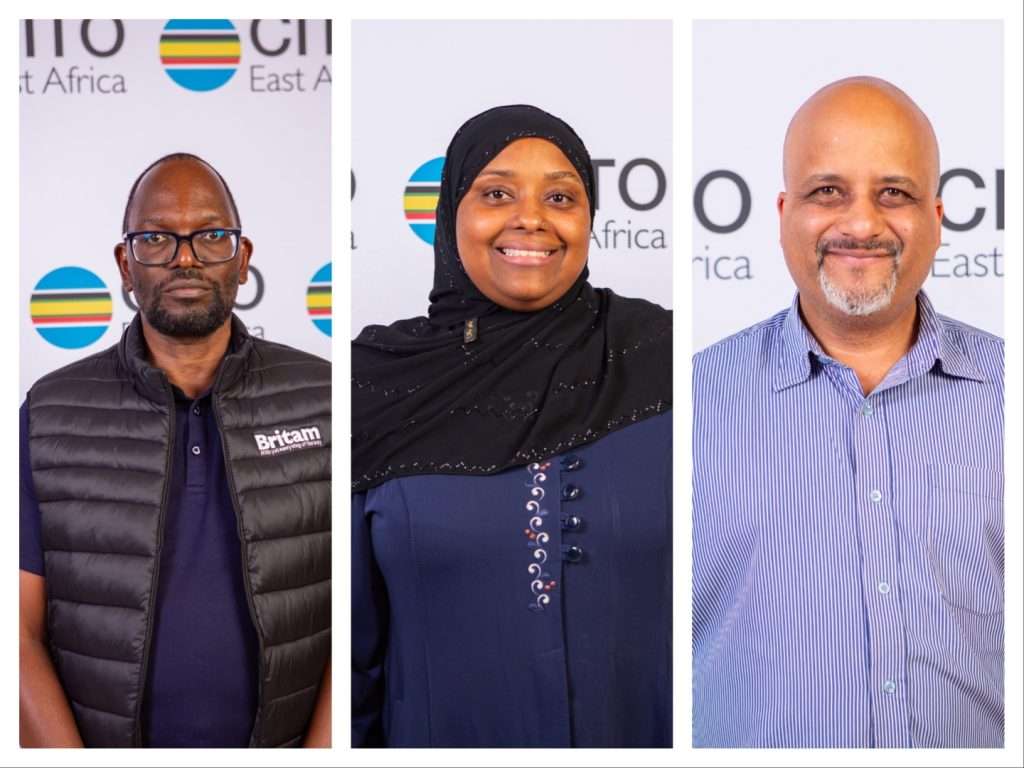
In a panel discussion titled Vision of an African Technology Future, three senior technology executives, Jay Patel, director of technology at Jacaranda Health, Kenya; Jamila Aroi, partner for technology consulting at PwC Kenya and Tom Juma group CIO at Britam reflected on how East Africa can shape the next chapter of its digital development through homegrown talent, stronger infrastructure and solutions centred on local realities.
At the CITO East Africa launch in Nairobi, industry leaders gathered for the inaugural event of the region’s newest professional community for technology decision-makers.
Building on a rising wave of innovation
Jamila Aroi, partner for technology consulting at PwC Kenya, outlined how the region’s digital capacity has grown significantly in recent years. She said that the combination of a young population, improved access to training and a culture of experimentation has helped push East Africa’s innovation forward.
“We have a generation that is technically aware and very comfortable trying new things,” Jamila said. “A lot of what we’re seeing today comes from young people who used the pandemic period to build and test ideas.”
She however noted that progress varies across regions. While urban centres continue to establish themselves as innovation hubs, rural areas still face limitations around power supply and connectivity. She explained that governments have an important role to play in expanding infrastructure and enabling better access.
That includes creating policies that encourage innovation, supporting talent development at the secondary and university levels and promoting regional collaboration so solutions can scale beyond national borders.
One concern she highlighted was the tendency for African markets to rely heavily on imported systems that were never designed for local realities. She framed this as an opportunity for regional talent to build alternatives that reflect how communities actually work and live.
“We shouldn’t see ourselves only as consumers of technology, we have the capability to create solutions that reflect our environment and our needs,” she said.
Integrating technology in complex environments
Tom Juma, group CIO at Britam, brought the discussion into the realities of leading technology across an organisation that operates in multiple countries and lines of business. He described how, when he joined the company, systems were fragmented across markets, leading to customer frustration and operational inefficiencies.
“If a customer makes a payment, they expect that payment to reflect everywhere,” Tom said. “When systems aren’t connected, you lose time, accuracy and trust.”
The team set out to integrate platforms across the group, ensuring that information flows consistently regardless of where a policy is held. Tom argued that the work required more than technical deployment; it also required a shift in perception around the role of technology in business.
“Boards respond to value,” he explained. “When you frame technology decisions in terms of customer experience or financial impact, you bring people on board much more quickly.”
He added that young developers are playing an increasingly important role in shaping these solutions. Their knowledge, confidence and pace of execution, he noted, often surprise senior leaders.
Tom urged CIOs to adjust how they manage teams so they can retain and develop this talent.
“Young people approach problems differently,” he said. “If we allow them space to think, experiment and challenge old structures, they can bring fresh value to the organisation.”
Tom also highlighted the importance of combining business understanding with technical skill. In his view, IT leaders who can translate technology into practical business benefits are better positioned to influence strategy and secure investment for modernisation efforts across departments.
Designing for real users, not ideal ones
Jay Patel, director of technology at Jacaranda Health, Kenya based his reflections on the experiences of mothers who rely on basic mobile phones for essential health information. His organisation builds SMS-based systems to help expectant mothers recognise early danger signs during pregnancy.
“Most of the women we serve don’t have smartphones,” Jay said. “So our question has always been: how do we design a system that fits their reality instead of ours?”
He described how Jacaranda’s platform uses natural language tools and a triage process to identify potential risks among thousands of daily messages. When a message indicates a possible complication, the system alerts a helpdesk agent who can call the mother directly and guide her to care. This approach, Jay said, helps bridge gaps in the public health system by bringing information closer to the home.
He also emphasised the need to build technology that works consistently in low-bandwidth environments.
“If a tool only functions on high-speed internet, then we’ve excluded the people who need it most,” he said. For that reason, Jacaranda designs for 2G first, ensuring that mothers in rural areas are not left behind.
Jay added that his entire engineering team is Kenyan, reflecting his belief that local developers are well positioned to create tools that reflect local realities. He pointed out that there is no shortage of talent capable of tackling complex health challenges with scalable, practical technology.