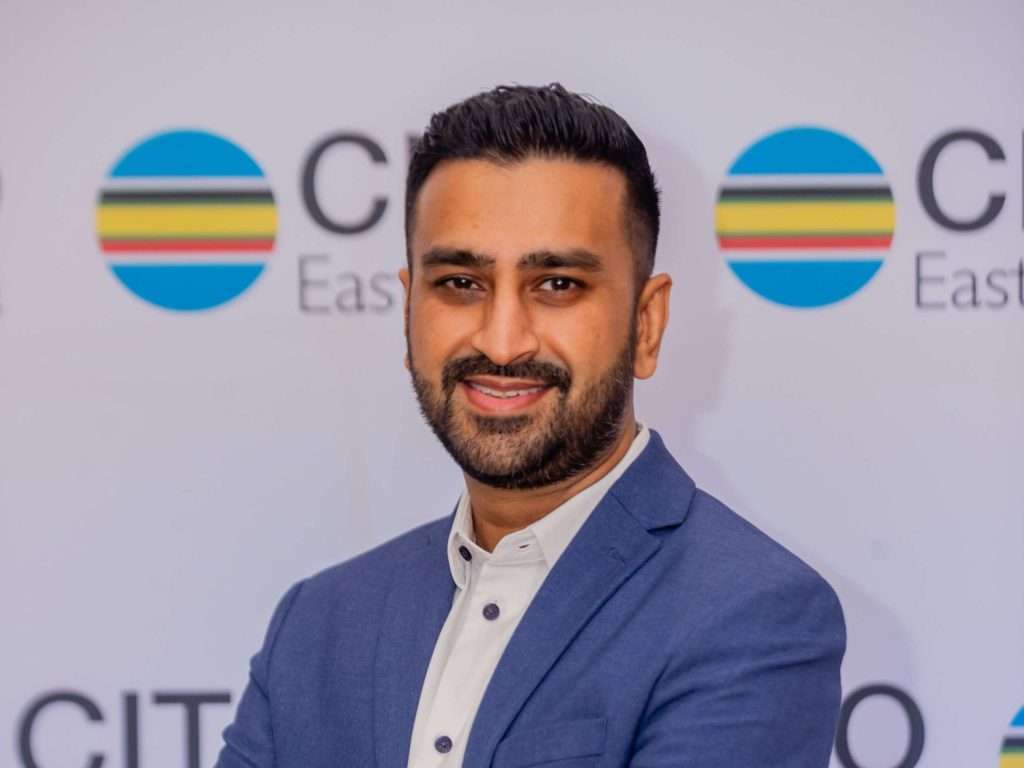
Personal AI agents are transforming business by acting as direct intermediaries between individuals and brands. At the CITO EA virtual summit, Karibu World CTO Musharaf Dhanji showed tech leaders how to prepare for this shift by owning their tech systems and structuring data to prepare for a future where personal AI might replace traditional advertising.
Imagine your flight gets delayed and before it's too late, an AI agent calls you to inform you of the delay and book you an alternative flight. This was the scenario playing out on the screen during a presentation by Musharaf Dhanji, CTO at Karibu World, at the CITO EA virtual summit.
“When you see a robot like this calling you, it has proactively detected an event. It’s been able to retrieve information from not just one system, but multiple systems that are organised well in a company and connected through application programming interfaces (APIs) and modern context protocols (MCPs). Additionally, it’s able to take input from the customer side, understand it, process it, and then do that two-way data exchange with your systems,” he said.
Achieving that level of seamless, two-way data exchange requires a foundational shift in how companies build their tech. Musharaf noted that for organisations to truly reap the benefits of AI, they must maintain full ownership of their ecosystems.
“We can’t rely on third parties to come in and tell us how the technology should work in our business. AI has made it possible to develop that knowledge within our own companies. And yes, that means investing in the technology and the people within your company, so that you own that business knowledge and you build your own workflows,” he explained.
Even when companies must work with third parties, he emphasised the importance of bringing the API in-house and integrating it directly within the organisation.
“Doing so ensures that company data remains structured, allowing an AI to run in the background,” he noted.
Structuring data
To help internal teams structure their data effectively, Musharaf advised attendees to create journey files, a strategy he has used at Karibu World to get the most out of AI. A journey file captures the customer’s journey from their first contact with a company to the last.
“If you create journey files, you don't need to send AI a million tokens. The journey file, which has just the relevant information in one blog, goes to your integrated GPU and is able to process it easily and do the automations that you wish,” he explained.
Beyond owning infrastructure and creating journey files, Musharaf also challenged tech leaders present to look toward personal AI, warning that it is rapidly becoming the primary interface between consumers and businesses.
“When people are searching for a flight, or a hotel, or insurance, or they want to access their bank account statement, they go through AI. Why? Because it’s hypersensitive to everything personal to that individual,” he explained.
His advice to attendees was to begin structuring data in a way that MCPs allow user personal AI to get into businesses and access the data they need.
“ I feel like, just like this is the direction that we're headed in. Everybody is going to be working from their personal AI as a customer, and if you are not reaching them at that point, no billboards or anything that you can do to advertise your product will compete with that,” he said.