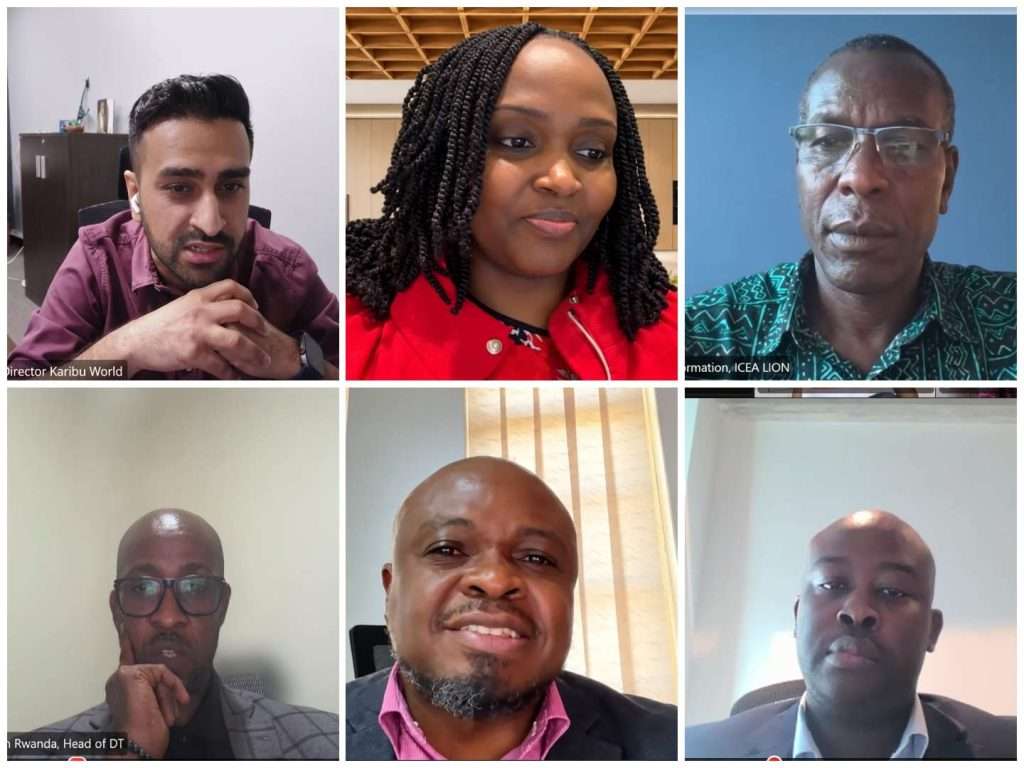
While everyday AI usage is surging across the continent, regional enterprises still struggle to turn AI pilot projects into measurable economic returns. At the inaugural CIO East Africa virtual summit, senior technology leaders gathered to map a path beyond the buzzwords.
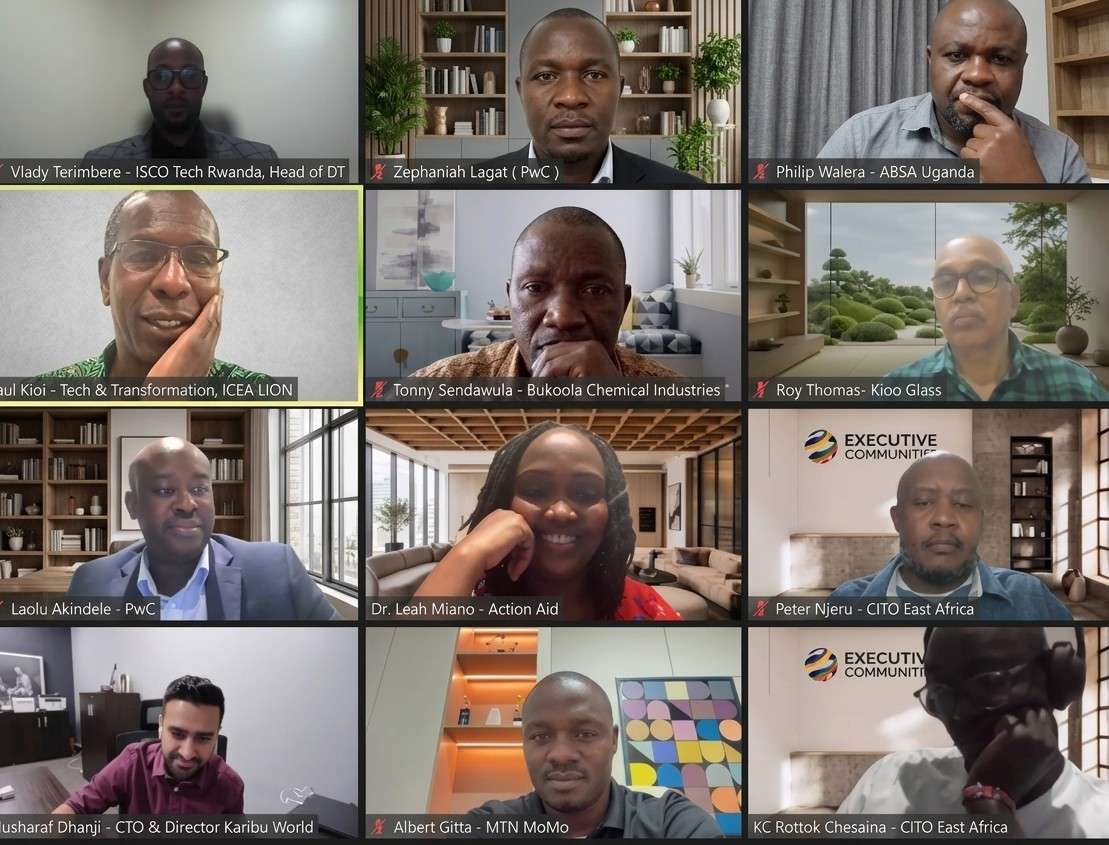
Over 100 Technology leaders and senior IT executives from across East Africa gathered for the inaugural CIO East Africa virtual summit to discuss how regional organisations can move from AI experimentation to creating business value. In a spirited two-hour discussion, executives ditched the usual AI hype and dove deep into how organisations can transform AI from a buzzword into a strategic enabler of sustainable impact
Setting the tone for the event was Laolu Akindele, partner in technology consulting at PwC, who pointed out an urgent need to bridge the divide between small-scale pilots and enterprise deployment. Citing recent PwC research, he noted that while 64 percent of African professionals have used AI at work over the past year, and 38 percent of global CEOs use it to anticipate disruption, many African organisations have yet to realise concrete economic returns.
Laolu traced this gap to an adoption of technology without a clear definition of the problem being solved.
“Sometimes your CEO or a board member attends a conference or a session where a competitor announces a new tool, and that becomes the starting point within your organisation. There is no initial discussion on what problem we are actually trying to solve,” he noted.
He further pointed to the premature launch of pilot programs before technical foundations are established.
“Pilots typically run in controlled environments using small or sample datasets. It works in the sandbox, but the elements essential for true operational readiness, data maturity, enterprise integration, architecture, and change management, have not been addressed. The result is a proof of concept that simply cannot scale,” Laolu explained.
To overcome these pitfalls, he advised tech leaders to anchor AI initiatives to specific organisational use cases and ensure that there are robust governance measures and continuous risk assessments.
A three part framework
Building on these insights, the summit shifted into a panel discussion where industry leaders expanded on what it takes to build viable AI strategies.
Paul Kioi, head of technology and innovation at ICEA Lion, introduced a three-part framework, which he likened to a three-legged African stool, that he believes is essential for moving AI past the buzzword stage. Central to this framework is cultivating the right mindset.
“AI is one of those technologies that are resisted, even by the mere mention of AI. So we really need to get people and organisations to actually change their mindset. It will be futile for us to try to create AI capabilities when we are insisting that actually some of the roles in organisations are going to change or disappear entirely,” Paul explained.
In addition to the right mindset, Paul emphasised the need for more curiosity than compliance when working with AI tools and trust. Like Laolu before him, Paul also emphasised the importance of governance and ownership in proper AI adoption.
Systems engineering and integration
Shifting to technical execution, Philip Walera, head of IT at Absa Bank Uganda, urged participants to look beyond consumer-facing tools toward systems engineering.
“For instance, blockchain, right now there is a very huge move on financial asset tokenisation that is ongoing, largely in Europe, in the Western world. In Africa, we are thinking maybe this will come later, but this is something that could easily lock us out from capitalisation,” he observed.
To bridge the gap, Philip recommended retrieval-augmented generation (RAG) as a solution to help businesses create value from AI.
“With RAG, you now have your large language models or AI models integrating with the data in an organisation. Of course, with your governance in place and cybersecurity in place, you can have some of those models downloaded, customised, so that enable users to query, analyse this data and come up with meaningful results that are custom to your business,” he said.
Sustainable foundations
Dr Leah Miano, head of technology at ActionAid International, shifted the focus to commercial sustainability, advising organisations to view governance not as a barrier but an enabler.
“Governance must not be viewed as a bureaucratic roadblock to innovation. Rather, clear guidance, sanctioned tools, robust access controls, and transparent accountability frameworks create a ‘safe sandbox’ that empowers staff to experiment confidently within well-defined boundaries,” Leah said.
She also emphasised that technology investments must be tied to clear operational metrics rather than deployment metrics.
“We must establish a baseline ROI and understand the total cost of implementation. The conversation has to move from how many tools we have deployed to what has fundamentally changed in how the business runs; whether that is measured in hours saved, cost reductions, or lower error rates,” Leah noted.
Moving from access to literacy
When it was his turn on the mic, Vlady Terimbere, director of IT at ISCO Technologies, highlighted the distinction between basic AI tools usage and workplace proficiency. He observed that while consumer chatbots have made AI familiar, everyday familiarity rarely translates into value creation for organisations.
“Today you'll see that many people are using ChatGPT and Claude AI, but surprisingly, not many people know how to use them efficiently,” he said.
Drawing from a training he had earlier, Vlady insisted that most people have not even scratched the surface of what they can achieve with AI.
“I took AI training and I didn't even get to 20 percent of it, because it was at the PhD level understanding. That's when I started to understand why some AI companies are hiring people and paying them millions of dollars per year to do their job, and all of them are PhD level staff,” he said.
“Today you'll see that many people are using ChatGPT and Claude AI, but surprisingly, not many people know how to use them efficiently,” he said.
Vlady challenged IT leaders to invest directly in upskilling employees, noting that true organisational success is measured not by the number of applications a firm has bought, but in the number of business problems a solution can solve.
Last to make his presentation was Musharaf Dhanji, chief technology officer at Karibu World, Tanzania. His presentation was anchored on a video of an AI travel assistant that is able to offer alternate flight booking information.
While he acknowledged that the video meant convenience for customers and a way to cut costs for boards, for him the video represents what AI can achieve when integrated into organisational processes.
“When you see a robot like this calling you, it has proactively detected an event. It's been able to retrieve information from multiple systems that are organised well in a company and connected through APIs or MCPs. It's able to not just read that data, but write to that data. Additionally, it's able to take an input from the customer side, understand it, process it, and then do that two-way data exchange with your system,” he said.
His central message to IT leaders was to maintain ownership of core technical architecture rather than becoming completely reliant on vendor-packaged solutions.
“We cannot rely entirely on third parties to tell us how technology should run our businesses. We need to build and retain that core technical knowledge internally, designing our own workflows and maintaining direct API integrations,” he said.