

For Laolu Akindele, partner and leader of PwC’s Technology Consulting practice in East Africa, technology is no longer a support function; it is the engine that will determine whether organisations grow, stagnate or fall behind.
Overseeing PwC’s technology consulting work across Kenya, Uganda, Tanzania, Rwanda and Zambia, Laolu has a front-row seat to the region’s most ambitious transformations, from AI readiness and cloud migration to cyber resilience, data governance and large-scale digital strategy. In practice, his work touches every corner of the digital landscape, from major transformation programmes and ERP implementations to cloud strategy, cyber resilience, enterprise architecture and the rapidly evolving world of responsible AI.
This vantage point has strengthened his belief that East Africa is entering a defining phase of digital maturity, one that will be shaped by how intentionally its technology leaders learn, collaborate and lead. “Technology today sits at the heart of business performance,” he says. “Our role is to help organisations harness it in a way that drives real, sustained value.”
He explains that PwC helps clients leverage technology not just to address immediate needs, but to shape the organisation as a whole. “Our work touches every part of the enterprise, from operations to governance to customer experience,” he notes.
A major focus today is guiding organisations through artificial intelligence, where many are still finding their footing. “Most are still at the early stages,” he says. “They are formulating policies, identifying use cases and figuring out how to generate value responsibly.” PwC supports this journey by developing responsible AI frameworks and helping organisations identify practical, high-impact applications that accelerate outcomes.
Collaboration, he adds, is central to PwC’s philosophy. “Successful transformation does not happen in isolation,” he says. The firm works with global technology partners to deliver change at scale, helping clients adopt modern tools while embedding the governance and capabilities needed to sustain long-term value.
Why PwC chose to support the CITO East Africa Community
For Laolu, PwC’s partnership with CITO East Africa was an easy decision, shaped by the firm’s long-standing investment in executive communities across the region and its commitment to advancing technology leadership. PwC has supported the CFO East Africa programme for years, sponsoring events in Kenya, Rwanda and Tanzania. He sees CITO East Africa as the natural next step in elevating conversations that matter.
“The success of the CFO community showed us how powerful it is when leaders come together to share ideas and co-create solutions,” he says. “If you can bring technology leaders into the same room, you create a space where they can address challenges collectively and shape the future of the industry.”
The partnership also aligns with PwC’s global priorities. Across the firm, technology, data and AI have become strategic pillars, backed by significant investments in tools, innovation and upskilling. PwC has trained thousands of professionals globally, including teams in East Africa, to help clients harness emerging technologies safely and effectively.
He believes the timing is critical. East Africa has a young, tech-savvy population and a growing appetite for digital solutions, making the region well positioned for accelerated transformation. “Technology will be one of the biggest drivers of growth on the continent,” he notes. “Collaborating with communities like CITO East Africa gives us an opportunity to support that progress and to work with leaders who are shaping the next decade.”
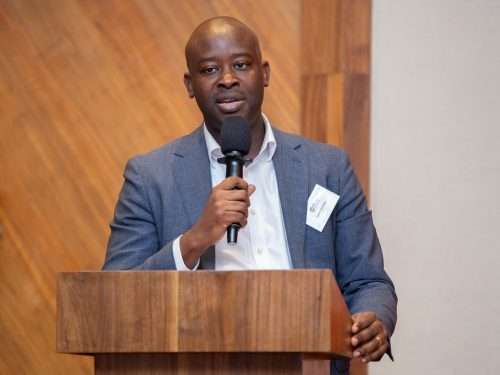
Tech challenges keeping leaders awake today
With a vantage point that spans boardrooms, C-suite conversations and on-the-ground delivery, Laolu has a clear sense of the pressures facing technology leaders today.
AI tops the list. Across nearly every board he meets, artificial intelligence has become the dominant topic, yet many organisations are unsure where to begin. “There is excitement, but also uncertainty,” he explains. “People worry about privacy, talent and identifying the right use cases. Many have deployed tools, but they are not harnessing more than a fraction of their capability.”
Cybersecurity is a close second. The threat landscape continues to evolve, and attackers are now using AI to refine, scale and disguise their methods. “Cyber risks are becoming more sophisticated because the tools being used to launch attacks are becoming more advanced,” he says. “As organisations become more connected, the exposure grows.”
The rapid pace of technological change is another persistent challenge. Investments made today can become outdated quickly, making long-term planning difficult and often leading to hesitation or underinvestment.
Value realisation remains a major concern. Many CEOs and boards struggle to connect technology spend to tangible business impact. “It becomes harder to justify future investments when you cannot clearly articulate how technology delivers value,” Laolu notes.
Talent scarcity compounds the challenge. With global competition for skills, organisations in East Africa are contending with rising salaries, higher turnover and a shrinking pool of experienced professionals.
Project fatigue is the final pressure point. Organisations often invest heavily in large transformations, only to see low adoption, limited returns or abandoned initiatives. The result is wasted budget and declining confidence.
Taken together, these pressures make the CIO role both demanding and pivotal. “It is a lot to navigate,” Laolu says, “but these are also the areas where the right leadership can create significant advantage.”
Balancing innovation and governance
For many organisations, the tension between moving fast and staying compliant has become one of the toughest parts of modern technology leadership. Laolu sees this especially in fintech and other high-growth sectors, where the instinct is to innovate quickly and address governance later.
He believes this approach is risky. “Governance is not a barrier to innovation,” he says. “It is there to enable it. The last thing you want is to invest in a product or solution and then expose yourself to regulatory, financial or reputational risk because the right controls were not in place.”
PwC helps organisations integrate governance early, embedding controls, standards and ethical guidelines into products and processes from the outset. This ensures innovation happens responsibly and with long-term resilience in mind.
Staying informed is equally important. “We bring global best practices to our clients,” he says. “Our role is to help them implement robust frameworks for responsible innovation, including responsible AI, cyber policies and data governance.”
PwC also engages regulators directly, helping shape standards before they are enacted. “It is far better to work with regulators early than to react later,” he says.
How communities like CITO East Africa accelerate collaboration
For Laolu, one of the most powerful outcomes of CITO East Africa is the shared space it creates for meaningful exchange. It is more than a networking forum; it is a platform for collective problem-solving, cross-industry insight and sustained digital maturity.
“Bringing leaders together creates a shared vision,” he says. “It gives people the chance to exchange ideas on emerging technologies and to understand how others are navigating similar challenges.”
Roundtables foster honest conversations about cybersecurity, talent, regulatory pressures and the realities of large transformations.
Exposure to different sectors is equally valuable. Innovations in one industry often inspire breakthroughs in another. “When you hear what others are doing, it can open up possibilities you had not considered,” he notes.
But the most powerful benefit is the unified voice such a community can create. With hundreds of CIOs aligned around shared priorities, there is potential to influence policy, champion harmonised regulations and accelerate digital maturity across the region.
Shaping East Africa’s digital future
Looking ahead, Laolu sees the CITO launch as a milestone in the region’s digital journey. It is an opportunity for leaders to connect with peers who understand their challenges, share experiences and collaborate on solutions that will shape the next decade.
“For me, it’s also important that people enjoy the experience,” he says with a smile. “These are conversations with like-minded leaders who are trying to solve the same problems and build the same future.”
His message to technology leaders is simple: embrace collaboration, innovate responsibly and take the lead in shaping a digital future that benefits organisations, communities, economies and the continent as a whole.