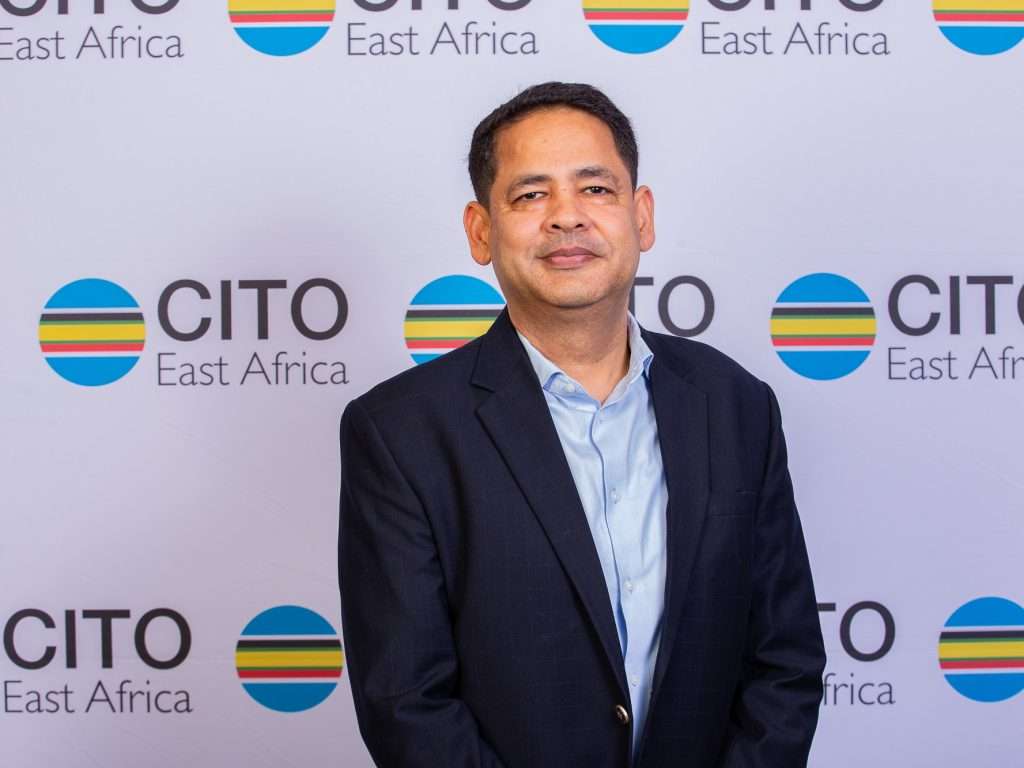
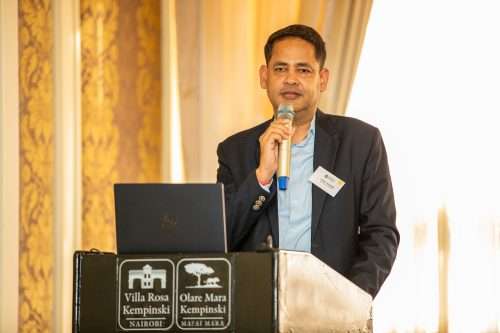
Vinod Sharma has spent years working at the intersection of technology and financial services. At the Future Ready CITO Summit organised by CITO East Africa, he made a case for keeping AI in its proper place, reminding the room that the people using the tools matter more than the tools themselves.
Mpesa Africa CTO Vinod Sharma opened his keynote at the Future Ready CITO summit by stating something that might seem at odds with his job title. Although he acknowledged that he belongs to the technology domain, he revealed that his focus lies elsewhere.
“For me, it's never about technology. It is about people, beautiful, talented people. You can replace a platform from one provider to another provider, but if you do not have the right kind of people with the right mindset who can drive the business forward, this will not help," he said.
Rather than treating it as a breakthrough, Vinod framed AI as the latest in a long line of developments that the industry has a habit of overstating. He offered a different term that he finds more useful: natural intelligence (NI).
“Can AI beat NI? The answer is no. But what we are actually making difficult is that when we do work, we bring a lot of emotions and sentiments. This is the reason AI might win, or is winning, in some sectors. Because we get biased, we get sentimental. We bring emotions into the plane. This is where we lag behind a little bit," he explained.
In Vinod’s view, the pattern of overstating new developments is not new to the industry. He traced the development of fintech, noting that the first transatlantic cable connected American and European financial markets in the 1850s. The term did not exist yet, but the idea of connecting financial systems through technology was already alive.
"FinTech may not be the word which was used originally at its inception. The use of the FinTech word started in 1994, and come 2014 I think it became viral. Everyone's CVs got changed, and FinTech got into everyone's CV," he said.
New wine in old skins
The same dynamic, he stated, is now playing out with AI terminology. Vinod has watched Gen AI give way to Agentic AI and then to AI Agents, with each new term arriving as though it represented something entirely new. But he has a different view.
“Every year you must have a hundred new jargons coming in. Like last year, it was Gen AI, then all of a sudden Agentic AI, and then you started listening to new terminology. It's the same difference between a car and a carpet. So if you assume the car and a carpet are the same, then AI agents and Agentic AI are also the same," he said.
Vinod sees genuine value in specific, well-defined applications. He asked the room how many attendees were using AI in their businesses and invited one to share their experience. The response came from someone in the healthcare space who had deployed AI transcription tools to help clinicians with documentation. A second use case involved AI vision technology reading patient monitors on a continuous basis. Vinod acknowledged both but pushed back on the assumption that a high initial accuracy rate was enough.
“Did you try looking at the precision and the accuracy of those machine translations? Because now it's not the human doing those translations. How much is the accuracy, and what is the precision rate, and is it improving day by day?” he went on.
Evolve or perish
As Vinod revealed, he has tested AI's limits himself, on more than a hundred occasions, using it to generate documents and full sprint documentation. The results, he said, consistently fell short of something he could take to a customer. As he sees it, AI has value, albeit limited.
"It does help. It empowers, it improves, it fast-tracks. But it can't deliver a finished product," he said.
For FinTech leaders deciding how to integrate AI, Vinod’s advice was to begin with the customer rather than the technology. He advised that AI should reinforce why a consumer chooses a product.
"Find a reason why your product should be used by consumers. It may not be the primary cause for your business to drive, but it has to be a pillar for consumers to come to the product and use it. These technologies, AI agents, are actually changing the world and they will continue changing and continue evolving. If we are not evolving, then we need to be ready to be phased out," he said.