
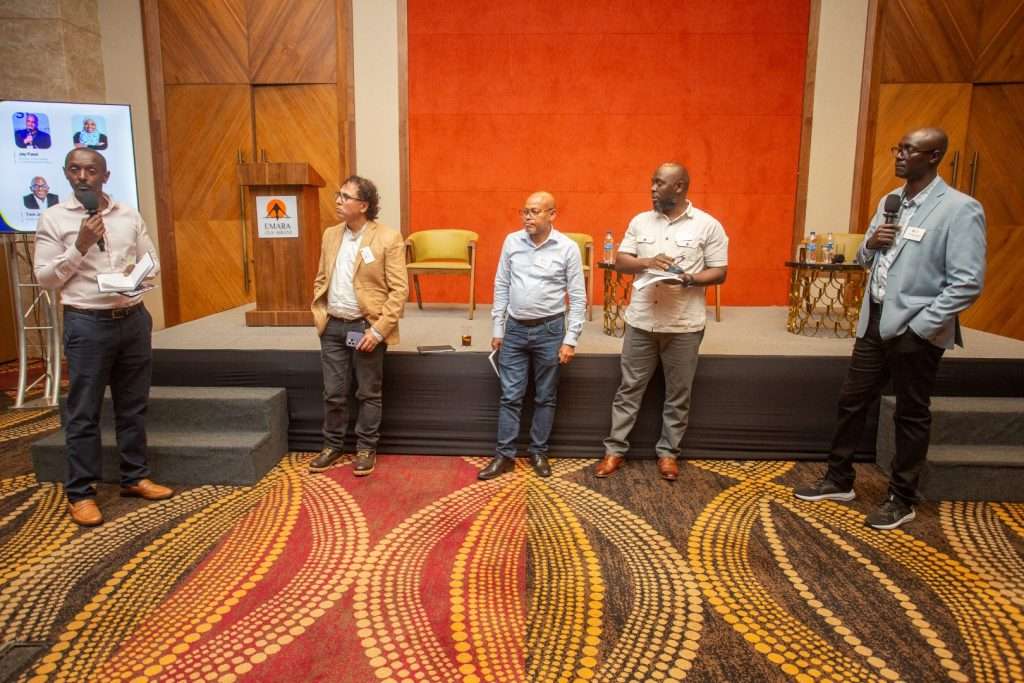
During the CITO East Africa launch, participants broke into four interactive groups to reflect on the region’s technology challenges and opportunities. Their discussions revealed the issues that CIOs and technology leaders believe the new community must address in the year ahead.
The interactive sessions at the CITO East Africa launch event opened with the recognition that the agenda for the community must be shaped by its members rather than driven from the outside. Participants noted that technology conversations in the region often become overly formal, leaving little room for candid reflection. In contrast, these sessions encouraged practical insights drawn from the executives’ experiences across different sectors including banking, insurance, public service and manufacturing.
Innovation dominated much of the early conversation, with executives describing the difficulty of pushing new ideas through traditional corporate structures. Some participants argued that meaningful innovation often happens outside the walls of an organisation, especially when internal environments restrict or cannot fund experimentation. Others noted that the region lacks mechanisms that allow innovators to test ideas safely without risking their careers. They proposed arrangements within companies where staff take sabbaticals to experiment with ideas and resume work after a while.
“Sometimes you just want to test an idea. That’s why going out might help, if there’s that opportunity to go out and see how it scales. Then if you pilot and learn from it, and you’re in a position to scale and monetise, you do that. And if you can’t scale and monetise, you come back and work,” one executive noted.
Attendees also highlighted the importance of local ecosystems, discussing the growing tension between supporting homegrown providers and managing the risks that come with them. The executives shared examples of local vendors who demonstrated promise but struggled with compliance, cybersecurity or scale once demand increased. Regulatory constraints also add further pressure, particularly in heavily regulated industries.
“Sometimes homegrown solutions go horribly wrong, especially if they affect things to do with compliance or security. And in my experience, I found that it’s usually a local vendor who maybe you’ve trusted and given the tender, but they let you down thoroughly,” an attendee said.
Pressure to upskill
Several participants argued that the solution lies in supporting local vendors more deliberately. They described efforts within their own organisations to train third-party providers and conduct audits to help them meet group-level standards. The goal is to strengthen the wider ecosystem so that local vendors become competitive and reliable partners.
“For us to be able to scale that space and support them, they have to come to the party. If they cannot be compliant, you can’t work with them. As a country, as an ecosystem, as a people, the only way to go is to support our own to be able to scale. They have to be resilient,” another executive said.
Participants also questioned whether universities are producing graduates ready for the realities of modern technology environments. Many noted that industry has changed faster than academic curricula, leaving newcomers with theoretical knowledge but little practical grounding. Experienced professionals also face pressure to upskill as the pace of change accelerates.
“We produce people we cannot use and when it comes to the big vendors, they actually sort us out separately. So I think as a forum, we need to be able to have that as an agenda where we can call vendors or universities and hold them to account for what they are delivering to the market,” a participant said.
The fraud problem
The topic of artificial intelligence generated both excitement and hesitance in the group. Executives said their organisations face growing pressure from boards that want immediate implementation without appreciating the level of preparation required. Others pointed out that data quality and infrastructure remain real limitations across the region. With AI tools becoming more accessible, they highlighted the need for a shared space to discuss practical strategies and use cases.
“Where do we get the resources to deal with this AI? How do we build the strategy around it? Secondly, how do we deal with the peer pressure from our executives? They hear something about AI, and they come and tell you to implement,” one attendee pointed out.
The question of ethics and integrity rounded out the conversations, with several participants arguing that technology teams must confront the uncomfortable reality that internal and third-party actors are often involved in tech-aided fraud. Because organisations rarely disclose misconduct publicly, problematic individuals move easily across the industry. Participants said a regional mechanism is needed to address this without breaching privacy or exposing organisations to legal risk.
“No matter how much you try to hide from this fact, it will come to haunt us. It is done by our vendors and done by our own employees. And if we don’t talk about ethics and just talk about ethics in AI, I think we’ll be just lying to ourselves,” an attendee said.