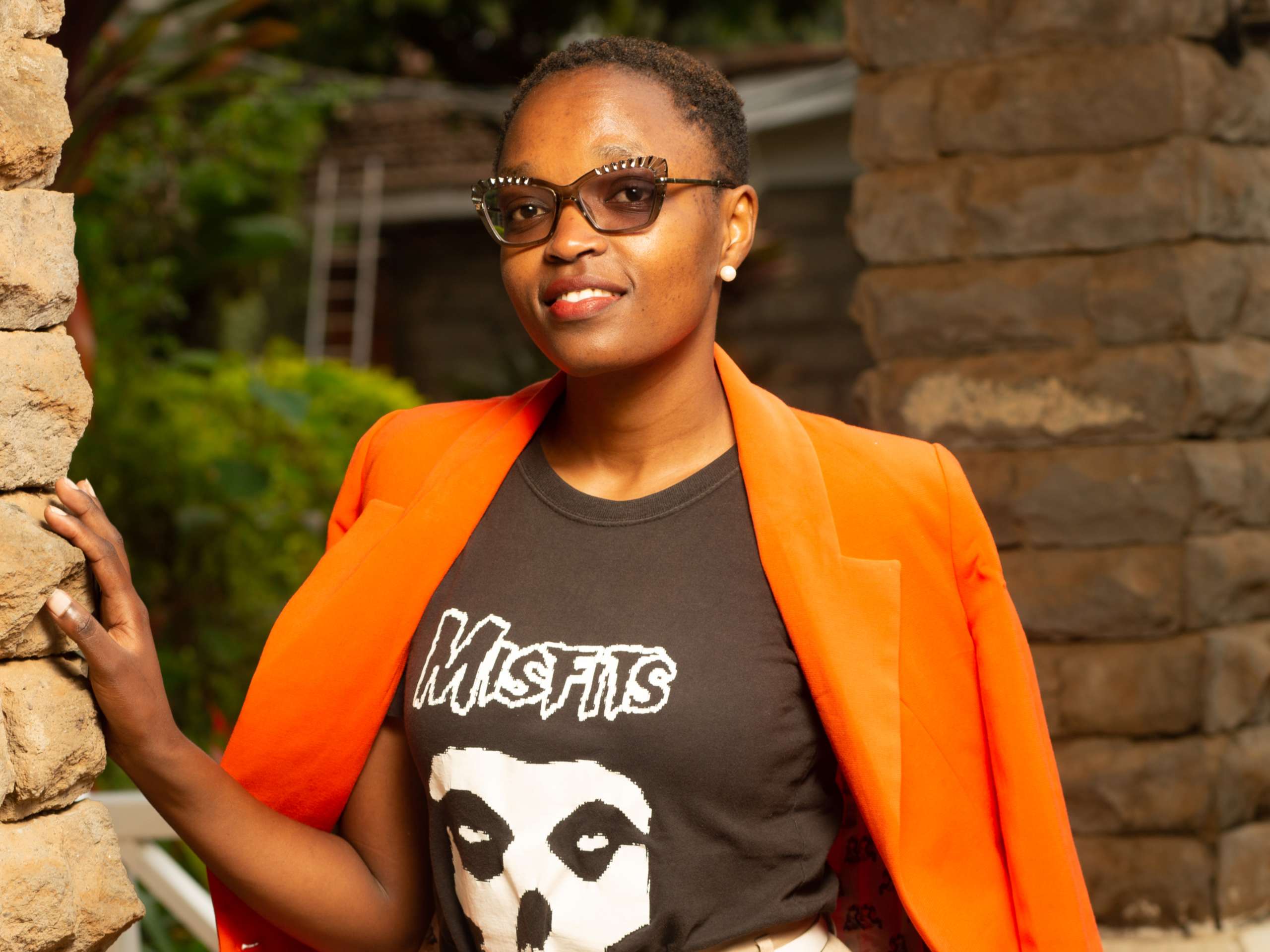

Clement Muhire may not wear a white coat or carry a stethoscope to work as he would have wished, but he is making remarkable contributions to the next frontier in medical training. As the head of IT at University of Global Health Equity in Rwanda, Clement is overseeing the digital backbone that supports the training of the continent’s next generation of medical doctors.
Years ago, Clement Muhire stood at the crossroads. His childhood dream of becoming a medical doctor had been cut short, and he couldn’t think of another option for a career.
“When it was time for me to go to University, I didn't get a chance to go to medical school. I later met a friend who was an IT engineer. We talked and I developed an aspiration for IT,” he recalls.
Clement currently sits as the head of IT at UGHE, surrounded by medical researchers, faculty and trainees, members of the very fraternity he badly wanted to join. He originally joined UGHE as the person in charge of IT infrastructure, but over the course of seven years, he has grown to head a team of six people, each with a different set of skills. Together, they work to ensure that UGHE achieves its mission of training the next generation of global health leaders.
It’s a role he takes seriously, often leveraging his love for music to help him focus on his daily activities.
“There will always be music playing when I am working. It does not distract me. It actually helps me focus,” he reveals.
Training without borders
One of the responsibilities of Clement’s department is classroom and event technology management. Through this, the university has adopted a hybrid model of teaching and learning that goes beyond the institution’s physical walls.
“We have been able to leverage what the current audio-visual infrastructure is providing to make sure we keep our students and faculty engaged with others. For example, we have volunteer faculty or part-time faculty in other countries delivering lectures remotely to students here in Rwanda, particularly in Burera district, Butaro sector, in a remote setting. We also partner with students from other universities that we collaborate with on different projects,” he explains.
For Clement, hybrid teaching is one among many things he celebrates. In early 2025, UGHE was chosen to be the secretariat and institutional home of the Consortium of Medical Schools – Africa (COMS-A), which was launched during the inaugural Advancing Medical Education in Africa Conference (MedEdAfrica2025). The conference had been organised by the University of Global Health Equity (UGHE) in collaboration with the Rwanda Ministry of Health.
“The consortium brings together different medical schools in Africa with the urgent need to transform Africa’s medical education systems to better address the continent’s health challenges in Medical Education; develop a common curriculum to make sure that if a student has done any research study in any of the countries, it can be applied to another region as well,” he says.
Within the consortium, Clement and his team are integrating AI to enable the sharing of research across the continent.
“We are developing an AI-based model to help faculty, students and researchers come up with medical ideas, combine them and share with each other,” he adds.
Currently, the COMS-A has attracted a membership of 145 institutions, making it the first and the largest of its kind on the continent.
The flip side
The progress has not been without challenges.
“Because we are in a non-tech environment, working with people in a different area and making them understand the use of tech and how they can leverage it can be challenging. For example, the students we receive here have no IT background,” he says.
To tackle this challenge, Clement and his team introduced a course to help onboard the students. In a twist, Clement taught this course before he moved on to leadership responsibilities.
Another challenge is that the University is located in a remote area that still lacks basic and reliable infrastructure.
“We currently have fibre optic and starlink but we don't have a lot of options compared to people in the city,” he says.
As a forward-looking medical institution that is integrating technology in training, UGHE is not immune to cybersecurity issues, especially because they collect data from various sources in its research work. Such research exposes them to cybersecurity risks, and Clement is cognisant of this.
To address this, Clement has an employee in the IT department tasked with cybersecurity.
“We plan to grow the team in a way that it can deal with cybersecurity protocols,” he says.
Even though the team is currently lean, they have still managed to develop measures to ensure that UGHE is compliant with Rwanda’s cybersecurity laws. One such measure defines how data gathered is handled.
“We still rely on external cloud servers to host our research data but we try to ensure that any research gathered locally is hosted in our data centre here in the country,” he explains.
Admittedly, the team may not have tackled every threat there is. However, Clement expresses enthusiasm that his team is on the right track to ensuring that UGHE remains resilient against cybersecurity attacks.
The conduit of knowledge
Before joining UGHE, Clement worked with Aegis Trust, a UK based NGO that has implemented various projects supporting the Education for Sustainable Peace in Rwanda (ESPR) based at Kigali Genocide Memorial.
“While I was there, I was in charge of digital archiving. We would collect testimonies of the survivors and preserve those memories,” he recalls.
Though Clement might view his work at Aegis and his current role at UGHE as distinct, a clear pattern emerges. At Aegis, he digitised and archived important testimonies that would otherwise have been lost, making it easier for generations to access them. At UGHE, he supports the sharing of existing information not for memorial services but to equip the next generation of health professionals. In both he plays the role of a custodian of knowledge.
His commitment to the flow of knowledge does not stop at work. At home, where Clement is a father of two girls aged nine and six, his free time with them is spent helping them to read.
“I want them to get a culture of reading,” he says.
Clement also loves reading, especially about politics. However, he is quick to point out that he does not love politics.
“I read to better understand the context behind what I observe,” he states
This curiosity extends even to his social circles. Given a chance to ask questions about the interview, he asked where the interviewer was from.
“I do not want to assume that just because you are in Nairobi, you are Kenyan,” he explains.
His love for learning was also the impulse that pushed him to enrol for swimming classes as an adult. Today, he is a capable swimmer who enjoys swimming in his free time besides playing football and supporting his favourite football team.
Ultimately, Clement’s work at UGHE has enabled students to create their own realities in training, while reinstating a part of his long-lost dream.