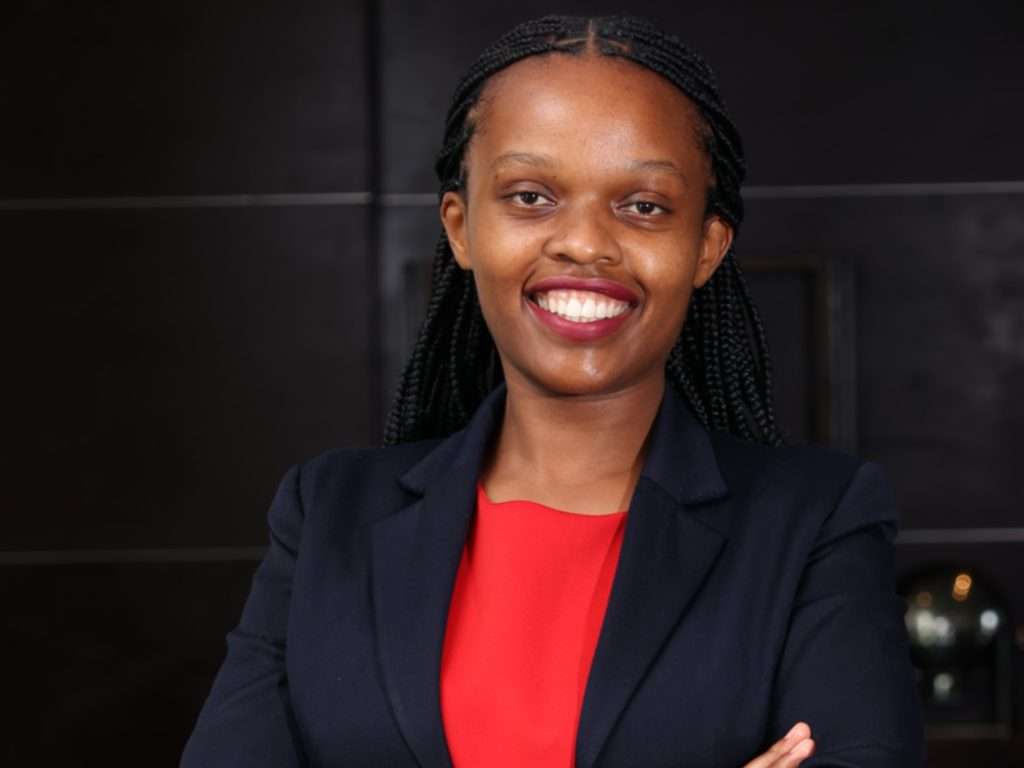
For Deborah Masara, acting head of technology and operations at KMRC, the boundaries between science fiction and real-world technological innovation are fascinatingly blurred. The future she glimpses through sci-fi movies fuels her drive in her professional life, where she finds profound satisfaction in developing technology solutions.
Deborah Masara finds relaxation away from her busy weeks as acting head of technology and operations at Kenya Mortgage Refinance Company (KMRC) in the form of science fiction movies. “I watch a lot of movies,” she shares. “I especially love sci-fi movies and action movies.”
This interest isn’t just for leisure, she explains. “It triggers your mind about what the world could possibly look like in the future.” Deborah notes that some things seen in sci-fi films “actually happen slowly with time”. With the rise of AI, she observes, “I’ve watched a lot of AI-related movies and I predict that in a few years some of those things will actually be around us and working with us.”
When asked for specific examples of technologies she expects to see, Deborah recalls Atlas, in which the main character, played by Jennifer Lopez, interacted with a robot assistant. “The main character, a counterterrorism analyst with deep distrust of AI and robotics, must rely on it after a mission to stop a rogue robot fails.”
Another example she shared was from a series in which a mom hired a robot nanny to take care of her child – it did all the mundane and repetitive tasks of parenting, like reminding the child to wash their hands or brush their teeth. “That’s probably not going to happen in Africa anytime soon, but somewhere in advanced economies, I am sure we’ll see something similar soon.”
Business in Africa, however, doesn’t have to wait. This scenario, she says, is playing out exactly in the business space with AI right now – technology has been tasked with the mundane and repetitive aspects of work.
Work imitating art
This fascination with technological possibilities extends directly into her professional life and fuels her passion for creating impactful solutions. Looking back on her career, particularly at her 10 years at a local software company, Deborah describes the profound satisfaction she derives from seeing her work transform businesses.
She recounts a challenging project in Nigeria for a large pension and asset management company that was struggling with segregated systems: “You found they had a pension system, an asset management system, a finance system – and so communicating had become a problem.”
She and her team provided a solution that allowed all these modules to reside in one system. “The task involved translating functional requirements into a design and then a working system and then migrating legacy data from the old systems. When the system went live that was one of the most incredible moments.”
Deborah says this is where her “spark” comes from – even just talking about it, her whole face lights up. “It gives you major satisfaction that you’re able to transform a business problem into something that will last.”
The solution that she and her team built is still in use today, having “solved a lot of bottlenecks, process and efficiency issues across their business”. Seeing something she delivered actively solving a problem is genuinely exciting for her, a feeling she describes as her “Eureka moment”.
Bringing that spark to her current role
Deborah's career path reflects her journey in building and implementing technology solutions. Starting as a software developer after studying software engineering, she transitioned to roles that included functional consultant, head of implementation and support, and project management. These roles gave her extensive experience in developing local solutions for various industries across Africa.
“I morphed into all these roles in my previous workplace, and I think that’s what really helped me in the IT manager position here at KMRC, and with what I am handling in my current role as acting head of technology,” she says.
She is no stranger to managing a team, having managed more people in her previous roles than the number she’s currently leading, but says that KMRC supports leadership development. “I have also invested the time in taking courses that are pro-leadership and pro-management, which will be very useful in terms of people management.”
Her current key focus areas are technology and innovation, which involves overseeing infrastructure, cybersecurity, applications, support and general process re-engineering – all aspects of business and technology that she is well prepared for, given her experience in delivering business applications and her genuine passion for bringing solutions to life.
She explains that innovation in this context means “making sure that we are keeping up with technology as it comes out, being sure to keep pace with disruptive technology and emerging technology”. Her goal is to ensure the organisation evolves alongside technology.
This blend of seeing future possibilities through interests like sci-fi and the practical application of technology to solve real-world problems is clearly a driving force in Deborah’s career that will continue to deliver dividends in the years to come.