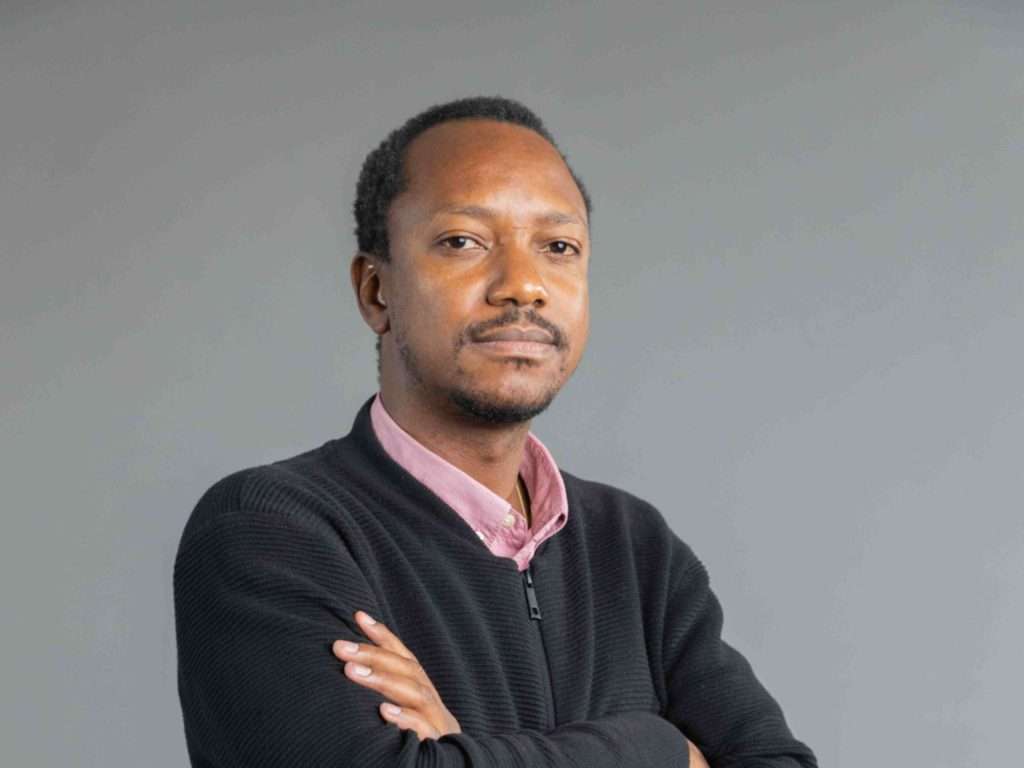
Paul Odero has steered APHRC through IT-related challenges and led initiatives such as development of AI-driven systems that make health research more collaborative and impactful. Recognised among East Africa’s top ICT leaders, he brings a grounded perspective on technology and leads by creating space for his team to grow and innovate.
When Paul Odero joined the African Population and Health Research Center (APHRC) in 2013, he took on his role as ICT Manager amid significant and pressing challenges. An external audit had flagged critical risks in the institution’s ICT systems, exposing weaknesses that demanded urgent attention. For a newly appointed ICT manager, it was baptism by fire, but it shaped the course of his leadership.
Instead of being discouraged, Paul rolled up his sleeves and got to work.
"The audit highlighted issues that could not be ignored, and it put us under immense pressure to prove that our systems could be trusted," he recalls.
Over the years that followed, he led his team in rebuilding systems, strengthening controls, developing and implementing policies and strategies that were previously nonexistent, and introducing greater accountability.
The results spoke for themselves. APHRC’s ICT infrastructure moved from high-risk ratings to a clean bill of health, with external auditors giving it a no-risk rating.
"Seeing that shift from high risk to no risk was a huge validation of the effort we had put in," he says.
Paul’s resilience has its roots in how his career began. After high school, he first explored graphic design and human resources before deciding to pursue computer science in college. In 2005, he entered the ICT field through software development and design, with a keen focus on user interface.
"From the start, I wanted technology to feel simple and usable," he recalls. "Good design is what connects people to the system behind it."
A culture of shared responsibility
As his responsibilities grew, so did the need to build a capable team around him. When Paul first took on ICT management at APHRC, the department had only two staff. Today, it has grown significantly, covering diverse areas from infrastructure to software development. Learning to manage that growth was one of his biggest leadership lessons.
"In the beginning, I tried to do too much by myself, but I came to realise that delegation is not about letting go of responsibility. It is about trusting people and giving them the space to do their work, while staying close enough to support, guide, and follow up on tasks."
That culture of shared responsibility has translated into some of APHRC’s most important technology milestones. Under Paul’s leadership, the centre has built and customised systems that serve both its internal operations and its research mission. An ERP platform, tailored by in-house developers, now streamlines processes across the institution, with a secure web-based interface for staff access and licensing control.
"We wanted a system that not only managed our processes but also gave us full control over security and licensing," he says.
Equally significant is a platform APHRC developed on an open source technology and enhanced with AI tools to link researchers across Africa.
"The idea was to make collaboration easier by connecting people and the data they need," Paul explains.
The system collects and organises information about researchers, helping them find partners and opportunities more efficiently. Beyond this, APHRC has been integrating AI into its ERP systems and research activities, using data-driven models to predict health outcomes. "AI is already part of what we do," he notes, "not as a buzzword, but as a tool that makes our research more impactful."
Striking a balance
For all his strong views on technology, Paul is quick to admit that balance is essential. Away from the demands of APHRC, he prefers a quieter rhythm that allows him to recharge and reconnect with his family. Much of his free time is spent with his two sons, often accompanying them to football training or cheering them on from the sidelines.
"Those are the moments that remind me why hard work matters," he says.
When not with his family, Paul enjoys long walks, sometimes stretching up to 50 kilometres , which he finds both relaxing and restorative. He also unwinds with action movies and, true to his profession, often ends up tinkering with his computer in search of solutions to work-related problems.
For the future, Paul believes ICT leaders should remain focused on solving real problems rather than chasing trends. "Technology will keep changing, but what matters most is how we apply it to make work easier, protect our systems, and support the mission of the organisation," he says.