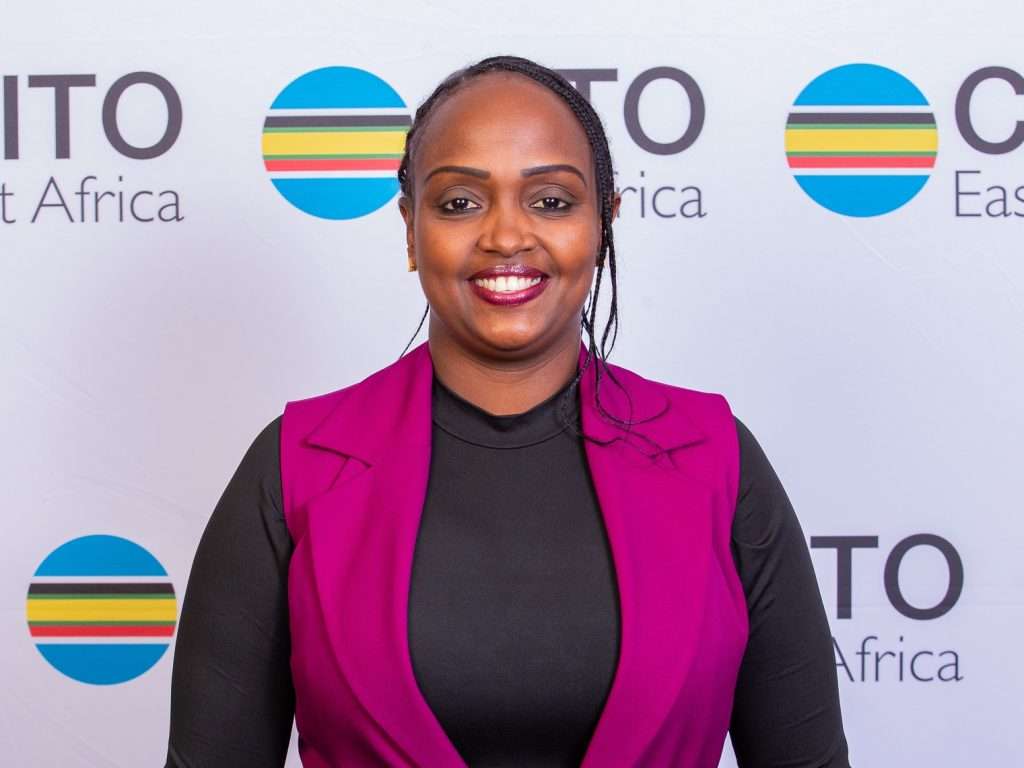
Universities Fund ICT head Dr Leah Miano has spent 17 years building systems, climbing mountains and teaching music, while raising three children. From nearly resigning over a database mistake to standing beside the CEO in Parliament, her career has been marked by moments that tested and defined her.
While the rest of Nairobi is still asleep in the pre-dawn quiet, Dr Leah Miano is already moving. At 4am, the head of ICT at the Universities Fund begins a ritual she has maintained for two decades.
“The only time I’ve ever skipped is when I had my babies and then I’m back. I’m a mother of three aged seven, five and four. If I don’t go to the gym, I feel like my day has not started,” she explained.
Early in her career, while working as a senior database administrator at Britam, Leah committed what many in the tech world consider a fireable offence. She accidentally replaced a live, production database with a backup that was two days old. Convinced her career was over, she drafted a resignation letter.
“I told my boss at the time what I had done but he took the letter and shredded it. He said one of the things I had done was come to him, explain the problem and highlight where the issue lay. He told me to go and fix it, but I wasn’t going anywhere. That moment was a turning point for me. I realised that true leadership is about how you handle the mistakes of others,” she recalled.
Today, Leah carries that lesson into the corridors of the Universities Fund, the premier government agency disbursing scholarships to university students. She manages a team responsible for complex integrations with the Kenya Universities and Colleges Central Placement Service (KUCCPS), Integrated Population Registration Services (IPRS), the Kenya Revenue Authority (KRA), Higher Education Loans Board, Universities and all universities in the country. Her systems must distinguish between students who are genuinely needy and those attempting to cheat the system.
Integrating systems
“Before I joined the public sector, I used to have a very one-sided view. I didn't know that the government has very talented techies. The problem is the bureaucracy,” she said.
The fund disburses around KSh 40 billion a year in capitation and government scholarships, calculated by assessed need. Under the old system, a chief's signature on a form was enough for a bursary
“There have been instances where beneficiaries misrepresent their family circumstances including falsely declaring their parents are deceased in order to appear more financially vulnerable and thus qualify for higher funding” Leah said. “You can imagine a beneficiary trying to get the maximum scholarship funds killing their parents on paper, just to look needy.”
A presidential executive order in 2023 required simultaneous integration with multiple government databases: births and deaths registries, disability systems, examination records and university enrolment portals. Leah’s team built the integrations in four months. The system now validates an application in under a minute.
She remembers the fund’s first year, when the CEO was called before Parliament countless times to explain the system.
The human touch
“On one occasion he came to me and said there were system questions he couldn’t answer and that I was coming with him to Parliament. That was a space I never thought I would get myself into,” she said.
Members of parliament tested the system live and no loopholes were found.
It is a role that requires zero-trust security protocols, yet Leah refuses to lead her staff with an iron fist. She has created an environment where the “human touch” is as important as the code.
“I always tell my team, if you make a mistake, say it. The worst part is keeping quiet and me finding out in a meeting when it’s blown up. Because I’ve been there. I don’t want people to be afraid of me; I want them to be responsible,” she explained.
When members of the education committee or high-ranking government officials question why certain students receive more funding than others, it is Leah who must provide the technical proof. She recalled a specific instance where she had to demonstrate the system’s integrity to a principal secretary by attempting to bypass the rules.
Ingrained habits
“I went to the PS’s office and showed him. I asked for his ID, put it in the system and it rejected it. I showed him that you can’t apply with your ID because you don’t fit the criteria. When people see the system works, the noise stops. One thing we can’t joke with is security, it’s cybersecurity, because we’re talking about KSh 40 billion and close to one million students,” she asserted.
Leah’s dedication to excellence and order can be traced back to her childhood. She was raised by strict parents, particularly her mother who was a firm believer in the power of the written word. In the household, reading was not a leisure activity, it was a weekly requirement. This upbringing instilled in her a “solution-orientated” mindset, a refusal to accept “no” for an answer when a problem needs solving.
“My mother was a teacher. She was very strict. She would give us a library card and say you have to read a book a week. That habit stayed. Now, I read 50 books a year. When I’m doing my PhD research, I can sit and read 30 journal articles in one go. My mother taught us that there is always a way to find an answer if you look hard enough,” she explained.
Even her weekends reflect this blend of technical precision and human connection. On Saturdays, the mother of three who manages national databases becomes a music teacher. Leah prepares her students for the international Associated Board of the Royal Schools of Music examinations. She sees a direct link between the structured logic of a musical score and the structured logic of a software programme. For her, playing the piano is a way to recharge her creative batteries while instilling discipline in the next generation.
“It’s very different from ICT, but also very similar. You have to be precise. You have to practice. It’s a way for me to give back and also to keep my mind sharp in a different way,” she said.
Despite her success as a CIO, Leah is not content with staying within the confines of the IT department. She is currently rebranding herself, looking towards the next level of corporate leadership. She has enrolled in a leadership programme at Strathmore University.
“I want to take myself to the next level. I need to know how to best position myself so that if an opportunity comes, it doesn't find me unprepared.”