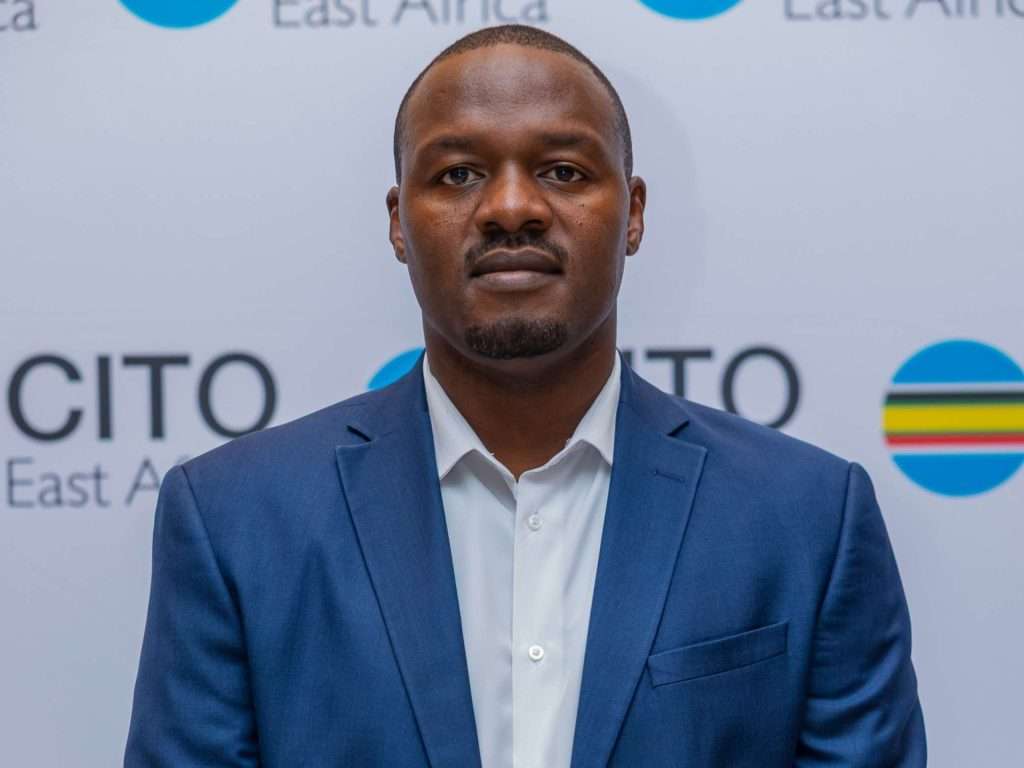
Albert Gitta, chief information officer at MTN Mobile Money Uganda, has built a business around over 15 million active customers and the data trail they leave behind. He explains how that data now shapes credit limits, pricing and product design, and why he still sees the biggest cybersecurity risk sitting inside the building rather than outside it.
Ask Albert Gitta what building an intelligent enterprise looks like in practice, and he paints the picture of an ordinary person and the value he could get just from data collected from the calls the person makes.
"Using the data, we can see that this person has been on our network for 10 years. We can guarantee that she is our customer so we will give her a credit limit," he says.
It is a striking illustration of how far mobile money operators have moved beyond simply moving cash. MTN's mobile money customer base, at roughly 15 million active users, already dwarfs Uganda's banking sector.
"I would hardly think of any bank that has five million customers. But if you look at mobile money, we are moving towards 15 million customers, and those are active customers that transact with us every 30 days. Extend that to the wider telco business and MTN is sitting on data from more than 26 million subscribers,” he says.
Data management practices
Handling that volume of data comes with risks and MTN has put measures in place to ensure data is handled correctly. One way is through obtaining consent.
"It's important to make sure that whatever we use the customer's data for, they have consented to it,” he says.
In addition, Albert is aware of cybersecurity threats especially when dealing with huge volumes of data. As a result, MTN has moved from DevOps to what he calls DevSecOps.
"We don't want to design a product or a service, and you reach step nine of ten and discover there are security aspects you've forgotten. That's why you build security from the beginning," he explains.
This conviction is driven by the fact that mobile money's entire business rests on trust.
"The moment someone cannot keep their money in the wallet because they are scared it will disappear, we've lost the business," he says.
Cybersecurity measures
Much of the trust Albert is describing also depends on the wider ecosystem of partners that work with MTN including banks and developers. To ensure that partners are not a weak link to cybersecurity,
MTN enforces non-negotiable security protocols before any partner is onboarded, including machine-to-machine communication that even MTN's own staff cannot intercept, alongside regular auditing and penetration testing.
"Every other day, we are blocking thousands of fraudsters trying to get into the platform to steal our money, or your money," he says.
Even then, Albert and his team still have to contend with internal risk which Albert feels are the more persistent threat.
The response has been to apply the four-eyes principle rigorously, so that no single person holds every key, paired with 24-hour transaction monitoring that flags unusual behaviour.
“If someone, for example, transacts between 1000 and 10000 shillings and now she’s tracking 100,000 shillings that will be flagged and then action can be taken, ”he says.
People, processes and technology
Moreover, the company also pays close attention to people, processes and technology.
“You've got to look at those three elements. People are very destructive and we tend to break things knowingly or unknowingly. I don't think there's anybody who comes from home to break things but I think there are things that we do without thinking so much about the repercussions that then lead to unintended consequences,” he says.
Time has also played a major role in MTN’s journey and its current improved platform reliability and Albert is candid about what it took.
If you look at the technology, our platforms have evolved over the years. Today we have Platforms that are resilient, so if you implement this type of technology then the services will always be up,” he says.
A third component is processes where as Albert explains access to everything is not given to one person.
“We've learned that you can't give one person the keys to the house, to the sitting room, and to the bedroom because you would have basically given away all your business. We use the four eye principle and usually the people with those rights are people with something to lose , we will not give an intern the same access we will for a senior resource,” he says.