
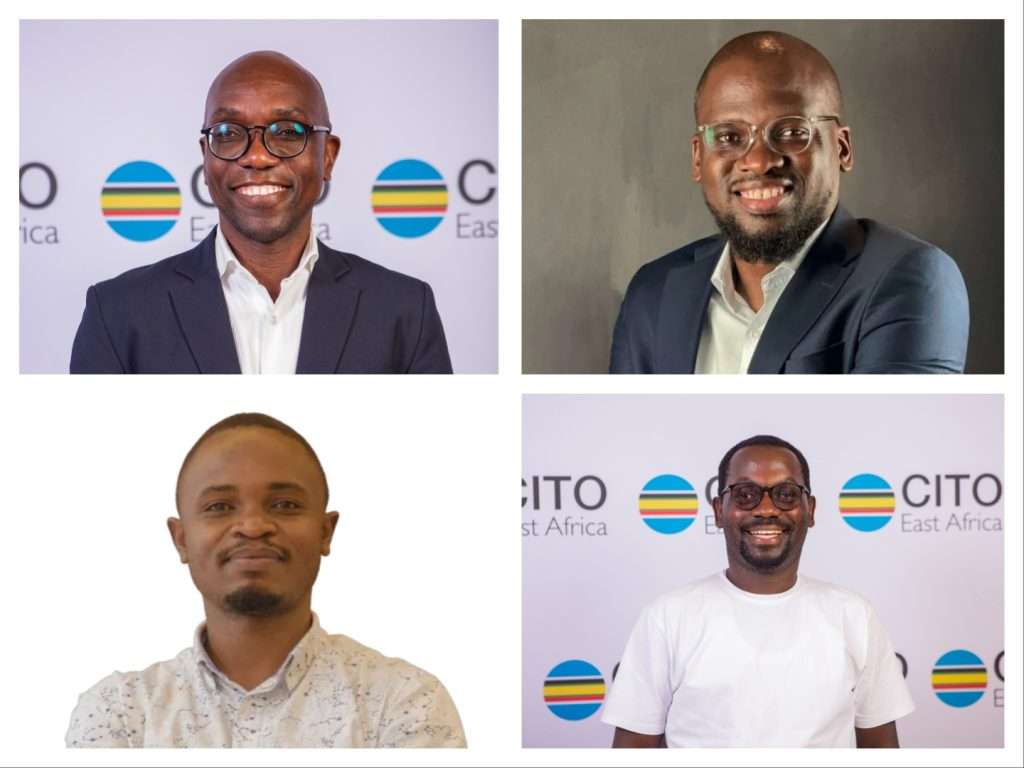
As more organisations commit to locally built technology, the focus is turning to execution, sustainability and scale. IT leaders Evans Ngala of Express Shipping & Logistics East Africa, Paul Mandele of Smart Foundry, Russell Akuom of Nation Media Group and Tadeo Kyeyune of Tugende reflect on the realities of building in East Africa, from infrastructure gaps and talent development to open-source tools, partnerships and the long-term vision for homegrown tech.
The IT executives acknowledge that making the decision whether to build internally, buy from the local market, or import solutions, is one that requires careful consideration.
For Tadeo, who has led his company in developing several products internally, there is always a clear path to success, a pyramid that perfectly balances mindset, skillset, and toolset.
“Getting these three right is always a big challenge for CTOs,” he notes. “Mindset means the team, including management, is convinced that the project is feasible; skillset refers to the right talent for the task; while toolset implies availability of the suitable infrastructure and technologies that will deliver the project,” he says.
The challenges
The region’s technology chiefs differ on the form that strategic decisions, innovation ecosystem, and future goals should take. However, they are united in citing infrastructure limitations that slow down their efforts in East Africa.
At the top of their list of key challenges are irregular power supply, poor internet connectivity, and low-capacity data centres.
At Tugende, for instance, Tadeo says the company, which hosts locally, sometimes has to shift to relatively expensive cloud hosting to ensure continuity, reliability, and data safety.
This, he clarifies, is because it is difficult to find tier III and IV data centres that guarantee the same level of security.
The IT heads have also flagged the rare cases when connectivity disappears across the region, “for reasons beyond the control of service providers”, and the disruptions that businesses sometimes suffer in East Africa during electoral periods among their challenges.
“In all, the negative impact of infrastructure limitations is reduced when firms rely on homegrown technology because there is a range of readily available tools,” Evans says.
Open source and skills
The unspoken advantage that the region enjoys in its push towards homegrown tech is the presence of many open-source tools that are essential in the process.
“The open-source tools continue to strengthen what we build locally, giving us the flexibility to innovate quickly, scale affordably, and avoid the prohibitive licensing costs that come with proprietary software,” he says.
The executives, however, maintain that safety and security should supersede other considerations when using open-source tools. As an ICT manager who oversees operations like cargo consolidation and freight tracking, for instance, Evans says he normally steers clear of such tools whenever possible.
Training and opportunity
The executives see an alternative in the local talent pool, the strong training institutions, and the international partnerships that are helping to raise the region’s innovation profile.
While they acknowledge that skills such as hardware development are still uncommon in East Africa due to the significant investments needed in infrastructure, they note that other vital expertise, like software engineering, data engineering, and data security, is already top-notch in the region.
“The universities in the region are playing key roles in providing theoretical grounding, the boot camps are giving practical skills, while project-based exposure and informal training paths are helping to produce the most resilient problem solvers,” says Tadeo.
Evans concurs: “The diversity of the locally available talent is amazing, and I believe that you can get any skill within East Africa if you scope well on what you need.”
He adds that training and mentorship programmes should be focused on scaling up the available local talent pool.
For young people looking forward to future careers in IT, Russell advises them to identify what they want to become first, then go for what works for them.
“Some skills will come from the training institutions, others from boot camps, and others from self-learning.”
The costs of local production
In terms of cost and sustainability, the IT leaders shared that building solutions in house takes longer at the start, but pays off over time.
“The in-house solutions come with upfront costs in the form of talent and patience, but they give organisations control and independence from external vendors. On the other hand, funding, especially from external sources, accelerates development, while sustainability lies in making systems lean enough to run at low cost,” Tadeo explains.
Local successes
As Tadeo explains, homegrown technologies do not operate in a vacuum. He explains that once the fire of innovation is lit internally, several local and international partnerships emerge to elevate the resulting solutions to the next level.
This mostly speaks to the integration of their systems with third parties like mobile network operators and local financial institutions.
“Local partnerships are particularly critical, giving us reach and reliability that we could not have achieved alone. Our integrations with mobile network operators and payment providers, for instance, allowed us to embed mobile money and USSD directly into our systems, which is essential for our clients,” he says.
These champions of homegrown tech share a run-through of the impetus behind their key innovations and visions for the products.
“We have highly talented teams, composed of fewer than percent of expats, who are based close to our clients across Kenya, Uganda, and Zimbabwe,” James says.“We understand the operating context of our clients, speak their languages, and understand their regulatory nuances. Having such a deep understanding and relatability allows us to understand needs and tailor our solutions appropriately. We don’t bring a stock solution, but instead problem-solve together with our clients.”
At Tugende, where the key product is asset financing, their mostly underbanked or unbanked clients lack the formal credit histories that fit the Western-style credit scoring solutions.
The company opted to build its own systems to evaluate clients based on alternative data such as community references, repayment behaviour, and real-time field insights.
The tools are built to work offline and only sync when a connection is available in a region known for its patchy internet connectivity.
Tadeo says the long-term vision is for the system to move beyond solving a single financing challenge to becoming a regional platform for inclusive finance.
“Today we finance motorcycles and other assets, but the same technology can support a broader range of livelihoods. We want to make it possible for people across East Africa to access financing, manage repayments, and build credit histories all in one place,” he says.
Russell's faith in home-growth tech has a backstory. He was working in the banking industry when he realised from the long queues on paydays that most customers were unable to use the mobile platform that favoured smartphone owners.
Most of these customers owned feature phones that were also shared among many other users.
“The issue was that once the bank had registered the SIM card in the name of one person, any other user would have to come to the branch for verification,” he says.
He led his team in developing a solution that differentiated the feature phone users by using the SSD signals to track their locations.
“My long-term vision for it was that it would become a top financial empowerment tool in Africa, where 250 million people could still be excluded from the formal financial services by 2050,” says Russell.
Evans says he prefers to keep most of the details of ESL’s technical solutions under wraps, saying some of the home-built solutions at the company are still in progress, but offers an overview of the challenges that need to be addressed.
“Success in the journey to homegrown tech lies with organisations that take their time to understand the solution to be developed, embrace change management, and are prepared to retain corporate knowledge and expertise of both the development team and solution users,” he says.
Missing links
Overall, these executives view the East African market as a bastion of homegrown tech but warn of a few links still missing in the ecosystem.
The relatively low internet penetration rate and smartphone access are cited as the major gaps. They also point out that the wider ecosystem still lacks long-term capital, infrastructure, and stronger academia industry linkages.
As a result, the region is teeming with talent, but the pool remains underutilised in the absence of long-term funding.
Worse still, infrastructure also lags, from reliable data centres to affordable internet, which they note raises costs and slows growth.
In the end, the CTOs have opted to shrug off these barriers, saying they in no way undermine their faith in the transition that is sure to boost the region’s competitiveness in the future.
They know that locally built systems create jobs, strengthen supply chains, and keep value within East Africa.
“Homegrown tech will transform East Africa from being a consumer of imported systems to a producer of solutions,” Tadeo says, adding that the local solutions also raise the standard of what it means to compete globally when local businesses stop adapting to tools designed for someone else’s problems.
“In the long run, homegrown tech will change how the world sees East Africa, not just as a market to sell into, but as a hub of both ideas and platforms that can scale worldwide.”