
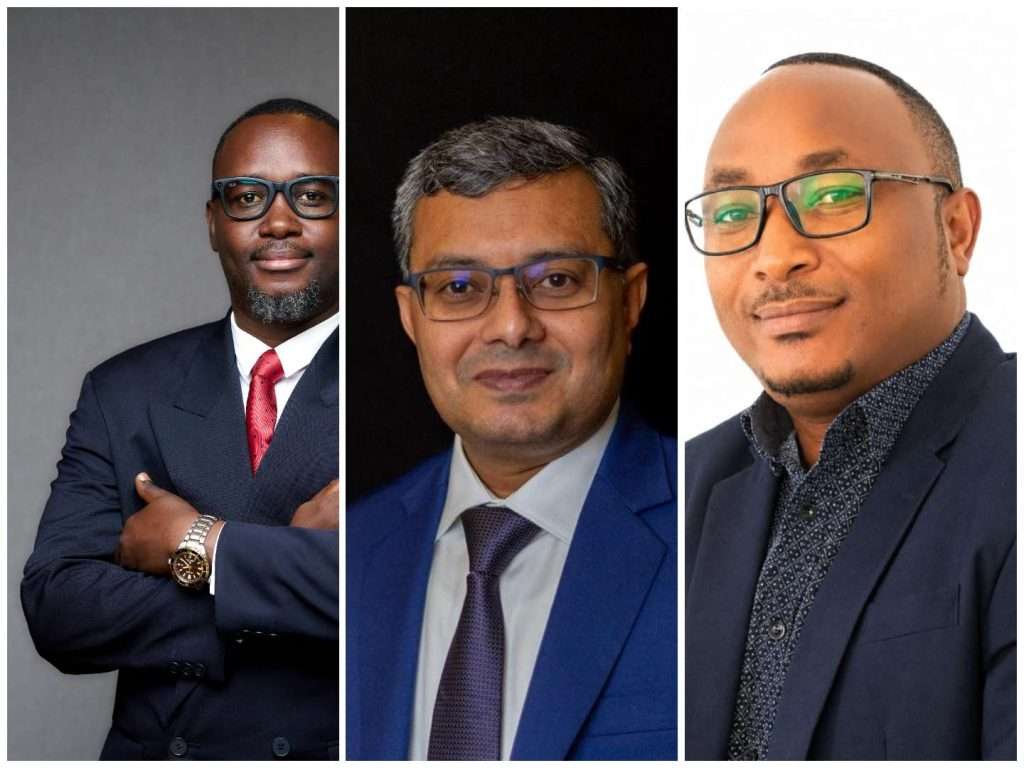
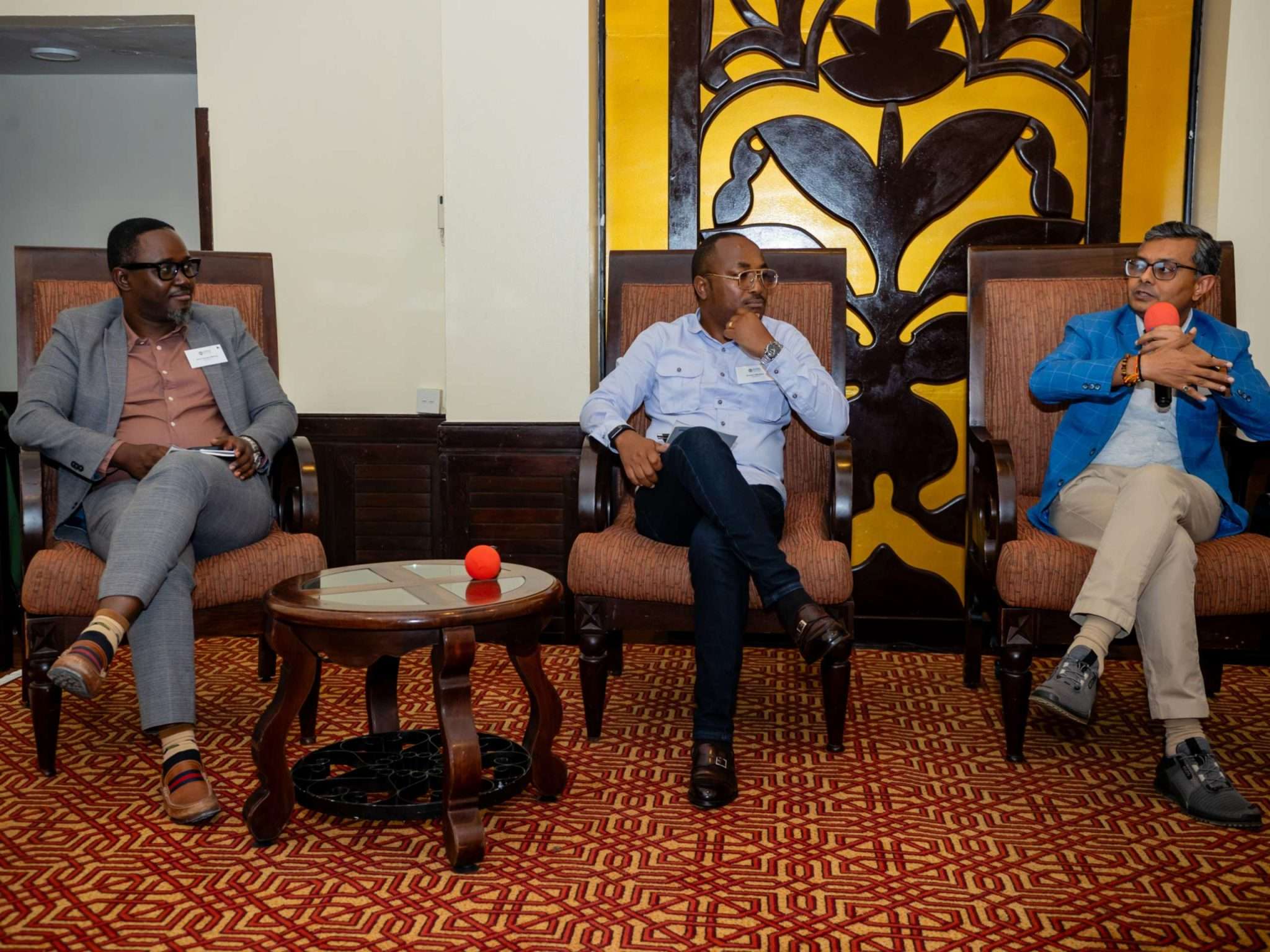
Artificial intelligence is rapidly entering business conversations, but fast adoption does not automatically translate into better decisions or stronger results. At the CIO of the Future Summit in Tanzania, Rohit Thaker, CTO of TEAGTL, Godwin Mbekelu, head of IT at Sportpesa and Amiri Sultani Mziray, head of ICT at I&M Bank Tanzania discussed how organisations can effectively adopt AI as a strategic enabler of business.
During the CIO of the future summit in Dar es Salaam, TEAGTL’s CTO Rohit Thaker told participants that the world is currently in the middle of an AI hype cycle. The first phase in a hype cycle is marked by excitement that comes with the discovery of new technology. What follows is a period of mass adoption of the new technology before the initial excitement dies down. In the next phases the new technology gets improvements and finally reaches a plateau where it becomes the new normal.
According to Rohit, AI is currently still in the middle stages of the hype cycle.
“Everyone is talking about this and that, and new models are being discussed. However, we are yet to see any concrete evidence of output from these models. There are some limited fields like image processing, model processing, and voice processing. However, in terms of mass business decision making, We are yet to see any evidence-backed output. We are not looking at any solid model. Everyone is talking about possibilities. So this is a classic signature of the middle of the hype cycle.”
However, he warned against waiting for evidence-based output and urged businesses to take a leap of faith
“Though we know it’s a hype cycle and we do not know what it will produce, in today’s time you cannot remain out of the game for too long or you will be out of business.”
He further advised that taking a step does not have to involve large investments in tools if the purpose is not clear. Instead, he urged tech leaders to take a measured approach to . to identify a problem using the data already available, and testing a limited solution.
The data question
For Amiri Sultani Mziray, head of ICT, I&M Bank Tanzania, data is what makes the difference between an organisation that gets a good return on investment from AI and one that doesn’t.
“AI is a multiplier. It multiplies what you already have. So, for organisations that have good fundamentals; good structure, clean, usable, actionable data will be the ones that can model useful AI data that can help improve what they are doing.”
On the contrary, organisations with poor quality data will most likely not achieve efficiency and would take time to catch up. As a result, Amir advised that businesses that want to start using AI must start from the foundations.
“I think most of the organisations, especially in third-party countries, are in different phases of AI maturity, and it's very important for each organization to correctly assess what is the maturity level they are in when it comes to AI, and then to adapt whatever models that they want to adapt depending on their maturity level.”
Accountability stays human
Like Rohit and Amiri, Sportpesa head of IT Godwin Mbekelu supported Rohit and Amiri’s sentiments. He also urged businesses to avoid using AI to replace the human function adding that AI can only be used to fast track decisions not make them.
“Instead of running code or analysis for ten hours, you can use AI to do the analysis for two minutes, then make a decision. AI will help us to fast track the decision, but we remain accountable to make sure that the outcome makes sense to the business.”
He further added that most businesses do not struggle adopting AI to their business processes but have a challenge with governance..
“That is the part where, as CIOs, we put a very good governance policy, to govern our processes to make sure that we don't overlook that part of human human intervention.”