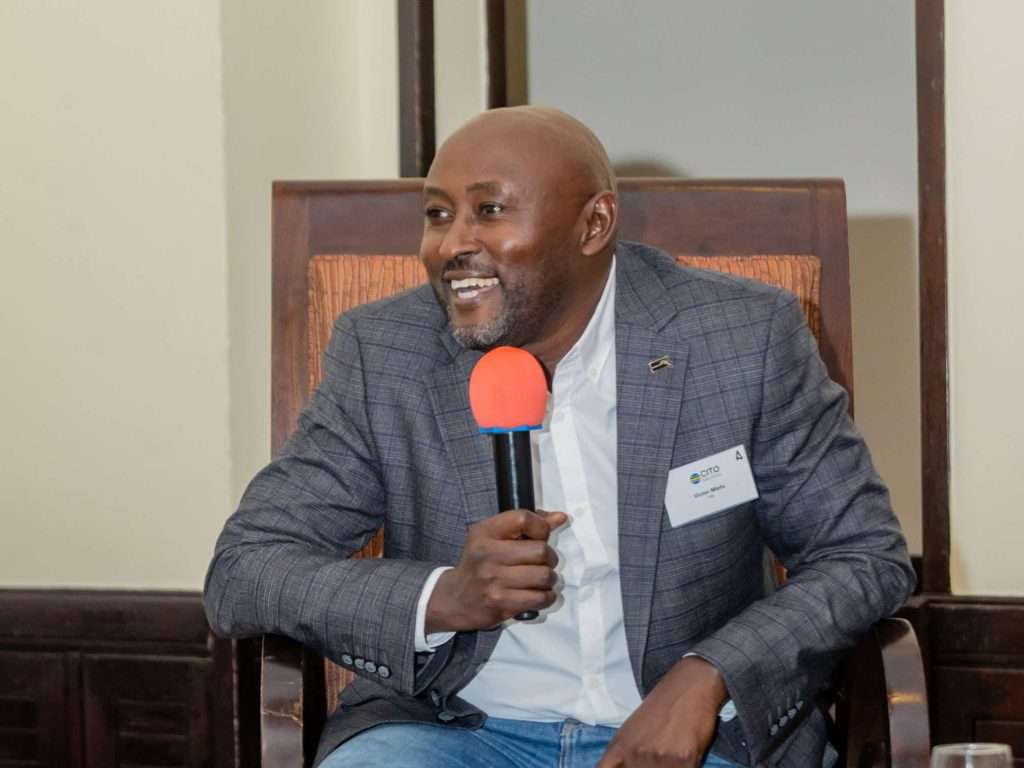
At the August CIO of the Future Summit in Tanzania, Yas Tanzania IT director Victor Mtefu narrated how he navigated the high-stakes migration from legacy systems during the telco’s rebrand from Tigo. He also shared why revamping core tech relies far more on strategy and governance than on the technology alone.
In its more than three decades of existence, Yas Tanzania has gone through multiple changes of ownership and rebranding from its days as Mobitel to Tigo and now Yaz Tanzania. Victor Mtefu, the telco’s IT director, has lived through one such change of ownership. From his experience, every shift in ownership brings different targets, new structures, and fresh demands on internal systems.
Speaking at the CIO of the Future Summit in Dar es Salaam, Victor explained how frequent changes often resulted into a kind of tangled mess that makes transitions challenging as he learnt during one of the company’s migrations. In those early days, IT was treated largely as a background function that people rarely paid attention to until a major overhaul was needed.
“Sometimes the service is running, but you don't know exactly which server is actually producing the result. When you come to a point of upgrading and revamping, it is one hell of a job,” he said.
Despite the scale of the task, which involved revamping almost everything while managing a massive workload, Victor and his team navigated the transition successfully. The experience also became a source of important lessons about legacy migrations which he freely shared with participants of the summit. Managed well, he noted, the whole journey can actually turn out to be fun.
Creating a plan
The first step in a migration is taking inventory to get an idea of what needs to be achieved.
“Management must decide where we are, where we want to go and what the deciding factor is,” he said.
In his experience, the business factor is almost always the deciding factor.
“Business can be split into compliance, customer and revenue. If the first two are missing, we won't get the third one,” he explained.
Once those priorities are clear, Victor advised that teams must decide how to handle each system within the migration framework. Rather than defaulting to a simple "lift and shift," leaders must evaluate whether to keep a system as it is, do some minor tweaking, re-model the technology, or retire it entirely.
He also advised that leaders planning to perform system migrations must ensure they have strong teams. He likened the process to throwing a party where plans must be made and everyone assigned roles to ensure everything goes smoothly.
“We need to sit down and decide how we're going to do it, when we're going to do it, and make sure everybody is aligned and happy,” he said.
He also noted that senior management must be actively engaged throughout the process.
“It’s not all about technology. You need governance, planning, and a great team to see it through,” Victor said.