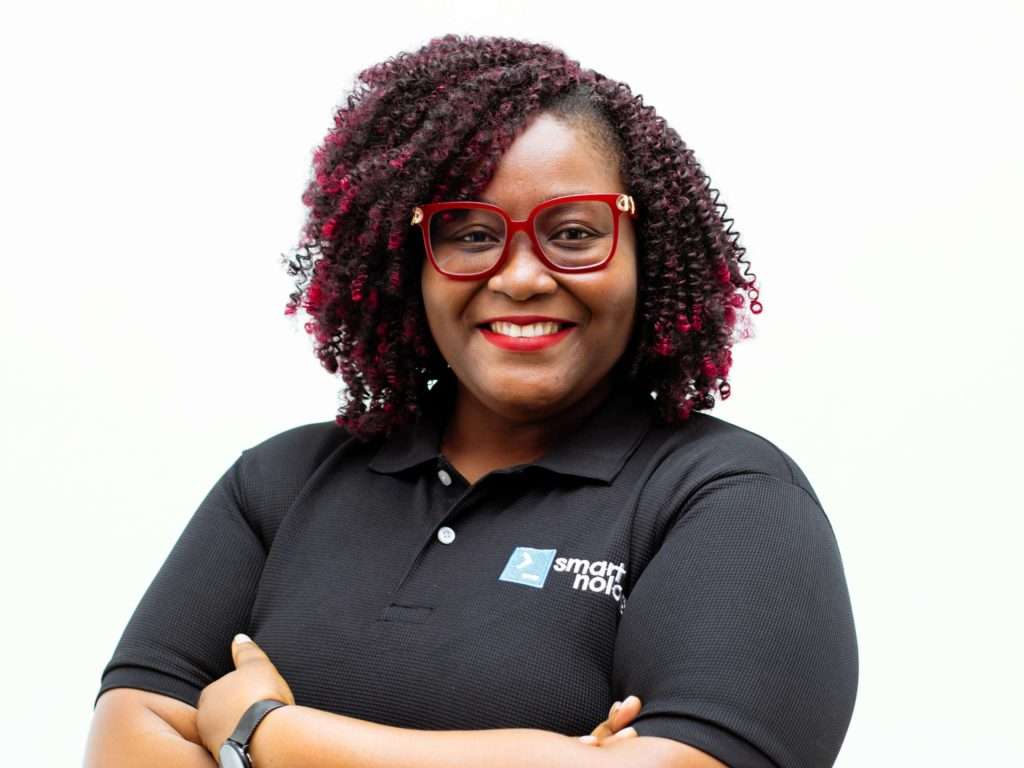
Hawa Mwakatundu didn’t just rise through the tech ranks; she rewired them. Starting on the customer side of the screen, she now leads Tanzania’s Smart Africa Group’s technology subsidiary as Smartnology’s CTO. She reflects on challenging boardroom assumptions and building the company’s entire IT infrastructure from scratch.
Hawa Mwakatundu didn’t start out in tech. She started out with people. Her journey began on the other end of the service line, helping customers troubleshoot issues and chasing solutions that actually worked.
“I started as a customer and later worked in customer service,” she says. “That experience really shaped how I think. Even now, I always try to look at problems through the lens of the customer.”
Fast forward to today, and Hawa is the CTO at Smartnology, building the very systems she once wished existed.
Before she ever thought about building systems, Hawa was frustrated by them. As a customer, she found herself constantly chasing unresolved issues and poorly coordinated service. “I kept thinking, why does it have to be this hard to get help?” she recalls. That frustration quickly turned into curiosity, and eventually action.
She joined a telecom company as a customer service agent, determined to understand what was happening behind the scenes. “I wanted to see how things worked, or rather, why they didn’t,” she says. What started as a search for better answers turned into the first step in a tech career that would eventually have her designing the very systems she once struggled with.
From that early frontline empathy, she’s evolved into a powerhouse tech leader, but she hasn’t dropped the habit of asking, how will this feel for the user? Whether it is rolling out new infrastructure, digitising HR and finance, or introducing real-time backups, Hawa’s approach has always been part strategy, part heart and part nerd. And yes, she still believes the strongest IT policies are the ones people actually understand.
Stepping on toes
She proudly mentions her biggest flex as strengthening the IT function at Smartnology from how she found it. When she arrived, the team members were working autonomously with no policies, no clear frameworks and not even basic documentation. “There was nothing,” she says with a smile. “Just vibes and an internet connection.” Today, thanks to her, there’s structured tech governance, automated backups – and teams that know better than to use 'password123'.
It wasn’t a walk in the park, though. Introducing new processes often meant stepping on some toes. Departments that were used to handwritten records and unmonitored systems weren’t exactly lining up to celebrate change. “Sometimes I’m seen as the enemy because tech brings visibility and accountability,” she says.
But instead of pushing back, she leant in; patiently educating teams, listening to their concerns and making the case for smarter solutions and processes. “Once people understood that the tech made their work easier, not harder, it got easier to get buy-in,” she adds.
Her leadership style is hands-on and grounded. She is the kind of CTO who will fix something herself and then use it as a teaching moment for the team. “When I solve a problem, I bring my people in so we can learn together,” she says. “That way the next time, they can solve it themselves. I want them to grow.”
And while her work spans infrastructure, software, networking and cybersecurity, she admits that sometimes the hardest firewall to crack is the boardroom. Being young and female in a male-dominated industry has come with its share of side-eyes and silent doubts.
“Sometimes you walk into a room and you can feel the assumptions before you even speak,” she says. Still, she’s learnt to let her results do the talking, and she knows the systems she’s built speak volumes.
One of her proudest contributions is bringing trendsetting solutions to the forefront. She introduced systems that helped organisations automate their operations and become benchmarks in their industries. “Before, organisations preferred investing in independent systems to serve different departments, having a system for finance and a separate one for HR. Now they want to have ERPs that centralise every part of the organisation, allowing them to make informative decisions,” she says, grinning.
But if there’s one mission that fires her up even more than systems and servers, it is getting more women into tech. Hawa wants young women to see IT not as some mysterious male-only club, but as a space for creativity, impact and leadership. “Tech is not just for guys in hoodies in dark rooms,” she says. “It’s fun. It’s powerful. You can wear heels and still run a network.”
She is big on mentoring, breaking down jargon, and showing girls that they don’t need to code in their sleep to belong in tech. “You can love fashion and still build firewalls,” she says. “We just need to show the next generation that tech can look like them too.”
Despite her big role, Hawa has never stopped thinking about the people on the other side of the system. Or as she puts it, “At the end of the day, I just want to build tech that actually makes an impact on people’s lives. If it doesn’t make someone’s life easier, what’s the point? We’re not coding for decoration.”