
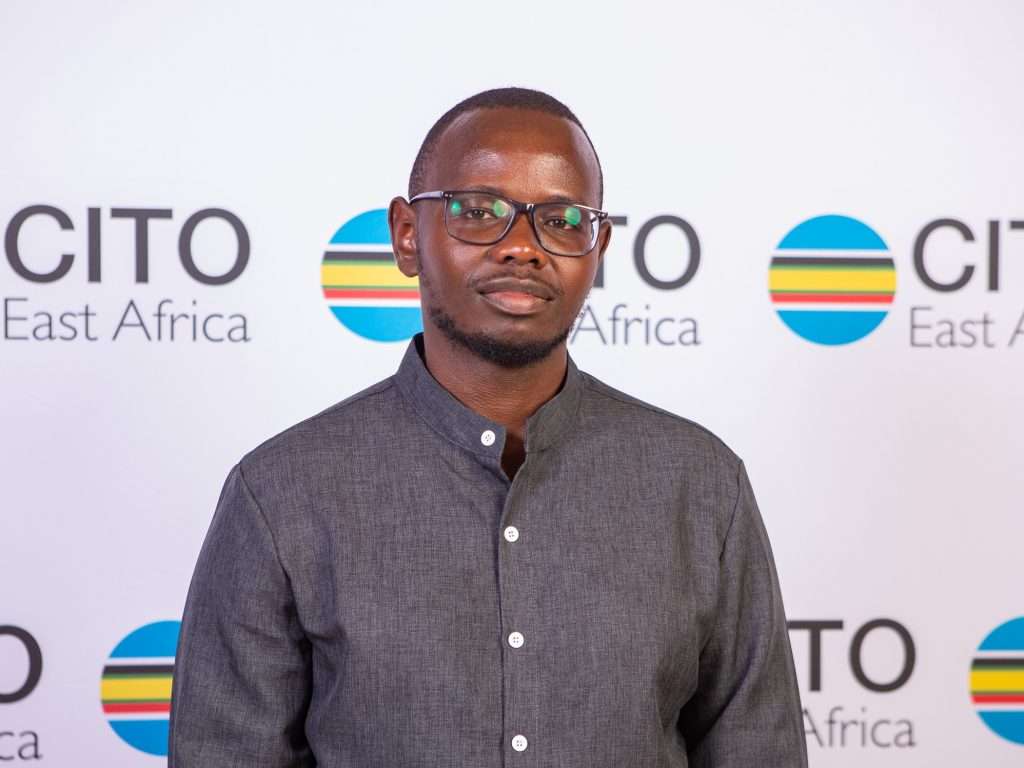
Alexander Gachihi, technology director at SHOFCO, takes a calm, thoughtful approach to his work, dealing with problems as they come and learning from them. He focuses on helping people do their jobs well and making sure things keep running, even when it gets difficult.
Alexander Gachihi has a firm rule about Sundays; they are strictly for rest, no meetings and no work emails. With a demanding weekday schedule, Sundays are reserved for being fully present with family and resetting for the week ahead.
“Saturday I’m usually doing a long run or catching up with friends. Sunday is for slowing down, sometimes that means doing absolutely nothing. No phone, no reading, just rest,” he says.
As technology director at SHOFCO, Alexander leads the team responsible for building and supporting the systems that enable the organisation’s operations and programmes. SHOFCO mobilises grassroots networks across Kenya through initiatives in health, education, water and sanitation, livelihoods, community organising and schools, reaching more than 2.4 million people living within informal settlements. His role focuses on ensuring technology strengthens these programmes and supports the scale, reliability and data-driven decision-making needed to serve communities effectively.
Tech leadership in complexity
In these conditions, technology cannot be theoretical.
“It has to work in the real world,” he says. “Remote areas, low bandwidth, limited infrastructure, and very high operational pressure. If the systems fail, the programmes slow down and that affects real people.”
Alexander describes his work environment with an unexpected metaphor.
“I’d say it’s like a slice-of-life Korean drama,” he says. “There are moments where everything clicks: the systems are running smoothly, teams are delivering, and you see the impact of the work. Then there are difficult moments: outages, fibre cuts, process incidents, where suddenly the entire team is mobilised to stabilise operations. And then there are the flat moments: long stretches where you are quietly building, improving and preparing for scale. No big wins, no big losses, just things going on.”
According to Alexander, the work demands resilience, adaptability and constant learning. Technology leaders, he says, often face two types of challenges: technical failures and human dynamics.
Technical failures are inevitable in complex systems. What matters most is how teams respond.
He recalls a high-pressure moment when a digital survey form used by more than 100 field facilitators suddenly stopped working. With each facilitator expected to complete around ten surveys a day, the impact was immediate, and it took a couple of days to identify the issue and restore operations.
“In moments like that, people already feel the weight of the mistake,” Alexander says. “My role is not to add pressure, but to help the team stay calm, fix the issue, understand what happened and make sure we do better next time.”
The harder challenge
Beyond technical challenges, Alexander says one of the biggest risks in technology delivery is misalignment across teams.
“Most failures in technology aren’t purely technical, they come from gaps in communication, ownership or expectations,” he says. “A big part of my role is ensuring teams are aligned early, before small issues become major blockers.”
As much as Alexander enjoys being in the tech field, he didn’t always see himself in this space. He initially wanted to be a lawyer, then switched to analytical chemistry in high school. Just before university, he spoke to a friend studying software engineering who told him it could get him a job at Safaricom. It was 2010, and Safaricom was the company everyone wanted to join.
"I looked at my choices and saw which courses would lead me to work there. That's how I ended up pursuing computer science," he says.
Since then, his career has remained closely connected to organisations working in complex development environments, contexts that are resource-constrained and that require heavy localisation. His current role at SHOFCO means translating organisational needs into technology and processes that can scale.
His daily routine reflects the same structure and consistency.
Alexander has long been a regular gym-goer, but he took up running about a year ago and quickly made it part of his routine. These days, it’s not unusual for him to complete a 10-kilometre run before the workday begins.
For him, training serves more than just fitness.
“The gym helps regulate my body and energy levels, and running builds endurance. Both help me stay balanced and focused through demanding work.”