
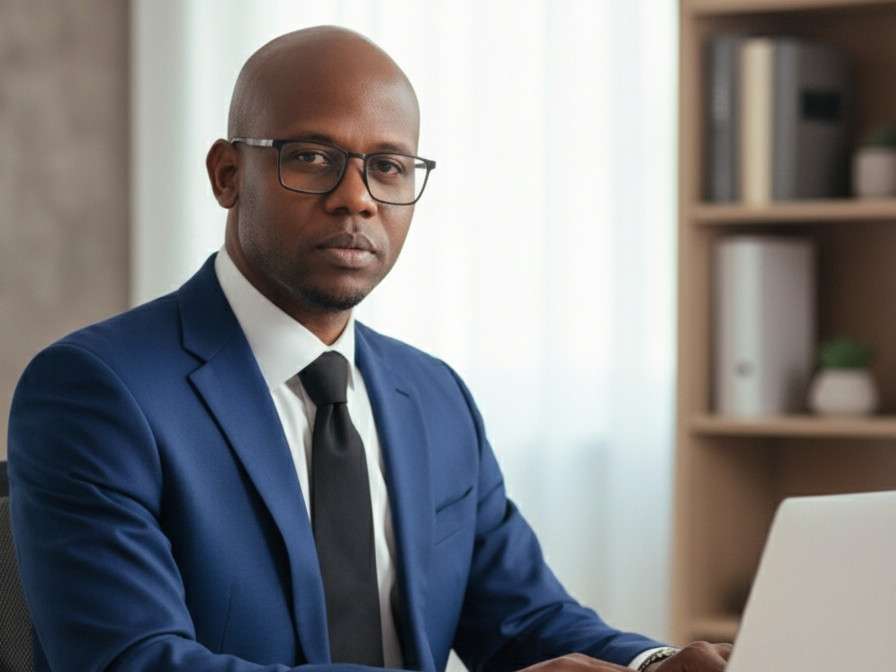
Raymond Machary, principal ICT officer at Ocean Road Cancer Institute, sees technology as a lever capable of transforming lives. Over the years, he has pioneered digital health systems in Tanzania and mentored young IT professionals. Central to his work is the belief that true innovation begins with people.
Raymond Machary’s path in IT has not followed the usual route. His degree in ICT and management combined technical training with leadership and business studies.
He believes his journey in IT differs from that of many others because the goal of his academic training was to prepare him to become a leader in the IT industry, rather than just a programmer or network specialist.
“We were taught to manage people and resources, and to understand the broader picture of organisational growth,” he says.
This philosophy shaped his next steps. Raymond went on to pursue a master's in IT and management, followed by another in project planning and management, and later complemented these with a Master's in finance and investment. This combination of technical, project management and financial expertise allowed him to ensure that resources are allocated while making sure digital projects delivered the best results.
“The goal of IT, economic, and financial investment skills is crucial to understand where the money is being spent, and whether it can be used elsewhere to create even greater impact,” he notes.
Building impact
Currently finalising his doctorate in business administration, Raymond blends IT, management, economic and investment insights to help shape national digital transformation plans.
At the Ocean Road Cancer Institute, Raymond leads a team focusing on IT strategy. But his influence goes far beyond the workplace. As the chairman and executive director of the Bethsaida Education Foundation, an NGO dedicated to supporting orphaned girls' education in Tanzania, he works to mobilise resources and opportunities.
He currently supports more than 130 orphaned girls across the country, many of whom are pursuing their studies through full scholarships. For Raymond, these efforts are not separate from his professional life; they are part of the same mission. Through his project, over 700 children in Tanzania have benefited directly, and more than 2,000 families have experienced the ripple effect of his work.
“Technology and education are connected,” he explains. “You can't build efficient systems if people don't have the skills to use them. That's why I invest in both.”
His human-centred philosophy was tested during his time at the Jakaya Kikwete Cardiac Institute, where he led the rollout of a complex health management information system while ensuring that hospital operations continued seamlessly. The project required precise planning, strong coordination across departments, and a clear understanding of how technology integrates with daily clinical practice.
“In my life, I have learned the hard way how complex it is to manage a project and remain ethical, and if possible, to risk everything for what is right,” he recalls. “In most developing countries over 80 percent of invested projects end up failing. It really disappoints me much when taxpayer money is wasted. I believe it is possible for the project to be implemented successfully.”
For Raymond, the success of that software solution goes beyond the technical achievement. It demonstrates that digital transformation in healthcare is about people's involvement. By aligning technology with human capability, he proved that innovation can enhance service delivery without disrupting the vital rhythm of patient care.
Leading people
Balancing such a wide array of responsibilities requires a distinct approach to guidance, one that challenges conventional practices. Raymond smiles and shares a principle that has guided his leadership.
“The traditional idea of 'management by walking around' proved to be one of the least effective models,” he says.
He believes in a people-first approach as a democratic type of leadership. Rather than micromanaging, he focuses on creating frameworks that empower his teams to operate independently, stepping in only when guidance or oversight is truly needed.
“We put procedures in place that can function on their own. I check in periodically, review progress, and ensure our goals stay aligned but I don't need to manage every detail,” he explains.
Discipline and reflection, he adds, are equally important in his personal life. To maintain balance, Raymond stays physically active, walking regularly, joining marathons, and dancing on occasion. He believes that keeping both the mind and body energised is essential for clarity, creativity, and effective leadership.
“Leadership requires reflection,” he says. “You can't make sound decisions if you're always moving without stopping to think. Taking time to reflect helps you see the bigger picture and make better choices.”
This reflective leadership naturally extends into how technology shapes his management style, which he firmly grounds in data and innovation.
“Technology helps reveal patterns we might overlook,” he says. “Data doesn't replace judgment; it supports it. That's how I lead, by combining human insight with digital intelligence.”
This digital intelligence directly connects to his extensive work with students and his foundation.
“My involvement with students and beneficiaries isn't separate from my job, it's part of it,” he says. “Seeing how technology and education change lives remind me that innovation should always serve people first. For me, leadership, technology and education are inseparable, each reinforcing his belief that progress must always begin with people. When I see a child from a rural area using digital learning tools, it reminds me why I do what I do as a software engineer, to create simple solutions for all.”
Raymond also harnesses technology personally, incorporating artificial intelligence into his workflow to automate processes, analyse data and build dashboards. He is comfortable working with a wide range of digital tools. That reflects both his technical expertise and his belief that technology should strengthen people’s ability to do their work.
“Honestly, AI is my assistant. With the right skills, you can achieve almost anything. It allows me to work across platforms and combine automation with innovation,” Raymond says.
Shared vision
Addressing concerns regarding whether the use of AI could be considered unethical, he responds with calm assurance.
“AI itself isn't unethical, it's about how people choose to use it,” he explains. “Like any tool, it can create value or cause harm depending on intent and oversight. What matters is ensuring transparency, fairness, and accountability in every system we design.”
He goes on to add that when used responsibly, AI can be a powerful force for progress.
“Applied thoughtfully, AI helps reduce human error, strengthens decision-making, and expands access to services from healthcare to education. The goal should always be to make technology work for people, not replace them,” he states.
Raymond also encourages that students be trained to use AI as a tool for academic growth. He believes that equipping young people with the right digital skills will help them use technology to think critically, innovate, and solve real-world challenges.
Expounding on the role of the CITO community, he speaks with conviction about the importance of collaboration across the continent.
“Africa must learn to speak the same language. That's the only way we can truly transform our nations by sharing experiences, challenges and solutions among us,” he says.
He says the community has become an important link between experts across Africa. It has also created more opportunities to share knowledge and learn from one another.
Through such networks, professionals are able to learn from one another and build homegrown strategies tailored to the continent's realities.
“Transformation doesn't come from isolation, it comes from collaboration,” Raymond concludes. “When African experts unite under a shared vision, we stop following and start leading.”