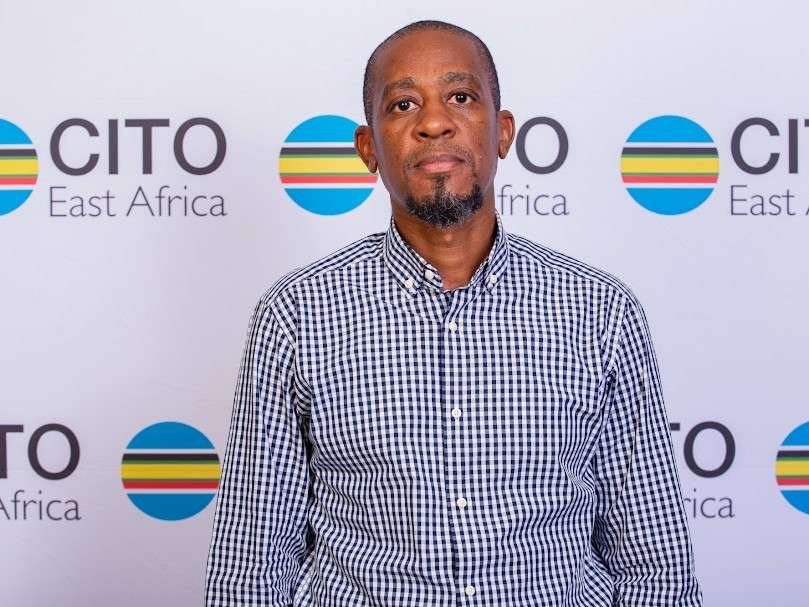
Very few people, if any, would describe themselves as “someone who does not like enjoying life.” Yet this is the statement Dennis Katusya picks as a way to introduce himself.
At first, the statement paints a picture of a strict, uneventful, perhaps even boring lifestyle. However, as the conversation with Dennis Katusya progresses, a different picture emerges. One of a man who lives a well-curated life of balance, discipline, and intentionality in creating value for those around him. Ten years ago, Dennis went out two or three times a week to grab a coffee. However, things changed when his children came along.
“I realised that my kids are growing and will leave soon. Since they came into my life ten years ago, I have purposed to be present,” he reveals.
To keep up with his decision, Dennis strives to be home every Friday evening by five in time for his movie date with the children. His commitment to his family extends beyond his children and includes his parents.
“I love going to Ukambani a lot to see my parents on random weekends,” he says.
The making of an IT leader
Dennis’s desire to see to the well-being of those around him and to give himself to others extends even to his career. In his role as the group technology delivery manager at Mitchell Cotts Group, Dennis is happiest when technology serves both internal and external customers to their satisfaction, a philosophy that has guided much of his career.
“I believe that my value is in making sure that my customers are happy,” he says.
While he has, by and large, managed to achieve his goals in the course of his career, the journey has not been without some low moments drawing from errors. One of the most memorable came early on in his career while he was working at a bank.
“We once made a mistake documenting transactions when building a database for the bank transactions. It was supposed to be simple but a small error affected all the transactions for that day,” Dennis recalls.
Almost immediately, he realised the gravity of the error and took responsibility, letting senior leadership know what had transpired. Nearly all the staff had to be recalled to hand in their records once again so that the error could be corrected. At the time, Dennis was very sure that he had lost his job. Fortunately for him, his seniors handled the situation well, and his job was spared. Nevertheless, the situation left a lasting impact on him.
“I have not made any other mistake but that was big. I actually took a three-week leave afterward,” he recalls.
Dennis, however, did not let the moment derail him and chose to learn from his mistake. In hindsight, the mistake occurred because he and his team had overlooked an important process.
“My biggest lesson was to follow the set processes and procedures and to avoid shortcuts,” he reflects.
Pursuing growth
Even though Dennis began his career in operations, he moved into the IT department six months into his tenure with the bank. This marked the beginning of his career in IT. Dennis joined Mwalimu Sacco in June 2015, a move that thrust him into management for the first time.
“Mwalimu is where I learnt leadership in IT. My chief IT manager allowed me to get into spaces of learning and discovering and I grew a lot while there. God bless you, Sammy,” he says.
While Dennis was grateful for his career journey and the lessons he had picked along the way, he still harboured a silent desire.
"I had always wanted to work in a company that deals with international supply chains and the aviation industry," he recalls.
His desire was met in 2021 when he got an opportunity to join Mitchell Cotts Group and he seized it "without hesitation".
In hindsight, Dennis is grateful he took the chance.
"It's been more than four years of work fulfilment with great people, a great boss and a great organisation," he says.
The lessons Dennis picked from Mwalimu, coupled with his experience, have helped shape his work philosophy, one that has guides his leadership in the areas he has worked.
“I believe IT is a strategic enabler and must always be aligned with the business,” he reveals.
Dennis strongly believes that for businesses to grow, they must employ technology. However, he warns against pushing IT projects independent of the business because, according to him, whenever IT projects take the lead, adoption is always slower. He further advises companies to have steering committees anytime they are launching an IT project to ensure that such projects first and foremost serve a business need and are led by the business.
On AI and cybersecurity
Having been in the industry for as long as he has, Dennis is familiar with the trends in the industry and is more than willing to lend his voice to the AI debate and emerging issues in cybersecurity. For starters, Dennis views AI as a mixed blessing, having used it to stay up to date with emerging issues in cybersecurity.
“It’s monumental to use AI in cybersecurity right now in terms of understanding the risk landscape and staying ahead of the rest,” he notes
He, however, bemoans the fact that technology is evolving so fast, and a risk solved today might evolve into something else tomorrow.
From a general perspective, Dennis believes that the risks or benefits of AI depend on how individuals and organisations integrate AI into their work. For instance, while he maintains that AI has come to take over mundane tasks so that people can focus on more important things, he warns that AI has rendered some people jobless.
“For example, people can now programme without knowledge of code. This does not mean that AI has taken the jobs of programmers. It has only made their work easier so that they can focus on other things. However, they must stay ahead of AI,” he notes.
In short, Dennis believes that people must change their mindsets on AI.
“There will always be a human element first. For example, companies have now adopted robots in their customer care. A major question to ask is whether that interaction is human enough. There will always be human beings in the background doing a lot of coding,” he says.
Dennis thus advises people to find what else they can do and how they can use AI to be better at it.
Reflecting on the past
While Dennis has managed to stay abreast with key technological changes in the industry, every once in a while, he takes a trip down memory lane, especially to a time when transactions needed physical money as opposed to digital transactions that have become the norm today. Dennis also observes that phone calls reduce human interactions and argues that calls do not match an actual physical conversation and human connection.
Perhaps this is the reason why Dennis is very keen on separating work from his personal life. In fact, he avoids any side job that is IT-related. Recently, Dennis has begun watching movies other than the usual Friday movie night with his kids, an activity he discovered he enjoys. He is also a music lover with a preference for gospel music.
Owing to his desire to create value for his customers, Dennis aims to fully embrace digital transformation in his role and ensure that the company is continually meeting the needs of its customers. In the coming months, he also wants to capitalise on insights from data gathered to be able to create value for customers. Finally, he hopes to tighten the cyber security measures both for himself and the company to ensure safety online.
After more than a decade in the IT industry, Dennis is considering retirement soon. He desires to be a farmer, especially goat farming. He also has interests in IT consultancy and is currently running Impact 360 an initiative aimed at encouraging innovations to solve issues in rural areas.
“There are not many opportunities in urban areas now. So, we go to the rural areas and challenge young people to use technology to solve problems in their local areas instead of moving to the urban areas,” he explains.