
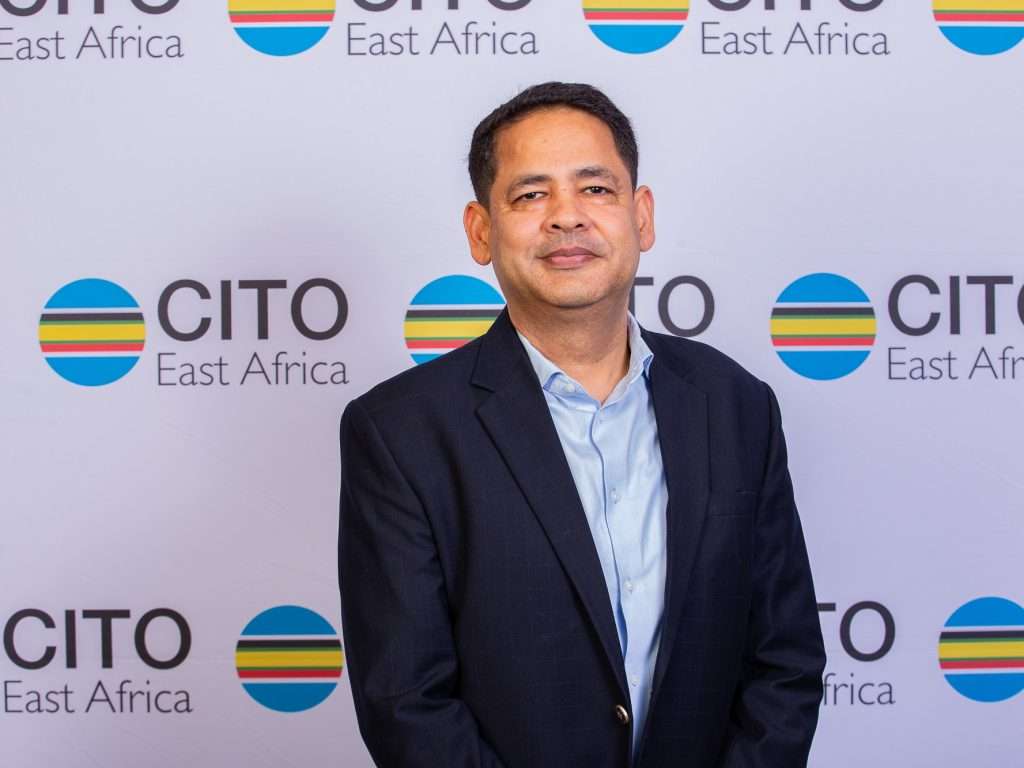
The quiet revolution in banking is already underway, according to insights shared by Mpesa Africa CTO Vinod Sharma on his blog titled “The Future of Digital Banking: Powerful Trends to Watch.” From instant loan approvals to real-time money transfers, digital systems are reshaping how financial services operate and how customers experience them.
Vinod noted that what once required a branch visit and a queue now happens in seconds on a screen. As the industry moves into 2026, Vinod argues, digital banking has shifted from a convenience to the very backbone of financial life.
Vinod framed the shift with a deliberate analogy.
“Think of it like electricity,” he wrote. “Once upon a time, it was new, exciting, even scary. Today, we don't even think about it; we just plug in. That's where digital banking is headed.”
He identified four forces driving the transformation: technology, new players, consumer behaviour and regulation. Of these, he gave particular attention to neo-banks, the app-only challengers that have no legacy systems, no branch networks and no tolerance for the three-day wait. Vinod is direct about what they represent.
Traditional banks treat your balance like a static number on a screen. Vinod tries to architect a world where your money is sentient. Through a ‘Council of SLM (small language models) Agents’, your capital now has a ‘nervous system’.
“It doesn't wait for you to move it; it senses inflation in real-time, feels the heartbeat of the stock market, and migrates itself across borders and asset classes before you even wake up. We aren’t building a bank; we are giving your wealth an instinct to survive. If traditional banks are like cargo ships, steady but slow, neo-banks are the speedboats. They zigzag quickly, test new waters, and force everyone else to pick up speed,” he wrote.
He is careful, however, to resist the zero-sum framing. The smartest institutions, Vinod argued in his blog, are not fighting neo-banks but partnering with them, building hybrid ecosystems where the reliability of established banking meets the agility of digital challengers.
On the consumer side, Vinod is equally clear about what has changed. Customers are not thinking about banks. They are thinking about paying bills, sending money and saving for their children’s future. What they expect from whichever platform delivers that is speed, personalisation and transparency.
“The winners will be banks that stop thinking like institutions and start thinking like platforms, blending into everyday life seamlessly,” he continued.
Vinod pointed to several organisations he believes are setting the benchmark: Revolut in the UK, Nu bank in Brazil, M-PESA in Africa and DBS in Singapore. What unites them, he argued, is not that they are doing digital, but that they are living digital.
His conclusion strips the conversation back to its essential argument. The industry is obsessed with 'Big AI' (LLMs), but that’s just another cargo ship in a digital ocean. Vinod is betting on the Atomic Agent.
“Why have one bank when you can have a thousand hyper-specialised SLMs living in your pocket? One for your 3 pm coffee habit, one for your daughter’s university fund and one for your Punjab-to-Nairobi trade liquidity. We are deconstructing the 'Bank' into millions of micro-intelligences. We don’t want to be your bank; we want to be the DNA of every transaction you ever make.”
“Digital banking isn’t about apps or APIs, it’s about life. The bank of the future will be less visible yet more present, less about transactions and more about experiences, less about keeping money safe and more about helping money work smarter,” he concluded.