
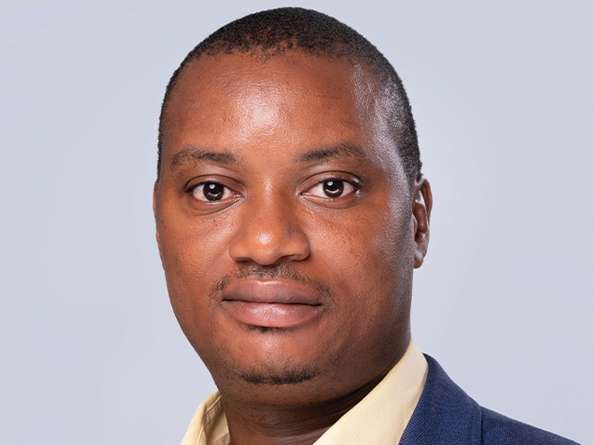
Richard Ssenono wants to build a digital legacy across borders. The head of information services at Makerere University’s Infectious Diseases Institute (IDI) is bridging the gap between health and tech and doing it on his own terms
Richard Ssenono has his mind set on data. He has a keen sense of how it powers decisions and gives institutions the intelligence they need to keep moving forward. At the Infectious Diseases Institute (IDI) in Uganda, where he serves as head of information services, he is charged with overseeing not just the tech backbone of one of the country’s foremost health organisations, but its digital future as well.
“Data drives almost all the things we do, be it the numbers, the financials, the synergies, the new innovations and the new insights. Data is one of my biggest passions because within the institute and even Africa, whoever now possesses data that makes sense is powerful. People are running away from wet labs to dry labs, and AI and machine learning are the order of the day. So, data and cybersecurity are some of the things that keep me awake at night,” he says.
Richard is equally driven by the need to secure data, especially as IDI scales into more than 90 districts and sets its sights on regional influence. He considers cybersecurity essential to protecting the institute’s expanding digital presence. This is part of his strategic vision for IDI.
“We operate in over 96 districts of the country, so we have a presence all over. I make sure almost all the different campuses and sites are connected and running. As we implement our regionalisation agenda, we want to see how we can remain upfront in terms of our cyber security practices as an institute. Of course, we must ensure the budget is robust enough to support us. The institute has a number of partners that support its infrastructure, so stakeholder management is also one of the key things I handle as an executive,” he says.
While many IT leaders begin their careers in technical roles, Richard’s path was not typical. His career at the institute began in library science and information sciences, putting him in charge of cataloguing and classification of knowledge and information. As he rose up the ranks, he enrolled in an IT degree programme and pursued both a post-graduate diploma in IT and master’s of IT at the University of Pretoria, South Africa and Amity University in India with several certification in IT and project management, eventually transitioning fully into designing the digital infrastructure that powers IDI.
Unique vantage point
“That diversity of knowledge gave me the chance to divert career wise and get grounded in IT and governance aspects. That also forced me to enrol for my PhD in information systems, so I'm a PhD candidate. The journey has progressed far away from where I began as a graduate trainee,” he says.
Richard’s background in library science and IT gives him a unique vantage point when it comes to systems thinking. His academic journey has given him a unique view of how information flows through an organisation. At IDI, his department spans software development, data management, IT, cybersecurity, and knowledge systems, creating a multidisciplinary environment that reflects his own hybrid training. As the head of information systems, Richard’s role touches nearly every part of the institute’s operations. But more than that, he has set a vision for IDI’s tech reinvention and is currently designing a digital transformation roadmap for the Institute.
“We have one of the largest HIV clinics here in the country, which is considered a centre of excellence. I want to ensure the institute is technology-driven or data-driven based on insights. That's why my department consists of data, IT, and aspects of software. I want to facilitate IDI’s digital footprint across the region.”
Richard is especially excited about the growing appetite for technology in Uganda and across the continent. He is bracing for an incoming wave of innovation, which he says is poised to transform the region’s IT sector.
“Everyone is yearning to see how to apply new technologies in their workspaces. Every CIO is trying to see at what level they can introduce AI and machine learning to reduce the inefficiencies that organisations face. How do you bring in robots for example or how do you integrate paperless environments to reduce your carbon footprint? It's a challenge but also an opportunity. And also at the country level, the government is trying to see how best can we reduce last mile access,” he says.
Although Richard seems to have a singular vision for IDI’s tech strategy, he is refreshingly grounded. He finds peace in nature, often travelling to the outskirts of Kampala to enjoy the rhythm of farm life. There, he tends to his goats and cows, relishing the silence away from the fast pace of his life in the city.
“I love farming. There’s something calming about watching your animals and walking on the land. It clears my head. The farm is not far from the city, so if something crashes, I can rush back,” he says.