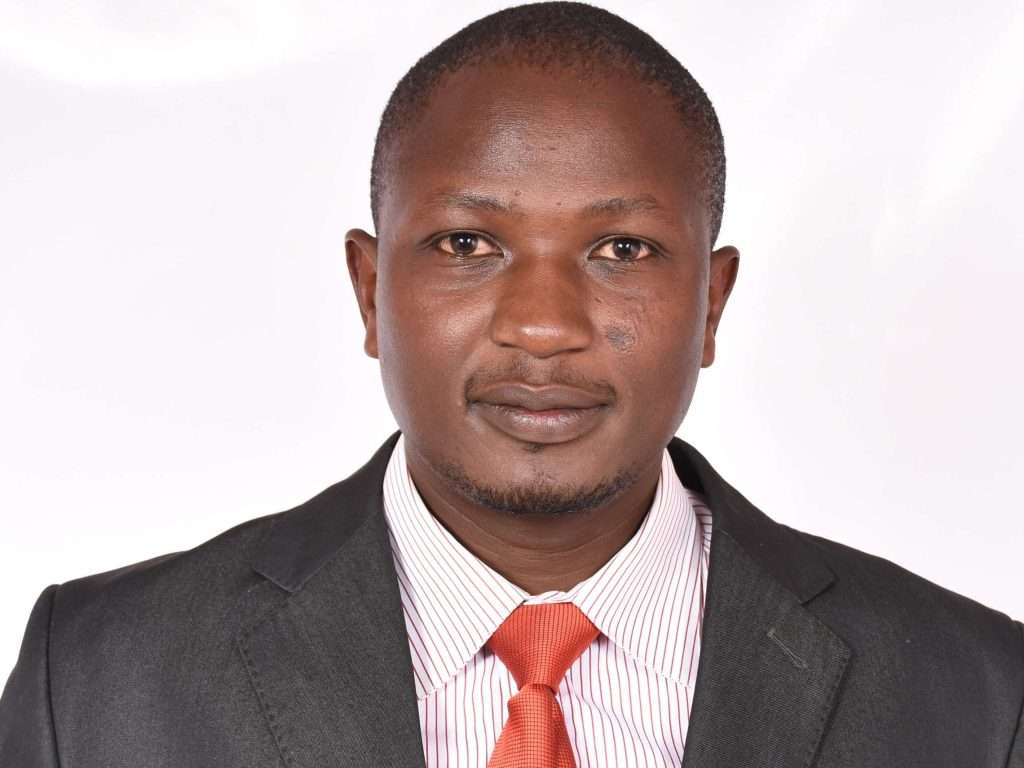
Paul believes a single shift in technology can change the course of thousands of lives. In his view, technology has the power to reshape the future of Africa.
At Hand in Hand Eastern Africa, a development organisation for marginalised communities, head of IT Paul Njoroge was the force behind the transformation that turned a slow system driven by paperwork into a fast digital platform. This has made timelines for loan approvals shorter and improved cashflow for small businesses. For Paul, technology is about giving people the tools to change their future.
“When members say that before, it took one month or two months to receive the money after applying for a loan, and now, they receive it the next day, I feel very nice. They needed the money quickly to start their business and make a profit. Now, they apply for the loan today and receive the money tomorrow. That is the impact we wanted to create,” he says.
When Paul joined the non-profit in 2012, its systems were due for an upgrade. Members complained that transactions were slow, and they could not transact with ease. Paul, who was an ICT officer at the time, saw an opportunity to make processes simpler and more efficient. He integrated the organisation’s systems with Safaricom’s Mpesa platform, allowing members to transact instantly.
“Now, we are able to disburse funds directly to the members’ mobile phone numbers. They receive the money right there. That has made a big difference in efficiency and accessibility,” he says.
Before the digitisation, each of the 25 branches of Hand in Hand Africa required two accountants, resulting in high operational costs. After automating its processes, the organisation reduced the number of accountants by half while maintaining efficiency. At first, the move was unpopular.
Tough decisions
“Some people felt unhappy about this, but I explained that technology should help an organisation ensure that it operates at a low cost and very efficiently. This has been my work at Hand in Hand Africa. We continue to improve our processes to make sure we are using technology to the fullest. That is how organisations remain sustainable,” Paul explains.
The organisation also has branches in Tanzania and South Africa, where Paul has played a key role in training teams. He takes pride in seeing the impact of his work improve the lives of thousands of people beyond Kenya’s borders.
“As we speak, two of their colleagues are in our offices. They want to learn what we do, so they will be joining our network soon, probably in the course of this year or next year. I will be going to South Africa to offer support to them. It is exciting to see the growth of our work in different regions,” he says.
Despite his obvious achievements, Paul remains eager to improve and stay ahead of the curve. In his experience, many organisations recognise the potential of AI but struggle to integrate it into their operations. He is keen to explore solutions that will harness the power of this technology. Paul sees curiosity and a willingness to experiment with new tools as the key to staying ahead of the curve. In his vision for the continent, technology shapes businesses and communities for the better.
“Every organisation today is talking about AI. The question is, which platform are you adopting? Are you embracing the right platform for AI? When you listen to CEOs, they talk about wanting to utilise the power of AI. But CTOs are still struggling to determine what exactly AI can do for them,” he says.
Rebooting relationships
In his free time, Paul enjoys counselling couples, a pastime he admits is unconventional. He organises retreats where married couples share their experiences and receive relationship advice. Through these interactions, he has gained a better understanding of human relationships, which has proven an asset in his work.
“It is not really relaxing, but it's what I love doing. I would call it my hobby. People keep wondering why I call it a hobby, because to others, it's a whole assignment. It is something that gives me fulfillment. Some people are in tech, while others are in business. So, you find there’s something new that you learn from different people. That exchange of knowledge is always valuable. It helps me become a better leader and professional,” he reveals.