
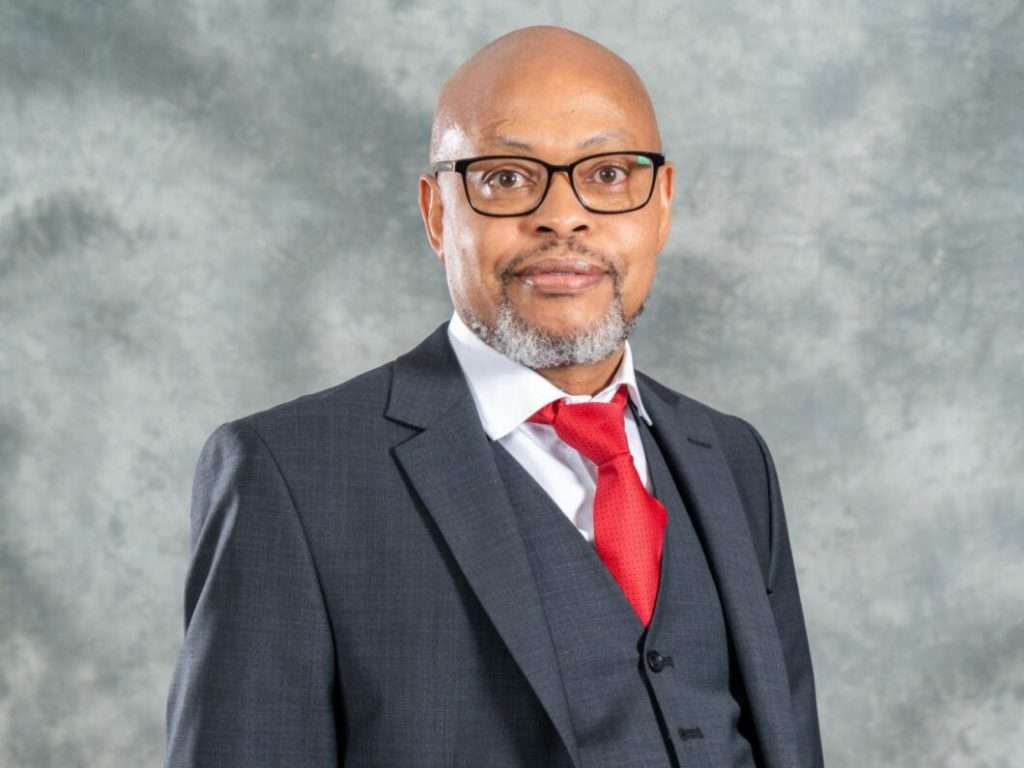
Jubilee Holdings’ group CIO Julius Orayo took a different route to the top by stepping out of IT for 14 years before returning to lead it with a business-first mindset. He shares what powers his strategy, why talent retention is a daily battle, and what scares him more than a missed deadline.
From cables to tech strategy, Julius Orayo’s journey has come full circle. After starting his career on the ground – quite literally, laying cables and configuring servers – the group CIO of Jubilee Holdings took an unexpected detour through operations, customer experience, group strategy and innovations. Now back at the helm of IT, he brings with him a rare 360-degree view of how technology truly powers business.
“The best learning is when I moved out of IT,” he says. “It's something I always encourage people in IT to do; spend even two years outside, and you’ll view the business differently.” Julius didn’t always plan to lead one of the region’s largest tech teams. In fact, when he graduated from Moi University with a degree in electrical and communications engineering, computer science wasn’t easily accessible.
“Then, only the University of Nairobi offered it and they were taking in about 40 people nationally, for all programmers,” he says with a laugh. “I found myself in a computer company by chance, first as a trainer, then as a systems engineer. Before long, I was doing server configuration, desktop support, cabling, the works.”
From there, the trajectory was anything but linear. After stints in Tanzania and with a South African firm, Julius returned to Kenya in 2005 as head of IT. But by 2008, he made what many might consider a bold move: he left IT entirely.
“I moved into operations with no tech titles,” he says. “At that point, I had done almost everything there was to do in IT. It was time to learn the business,” he adds.
A new perspective
That leap turned out to be more of a launchpad. Over the next decade, he rotated through operations, customer experience, claims, finance and even helped set up Jubilee’s Mauritius and Burundi operations. Eventually, he moved into group strategy. And in 2022, in a twist of poetic symmetry, he returned to tech, this time as group CIO.
“In 2022, I was appointed group CIO, back to where I started, but this time with a whole new perspective,” he says.
Under his leadership, Jubilee has embraced full cloud migration, a move that has transformed the IT department’s responsiveness.
“I don’t worry about data centres anymore,” he says with a grin. “If a business unit wants a new server, I can spin it up in minutes.”
Beyond infrastructure, innovation at Jubilee has taken centre stage. The company now uses robots to perform manual tasks, and no, not the kind with blinking lights.
“It’s just software,” he clarifies. “A robot can read your email, generate a statement and send it back – all without human involvement.”
With AI layered into the mix, their systems can now verify IDs, cross-check records and adapt even when formats change.
“That’s where machine learning kicks in,” he says. “We’re moving from automation to intelligent automation.”
Making magic
But with every leap forward comes a new set of challenges and for Julius, talent retention is a top concern.
“I’m the hunting ground,” he says, only half-joking. “You invest in training your team and then big corporates come knocking.”
He leads a team of about 70, spread across infrastructure, digital, enterprise architecture and business applications. It is a dynamic group, with Gen Zs fresh from university working alongside tech veterans.
“Managing them? Keeps you on your toes,” he says. “But the magic happens when they co-create with the business.”
To help his team thrive, Julius invests heavily in learning and development, with a practical twist. “Don’t just learn to build a robot,” he says. “Build one that automates claims processing or sends customer statements. That way, training feeds the transformation.”
And he’s not afraid to tackle soft skills either.
“You know techies – headphones on, lights off,” he jokes. “But we’re nudging them out of their caves into the world of collaboration. We even have an innovation centre where they co-create with business teams.”
Yet even with the right talent and tools, there’s one thing that keeps him up at night.
The best gym
“A cyberattack. Hands down. It’s what keeps every CIO awake at night,” he says. “You layer your defences, but one loophole, one phishing email, especially now with AI, and it’s chaos.”
That’s why cybersecurity is never an afterthought, even when AI policies are still catching up. “It’s like brain surgery,” he says. “You have to open the skull to save the patient, but you risk infection. That’s AI for you; powerful, but risky if you’re not careful.”
Outside the office, Julius is just as energetic. He’s an avid runner, often clocking between 10 and 21 kilometres before most people are out of bed.
“I run 10 to 15 km most mornings, sometimes 21 on weekends,” he says. “And I hike monthly – Mt. Kenya, Longonot, Kilimanjaro. Nature is the best gym.”
He’s also a sometime golfer; “rarely,” he admits, and a tech reader. “Fiction can wait, there’s too much happening in the AI space,” he says.
With that, Julius signs off the call. He’s got a cloud to run, a team to retain and no doubt, a few kilometres to log.