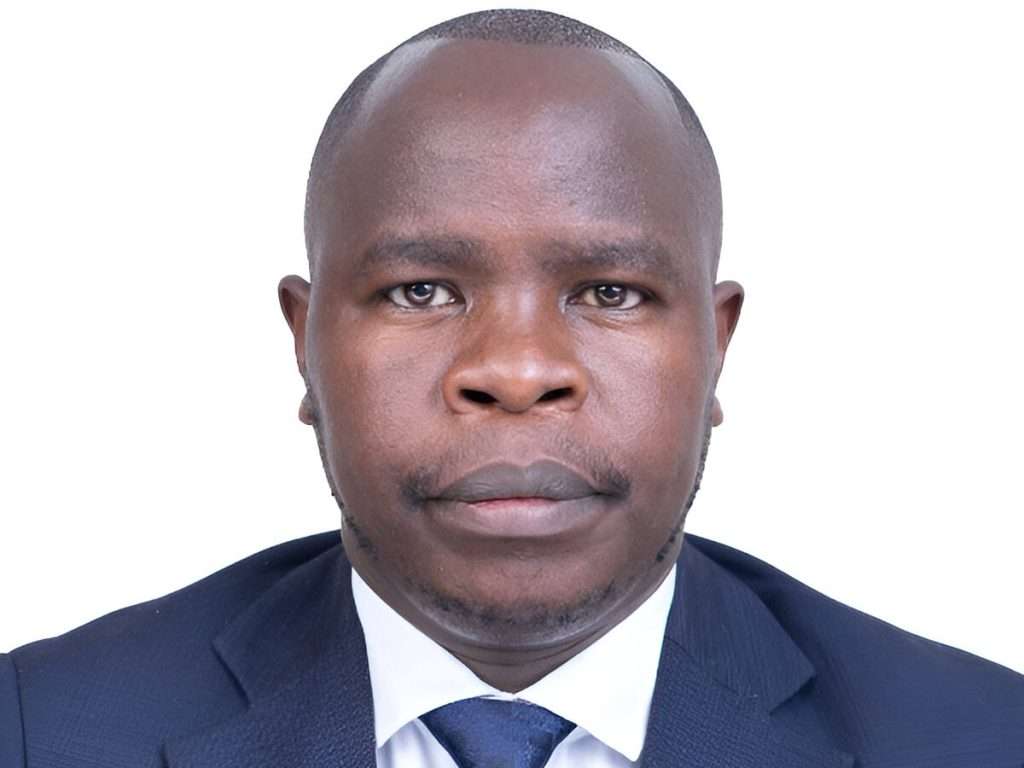
After a failed project, Gilbert Mutai focuses on thorough preparation and aligning technology with business goals. As CIO, he now supports systems that improve decision-making and drive performance and value across the organization.
Gilbert Mutai’s path into IT leadership was shaped early on by a major project that, despite careful planning and significant investment, failed to deliver the value the organisation expected. Rather than dismissing it as a one-off disappointment, the experience became a reference point for how he now approaches leadership and technology.
“We ran a pilot and expected it to guide the wider rollout, but the value just did not come through. At the time it felt like a loss, especially given the effort and money involved. With hindsight, it forced me to rethink how technology decisions are made,” he says.
Lessons from failure
He became more cautious about relying on external providers without strong internal ownership, and more deliberate about ensuring technology initiatives are clearly tied to business goals.
“What stood out was that the service provider did not fully understand what the business was trying to achieve. They delivered something, but it was not what we needed. That taught me that leadership and direction must come from inside the organisation,” he explains.
Today, as CIO of Car & General, that lesson informs how he leads IT across multiple countries. His focus is on systems that improve visibility, support decision-making, and contribute directly to business performance. He reveals that large projects are approached carefully, with an emphasis on preparation and shared understanding across teams.
“I now spend a lot more time upfront asking what problem we are solving and who owns it. If the business is not clear on that, technology will only add confusion rather than value,” he says.
He adds that one of the clearest examples of this approach was the group-wide SAP implementation, which ran from 2018 to 2022. Before the system was introduced, leaders across the organisation worked with fragmented data and limited insight into operations.
Gilbert says that decision-making was often reactive rather than informed.
“Before SAP, each part of the business saw only a piece of the picture. Once the system was in place, leaders could work from the same information, which changed how decisions were made,” Gilbert notes.
Technology that creates value
The impact went beyond efficiency. With improved transparency and data-driven decision-making, Gilbert says the business saw sustained growth and, for the first time, exceeded its revenue targets. This reinforced his belief that technology should enable performance, not simply support processes.
“When people can see clearly what is happening, they make better decisions,” he says. “That clarity has a direct effect on results.”
Alongside operational improvements, Gilbert has worked to reposition IT as a value-creating function. His teams now develop digital solutions aimed at key customer groups, including dealers and two-wheeler operators, with several of these tools generating revenue.
“We did not want IT to be seen only as a cost centre. If technology is solving real problems for customers, there is value in that, and the business should recognise it,” he explains.
Gilbert sees leadership as extending beyond systems and outcomes to include people development and the building of future leaders. His team of around twenty covers digital transformation, SAP operations, infrastructure and project management, supported by external partners where specialist skills are required.
“I see part of my responsibility as creating space for others to grow. When people leave the team and go on to lead elsewhere, that tells me we did something right,” he says.
At the same time, Gilbert is realistic about the challenges of retaining talent.
“Retaining skilled IT professionals remains difficult in a competitive market, and the loss of experienced staff can affect continuity and momentum. There is a lot of demand for IT talent, and people will move. We invest heavily in building skills, but retention is something you have to work at constantly,” he notes.
Prepared, not panicked
Cybersecurity is another ongoing concern. As digital systems expand, so do the risks, and Gilbert is careful not to treat security as a fixed state that can be achieved once and forgotten.
“You have to work from the assumption that something can happen. The goal is not to eliminate risk completely, but to be prepared and able to respond,” he stresses.
That mindset shapes how the organisation approaches resilience, including the operation of two data centres to ensure continuity. It also reflects how he leads more broadly: alert but calm, structured without being rigid and focused on preparation rather than panic.
Gilbert draws perspective from his family. Time spent at home helps him maintain focus and avoid being consumed by the pressures of senior leadership.
“My family keeps me balanced. They remind me that work is important, but it is not everything. I believe it is essential for keeping perspective in a high-pressure job,” he points out.
He also prioritises personal development, reading widely and engaging with professional networks. At the moment, he is reading Walking Backward, a book on strategy that encourages him to think beyond technology and consider leadership in a wider context.
“It helps me step back and think more clearly. Leadership is not just about IT decisions, but about how you approach problems in general,” he explains.”
Although technology became his path, he admits that medicine was once his ambition, and that circumstances played a role in shaping where he ended up.
“Life does not always take you where you expect,” he says. “What matters is how you adapt and make the most of the opportunities you have.”