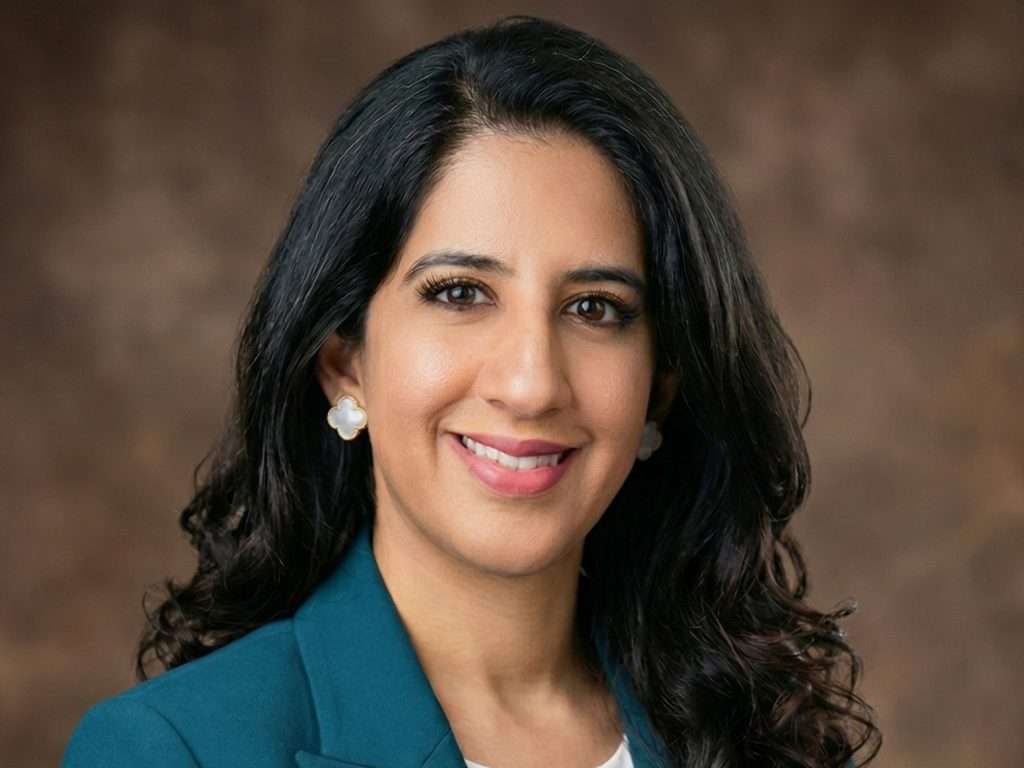
Uzma Qureishi is helping transform healthcare in East Africa through her work at Aga Khan University Hospital Nairobi. Guided by strong family support and determination, she is breaking barriers and showing that women can lead in technology and healthcare.
When Uzma Qureishi was born, well-wishers arrived with their congratulations and immediately asked if she was a grandson. Her grandmother proudly said no and then handed out sweets anyway, which was highly unusual in their community, as celebrating a granddaughter in that way was not the cultural norm. However, her family carried a deep conviction that her gender was not a limitation.
“I grew up knowing I was capable of something significant. My dad pushed me and his belief became like a cornerstone for my career and it empowered me, and today where I am is because of my parents,” she says.
As the senior manager of EHR operations at Aga Khan Hospital Nairobi, Uzma oversees the most complex digital transformation in East African healthcare, but she did not start out in technology. She initially pursued her education in business in Australia before returning to begin her professional career. She then joined the IT team in a business analyst role, where she was responsible for managing and overseeing the organisation’s website. During this time, the organisation was at the pre-implementation stage of the health information management system (HIMS), and she became actively involved in the process.
Historic digital transformation
“The hospital was going live at that time with a system and I was unexpectedly pushed into the deep end of the technical work. It is amazing because everything that I learned was on the job, but I had really good mentors in my life that really helped me, pushed me, and believed in me,” she explains.
She watched the project grow into a massive electronic health record system over two decades, running across 55 outreach centres. The first of her defining professional milestones put Aga Khan Hospital on a map no African healthcare institution had appeared on before. The hospital’s journey to EHR began in 2010 with a vision from the late Chancellor, Aga Khan IV, that all Aga Khan hospitals share one unified digital record. At the time, no hospital in East Africa had gone live with a full end-to-end EHR. The massive implementation required a command centre bringing together 150 people from across the globe, and by November 2022, the Nairobi facility made history by going completely paperless.
“We literally went into the ER, I picked up every pen and paper and we walked out, and from that day every step like care registration, billing, lab, everything, dietary orders are seamless into this EHR,” she says. “The system can detect conditions such as kidney issues, for example, high creatinine levels and warn clinicians not to prescribe medications that may be harmful.”
The pressure during the rollout was immense, pushing Uzma to work four days straight without going home.
“I did not come home for four nights, and I remember at four in the morning I hit my breaking point and I just said I do not know if we are going to be able to do this, but there was no fatality and we made history,” she recalls. “We had a small prayer room, and all of us, no matter who you are, no matter your faith, I remember just being there and saying God, we need you to be there for us, because it was something that no hospital in East Africa had ever done.”
Uzma notes that today, rich data captured through the system is now driving research and enabling the development of medications better suited to East African populations, moving beyond the traditional reliance on data from the United States and the United Kingdom. Uzma and her team are also piloting artificial intelligence in radiology to measure bone density and interpret normal x-rays, making the diagnostic process far more efficient for doctors.
“As a result, they are not always optimised for East African patients. Right now the data we are giving, the medications that are going to come up will be actually tested or made for us, and that really makes a difference,” she explains.
Expanding access to care
Her second major milestone began in 2018, when the late Prof. Sudhir Vinayak introduced a Philips ultrasound prototype at the hospital. As part of the Visiq project, funded by WFUMB, Philips provided a portable point-of-care ultrasound device designed for use in diverse settings.
Although the device’s portability made it suitable for deployment in remote areas, a critical challenge remained: ensuring that expectant mothers far from major hospitals could access high-quality diagnostic imaging. To address this, the initiative focused on training midwives in rural Kenya to operate the device and transmit lossless images to Nairobi, where radiologists could review them within 25 minutes. This approach directly tackled the acute shortage of specialists in underserved regions, enabling timely and accurate diagnoses.
“He said, we will take this to rural areas and figure out how we can do ultrasounds. But remember, these are rural areas, radiologists can't be there. It's midwives who are available. So, our consultant Dr Nidhi Leekha went and trained them using the point-of-care ultrasound device,” she notes. “There were a lot of cultural issues, like patients saying not to touch their bellies, but we pushed through. Midwives carried out the ultrasound scans, and within just 25 minutes, the full cycle was complete, from capturing lossless images to transmitting them to AKUH,Nairobi, where they were reviewed and reported, and then sent back to the rural facility. The efficiency of this process was remarkable and left many amazed, leading Philips to further develop an improved prototype.”
Several other hospitals had tried and failed, both the technical and the clinical team successfully built the technical infrastructure to make it happen, overcoming both technological hurdles and cultural barriers to deliver life changing care.
“When we were doing this, there was a couple pregnant with twins, and they didn’t even know that they were expecting twins. We prompted an urgent referral to a hospital just because of that report,” she says. “Some communities have never seen that an ultrasound can actually help you, and they were so sceptical, but those who embraced it experienced a life changing impact, and it was humbling to know that our work from East Africa was standing shoulder to shoulder with the best in the world.”
This success led to an invitation to submit a paper to one of the most prestigious radiology conferences, the Radiological Society of North America . Despite an acceptance rate of just seven percent, Uzma was the lead and presenter of the paper. Her collaborators were clinical leads the late Prof. Vinayak and Dr. Leekha. Uzma was six months pregnant and managing serious complications, but her husband encouraged her to travel to Chicago for the prestigious conference.
Leadership beyond technology
“Tanveer Khan, my co-lead, and I were in Chicago, presenting alongside the biggest names in global healthcare and we were on the same level as Harvard Medical School and Mayo Clinic,” she recalls. “They all looked at me and they said wow, really, this happens in Africa, and I said yes, it happens in Africa, and I feel like it was not just a hospital that was put on a platform, it was Africa.”
The project later expanded with a grant received from the Philips foundation and developed into the Mimba yangu study, and eventually received funding from the Gates Foundation to incorporate AI. The clinical leads for this were Prof. Marleen Temmerman and Dr. Nidhi Leekha.
Navigating a male dominated industry has significantly shaped Uzma’s leadership approach. She deliberately builds teams that are majority female, creating an environment where women feel empowered to take their space in technically complex hospital IT roles.
“I work in a very male dominated industry, and there is a misconception that it is all about the men, and sometimes the women are looked at as maybe not technical enough or not that strong to get into an industry like this because we are mothers, daughters and wives,” Uzma notes. “My team is mostly female dominated and I love that, and when they see that a woman can do this, it really also helps them to get better, to fight for something when they know this is my seat and I am going to take it.”
She acknowledges that succeeding in such a demanding field requires strong backing from both the organisation and the family. Despite her professional achievements, she openly admits that balancing her career with family life is an ongoing struggle. She is a mother of two, a boy and a girl.
“My daughter is only two years old, and when I come in sometimes from work, she does not want to come to me, and that breaks my heart sometimes. Mum guilt is real, it is out there, and I once cried to my husband and told him I feel so bad, I am not being a good mum, and he just hugged me and said you are a great mum,” she shares.
He reminded her that when her children grow up and understand the scale of what she has built, they will be immensely proud.
Uzma also finds joy in spending time with her family and taking part in activities that give her a sense of balance. She enjoys playing paddle with her husband and son, and Saturdays are a special time for her to connect with loved ones.
“I love spending time with my siblings, especially my sister and brother, and I’m fortunate to have great friends. I also enjoy cleaning, even though I’m not sure why, it makes me feel better,” she says.
She also shares a strong bond with her children, making time for their hobbies and outdoor activities.
“My son loves golf, so I take him out whenever I can. I also spend a lot of time with my daughter. We enjoy outdoor activities together,” she adds.
Uzma adds that her success is deeply rooted in the unwavering support of her husband, who has been her backbone selflessly stepping in to care for their children during the many nights she is away at work. Without his support, she believes her journey would not have been possible. She also appreciates the love and guidance from her in-laws, who have been a pillar of encouragement along the way.
Her parents are no longer alive to see the heights she has reached, but she carries their foundational belief with her every day.
“I lost my parents. They were my backbone, and I miss them a lot. But I am really grateful to God that I am here today because of them,” she says.