
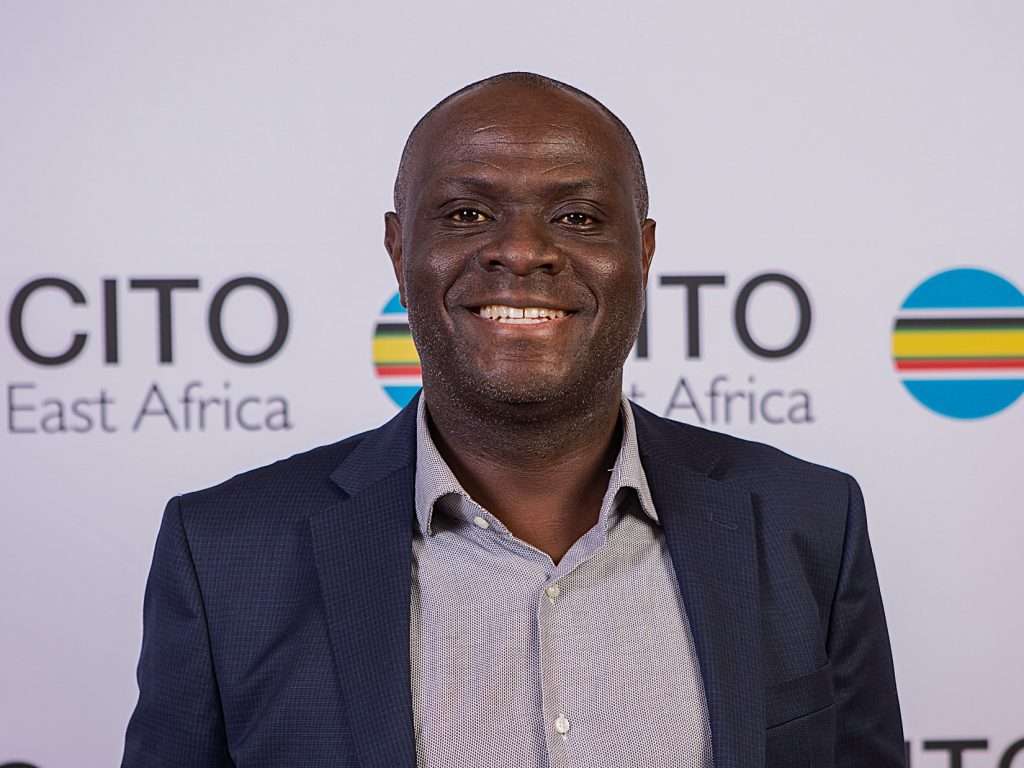
Stanbic Bank Kenya CIO Alex Siboe Wekunda has quietly shaped East Africa’s digital landscape. In this candid conversation, he shares his career wins and why, if AI ever tried to replace him, it had better be ready for a long hike.
Most people haven’t heard of Alex Siboe Wekunda, but chances are they have used, or at least benefited from his work. He is the man who rolled out Kenya’s first CDMA network, paving the way for the mobile broadband available today.
“It was the competitor to GSM at the time, and it later matured to give us 3G and 4G technology,” he says. Back when smartphones were still a novelty, Alex also brought the very first BlackBerry devices into the Kenyan market – and yes, he proudly carried the first one himself. “I launched BlackBerry in this market while at Safaricom in 2007,” he recalls.
He also played a key role in launching 3G in Kenya, changing how people connect, stream and communicate. But Alex’s influence did not stop with mobile networks. At KCB, he led the bank’s core banking transformation, a massive undertaking that modernised operations and made digital banking smoother for millions. He also helped launch KCB M-Pesa in partnership with Safaricom, putting financial services directly into people’s hands.
“It was about making banking more accessible and immediate,” he explains. Later, at Telkom, he spearheaded the rollout of a 4G network in the Coast region, bringing high-speed internet to more customers. Now at Stanbic, Alex continues to shape the way technology powers banking. He has overseen another core banking transformation and introduced the bank’s omni-channel digital app, streamlining how customers interact with their money.
“From innovation to delivery, it has been about building solutions that make a difference,” he says.
The journey to tech
Alex’s journey into technology began long before he ever stepped into a server room.
“I always loved maths,” he recalls. “It’s no accident I ended up doing something in engineering or tech.”
He paired that love with a knack for the sciences, ultimately earning a degree in Electrical and Electronic Engineering from the University of Nairobi in 2002. An internship at Telkom Kenya during his final year was the spark that set everything in motion.
“I worked in the switch room and server room, learning how international calls were connected and how the whole system talked to itself. I was hooked,” he says.
From there, his career reads like a guided tour of East Africa’s tech evolution – equipment vendor ZTE, a stint at the Communications Authority, then the big leagues at Safaricom, where he not only launched BlackBerry and 3G, but also earned a reputation for making the impossible seem routine.
Banking came calling soon after, with Alex spending seven years at KCB before moving to Stanbic. Along the way, he has handled everything from innovation and project management to strategy and network operations.
“It’s been the full spectrum,” he says, “and it’s built me into the leader I am today.” That leadership is equal parts strategist and coach. He heads a technology team of 89 people – everyone from cybersecurity experts and software developers to architects and infrastructure specialists. “It’s like managing a football team,” he chuckles. “You have your defenders in cybersecurity, your midfield in governance and architecture, and your strikers in innovation and delivery. My job is to keep them playing as one unit.”
He believes in embedding tech leads directly into business units, ensuring technology is not a back-office afterthought but part of everyday decision-making.
“If we’re not close to the business, we can’t serve it well,” he adds.
Alex vs AI
Ask Alex about artificial intelligence and his eyes light up. “AI is the new frontier, but it’s really been evolving for years,” he says. “We’ve had machine learning, robotics, and data analytics. AI is just the next step.”
For him, it is both exciting and a little unsettling. On the one hand, it can take over repetitive tasks, improve customer experience, and turbo-charge data analysis. “It works with speed, accuracy and can handle what we humans find tedious,” he explains.
On the other, there are thorny questions about accountability. “When AI makes a mistake, who takes responsibility – the machine or the human? That’s something the world still has to figure out.”
Cybersecurity, he notes, is where AI becomes both ally and adversary. “Back in the day, a bank robbery meant men with guns walking into a branch,” he says. “Now, the robber could be sitting on a beach in Australia or in an apartment in Estonia – all they need is a laptop.” It is a constant game of cat and mouse. With AI tools now in the mix, he explains that attacks can be faster, more sophisticated, and harder to trace. “That is why we have invested heavily in a zero-trust approach,” he explains. “We assume nothing and verify everything, every time.”
Staying centred
Despite the high stakes, Alex thrives in the challenge, though he has his own ways of staying sane.
“The job can be intense. Everything in the bank now rides on technology, so any blip is on my desk,” he says. His escape? Lacing up his hiking boots, running trails, and disappearing into the mountains.
“It clears my head and reminds me there’s life beyond servers and systems,” he adds with a smile. Away from the world of networks and firewalls, Alex has a soft spot for what he calls ‘old school gold’. “I still miss turntables and vinyl records,” he admits. “The other day I was even googling where I could buy one.”
If he had not gone into technology, Alex is convinced he would have become a teacher. It runs in the family – his father was one – and he finds joy in simplifying complex ideas for others.
“When my children struggle with maths, I break it down into what they already know. If it’s multiplication, I turn it into repeated addition. It’s about starting from the familiar to get to the unknown. Patience is key,” he explains. But Alex is not overly worried about being outsmarted by machines just yet. “If AI ever tries to replace me, I will hand it my hiking boots and tell it to join me on a 20-kilometre trek in the Aberdares,” he says with a laugh.
“Let’s see how it handles a steep climb without Wi‑Fi.”
It’s that mix of humour and a quiet confidence that inspires the belief that Alex will keep shaping East Africa’s tech story – with both feet firmly on the ground.