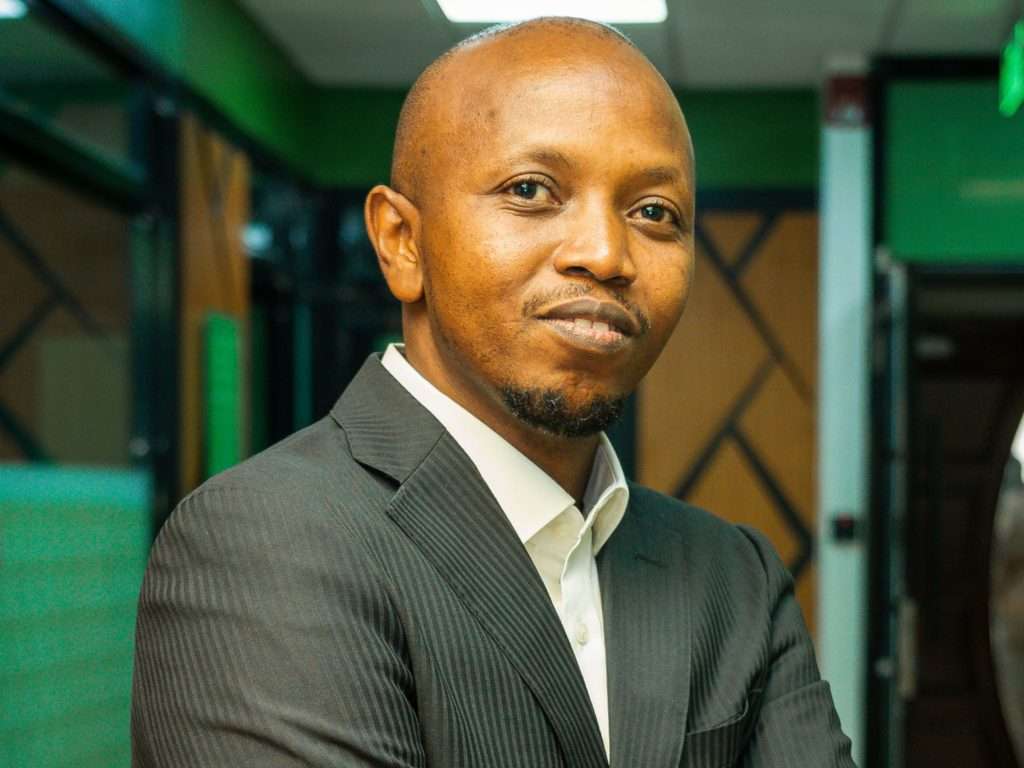
Jean-Marie Gashonga has spent his career building technology systems and empowering teams to deliver results. As IT manager at Old Mutual Insurance Rwanda, he has modernised core systems for insurance operations, championed automation and fostered collaboration within the wider IT leadership community. In this conversation, he shares how innovation, people and shared knowledge are shaping the future of insurance technology.
Jean-Marie Gashonga’s career in IT has been defined by building things from scratch. At Old Mutual Insurance Rwanda, formerly UAP, he stepped into a role where system automation was almost non-existent. He began by training the staff on basic systems, then designing and implementing the organisation’s entire IT infrastructure.
Over time, he spearheaded major achievements such as integrating their insurance platform with banks for seamless payment processing and introducing online claim notifications. More recently, he has overseen core system upgrades for both general and medical insurance, modernising operations across the business.
But automating insurance processes has been anything but straightforward. Unlike banking, where processes are clearly defined, insurance comes with complexities such as the principle of good faith in contracts, which can be difficult to translate into code.
“It is not as simple as taking a form and putting it online. There are a lot of nuances,” he says. Alongside these complexities, he faces the challenge of managing multiple large-scale projects with limited resources, often without dedicated project managers. “You are expected to run projects and still keep daily operations running,” he explains.
Budget constraints are another reality of the insurance sector. Jean-Marie has had to balance ambition with practicality, prioritising projects that deliver maximum impact without overstretching resources.
Setting clear goals
It is a delicate balance that demands both patience and persistence. “You cannot do everything at once. You have to know what will give the most value in the shortest time,” he says.
Jean-Marie’s leadership style leans heavily on empowerment rather than micromanagement. He sets clear goals, offers guidance and gives his team the freedom to deliver. He proudly recalls encouraging a network administrator to step into a business analyst role, a move that allowed the individual to grow while filling a critical gap for the team. “If you give people space and support, they can surprise you with what they can achieve,” he says.
This belief in growth extends beyond his own team to the wider IT leadership community. For Jean-Marie, being part of platforms like CITO East Africa provides valuable opportunities for knowledge sharing, access to peer-tested solutions and the chance to learn from others facing similar challenges.
“IT leaders benefit significantly from being part of a community through knowledge sharing, networking for talent and training resources, and gaining insights into new technologies and best practices,” he says. “It is not just about what you get but also about what you can give.”
He is particularly interested in how emerging technologies can transform the insurance industry. Artificial intelligence is high on his list, especially for risk analysis and data-driven decision making.
“AI has huge potential in helping us understand risk better and making more accurate predictions,” he says. At the same time, he remains grounded about the realities of technology adoption. “You have to be clear about what you want AI to do and make sure you have the right data to support it,” he explains.
Finding balance
Cybersecurity is another area where Jean-Marie is deeply focused. He places strong emphasis on regular testing, user training and access controls to mitigate risks. “Most breaches come from human error. That is why awareness and training are so important,” he says. His approach is to build a culture of security that is proactive rather than reactive.
Away from the office, Jean-Marie’s time is largely devoted to his family, which includes his spouse and three children. He has also ventured into agro-business, although he admits finding time for it can be challenging. “It is something I enjoy, but my work often takes most of my time,” he says.
Looking ahead, Jean-Marie sees technology leadership as a balance between driving innovation and building strong, capable teams. He believes that while systems and tools are important, it is people who ultimately determine the success of any transformation.
“You can have the best technology in the world, but without the right people and the right mindset, it will not deliver,” he says.