
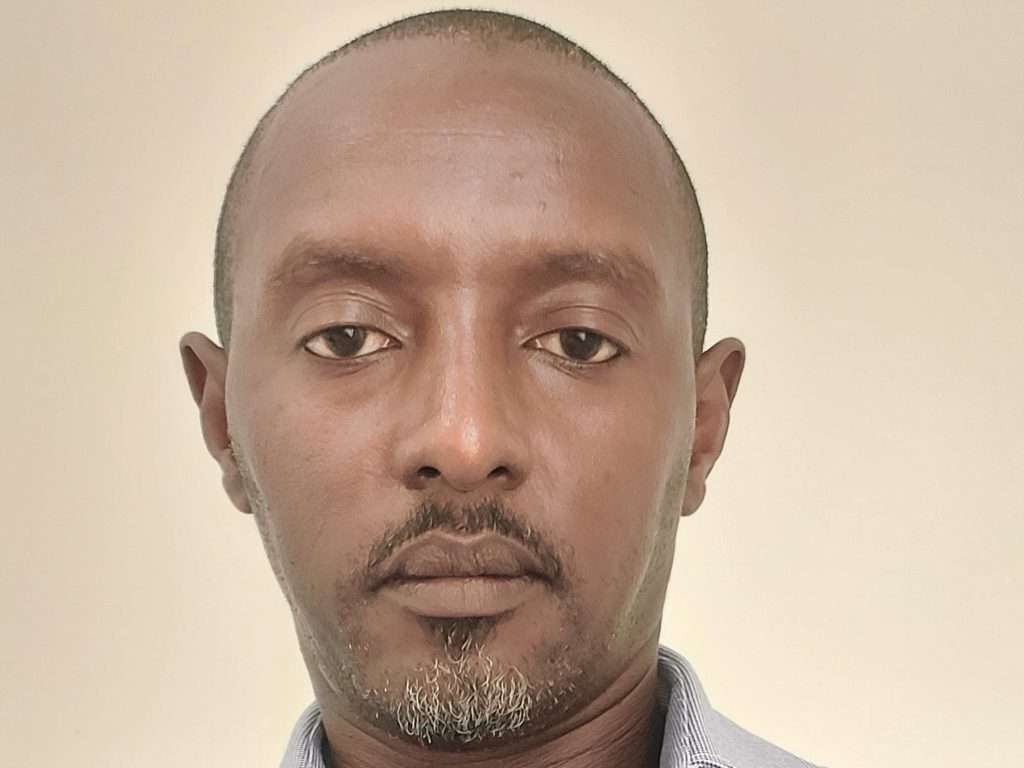
Kibe Kamau’s unconventional journey from finance to IT is a masterclass in blending disciplines to maximise value. He reveals how he leverages his experience in both fields to align the company’s in-house solutions with strategic business needs.
Gardaworld IT director for Africa Kibe Kamau straddles two worlds – tech and finance – a blend that has proven to be a powerful advantage. His dual expertise allows him to transcend the limits of both disciplines and add value to the business at a strategic level.
“From the onset, I was able to relate to what the business was trying to achieve, because in terms of the language, the terminology and the jargon, I could already understand that. I was therefore able to contribute beyond just a technology solution or an IT platform. I was able to contribute from an understanding perspective, questioning and analysing, and being able to fine tune the solutions to better fit what the business was looking for,” he says.
When Kibe finished high school, he was certain he would go into finance. He began a degree in cooperative auditing, but during the holidays, he enrolled in short IT courses and discovered tools that made it easier to post financial transactions.
Fascinated by the technology, he began to transition into the field and joined computer training school. There, he performed well and was offered an internship, becoming a trainer for new tutors and students. This exposed him to different platforms and technologies in several areas of IT, cementing his decision to pivot away from finance.
“Once I was done with that, I decided to venture into the customer side of IT. So, I was no longer offering IT as a service, but I was going to offer my knowledge to help the business. And so that's how I ended up in a business in Kenya. Then shortly after, I moved to Cape Town in South Africa to open up a new brand with a new company there. And then from there, I moved to the Middle East, doing the same, but more in terms of business applications, global applications development and rollout,” he says.
Adapting to new environments
Kibe believes his experience in Kenya made each transition to another region smoother, as the country was already keeping pace with tech heavyweights across the globe. He also thinks it helped him get the most out of his MBA, which he completed at the University of Cape Town. His experience in the Middle East exposed him to different global IT approaches, with some time spent in India, which helped him develop his knowledge and expertise in software development, business applications, and other new technologies.
Over time, he built a skillset that made it easy for him to adapt to any environment. Through these experiences, Kibe has crafted a culturally aware leadership style that has proven an asset as he manages teams scattered across different parts of the globe including Africa, the Middle East, and the US.
“As I moved around the countries doing work in different regions, I decided to settle down. And I have always felt like I fit in best in Kenya. When I finally decided to settle down and start a family, I tried it in the Middle East and it was very difficult. So, that's why I decided to move back to Kenya,” he says.
At home in the Silicon Savannah
Back in Nairobi – dubbed the ‘Silicon Savannah’ – in 2016, Kibe thought he would join one of the many start-ups that make up the city’s tech ecosystem. But after a few months, he decided to broaden his search and ended up at multinational private security firm Gardaworld.
Here, he oversees IT operations and provides technological support, ensuring the company’s internal systems are aligned with its processes and objectives. Kibe also manages a complex ERP system and guides product deployment, maintenance, and security. His priority as an IT executive in the Fourth Industrial Revolution is upskilling to meet the demands of a fast-changing tech landscape.
“There are a lot of resources and colleges and schools. But the people in the ICT space are not really sure what skills they should go for or focus on. Should they focus more on development tools? Should they focus more on cyber security? Should they focus on business technology? Should they focus on infrastructure? So, I think the biggest priority is to understand and evaluate which skill sets are fit for the people in the IT teams here, because there's also a lot of automation.
“Some may be wondering, ‘I'm a good developer in a certain programming language, but there are now no code programming tools. What skills should I get next? Should I learn a new language, or should I pivot to infrastructure? Or should I pivot to cyber security? Should I combine that, or should I just align with technology driven business process transformation?’” he says.
Recently, Kibe himself took up some further technology courses at MIT in building AI solutions with no-code tools, to augment his experience deploying AI for business. He has also enrolled in leadership courses and people management certifications to equip himself for his role as IT director for Africa. He advises IT professionals to identify their niche and develop a skill set that will sustain them for the next five to ten years, as he believes technology will play an outsized role in transforming businesses across the continent.
Weekends are reserved
Although he has a full plate at Gardaworld, Kibe’s weekends are reserved for his children, who keep him busy with one activity after another.
“I like to spend time with my four daughters. There's always a lot of activity. They're either going swimming or dancing or they've got a show. So that's pretty much what I look forward to doing from Friday evening until Sunday,” he says.