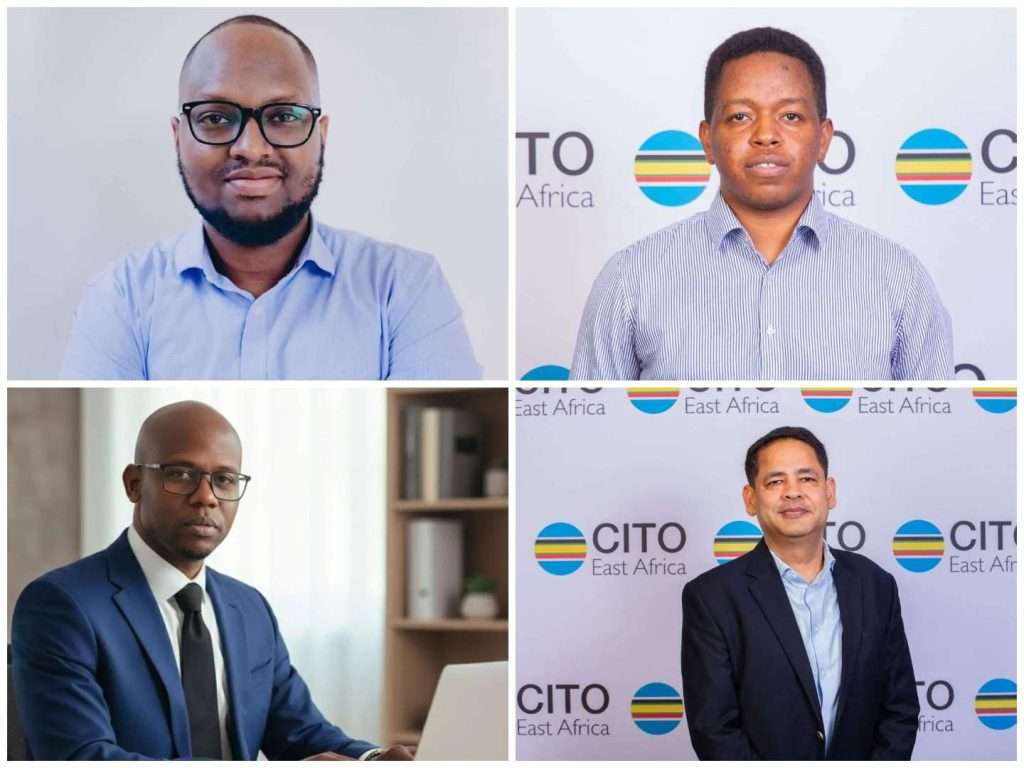
There has been a long-running debate on whether AI will replace humans. While some quarters believe it will, Mpesa Africa CTO Vinod Sharma, Onfon Mobile CTO Timothy Wahome, Ocean Road Cancer Institute’s principal ICT officer Raymond Machary, and Brice Mutoni, an IT specialist at Eden Care Rwanda, see things differently.
At Onfon Mobile, CTO Timothy Wahome says using AI is non-negotiable for anyone on his team, and he wishes the industry had embraced it three or four years earlier. One reason for his stance is that AI has bridged the gap in access to knowledge.
“Five years ago, where you studied mattered a lot more. Now access to knowledge is there. You can learn best practices that would have taken 10 or 20 years of experience,” he says.
While Timothy is aware of the debate on whether AI can replace human beings, he chooses to avoid this debate. Instead, he is careful to frame AI as a tool that should be absorbed naturally into how people think, build, and solve problems, not treated as a shortcut that replaces the thinking itself.
Brice Mutoni holds a similar view. He believes anyone who avoids AI today will eventually be left behind.
“I think AI came to help us with the simple things so that we could dedicate more time streamlining the processes that AI can’t,” he says.
However, he's equally clear that AI taking over repetitive tasks doesn't mean it can replace people. Fields like counselling, psychology, and customer service, he argues, will always need a human touch that AI simply can't replicate. For this reason he advocates for a change in the education system to accommodate AI.
“Schools must adapt so that instead of just learning how to code, they also hone their creativity skills and their ability to communicate with AI” he says.
His stance is almost similar to that of Mpesa Africa’s Vinod Sharma. He believes that there will always be a human element needed for effective operations, an element he calls natural intelligence. Of the four executives, his stance is the most measured view of AI's long-term impact. While he acknowledges the benefits of AI, he insists that natural intelligence remains superior to artificial intelligence.
"AI does help. It empowers, it improves, it fast-tracks. But it can't deliver a finished product," he says.
Nevertheless, he does not completely rule out the possibility of AI eventually taking over certain kinds of things that are best handled by humans.
“These technologies, AI agents, are actually changing the world and they will continue changing and continue evolving. If we are not evolving, then we need to be ready to be phased out," he says.
Vinod’s biggest concern is that people have not quite learnt how best to use available AI tools.
“We are actually making it difficult because when we do work, we bring a lot of emotions and sentiments. This is the reason AI might win, or is winning, in some sectors. Because we get biased, we get sentimental. We bring emotions into the plane. This is where we lag behind a little bit," he says.
On his part, Ocean Road Cancer Institute’s Raymond Machary views AI as a tool that can have either negative or positive impact depending on how it is used.
“What matters is ensuring transparency, fairness, and accountability in every system we design. Applied thoughtfully, AI helps reduce human error, strengthens decision-making, and expands access to services from healthcare to education. The goal should always be to make technology work for people, not replace them,” he says