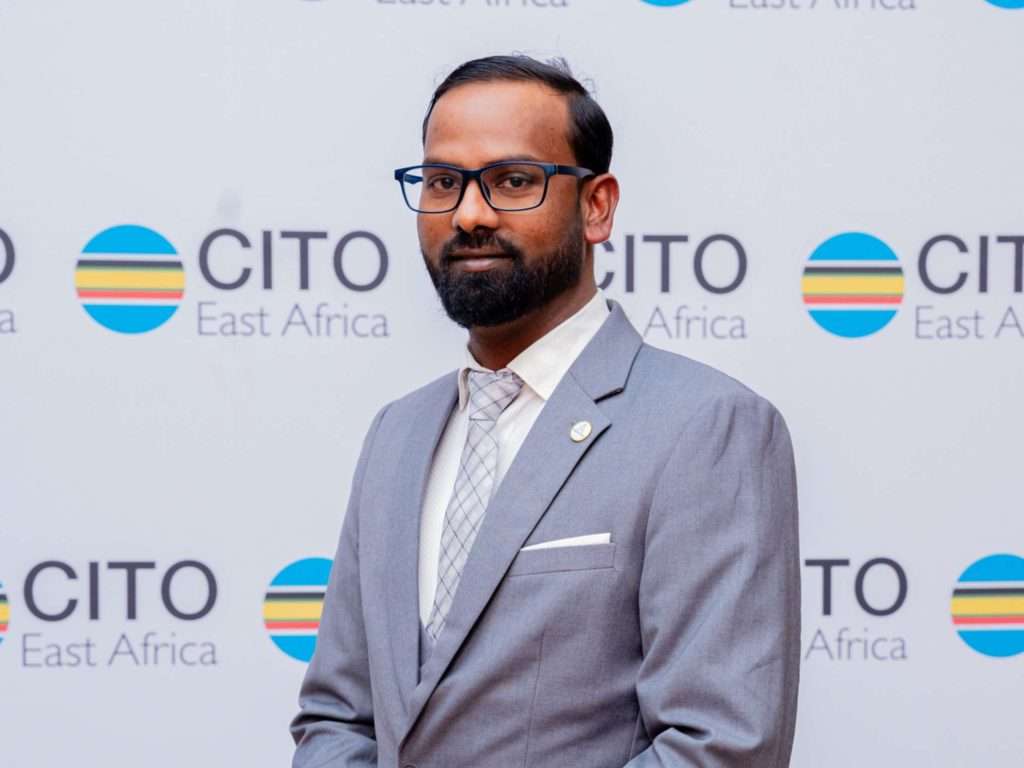
Bhanu Partap joins Amsons as group head of IT

post-title

Bhanu brings over 18 years of experience in Information technology to Amsons and will lead the company’s IT strategy focusing on innovation and digital transformation.

Bhanu Partap has joined Amsons group as the group head of IT. Bhanu has over 18 years of experience in information technology, specifically in leading large scale digital transformation  initiatives, enterprise applications and IT applications across multiple business sectors.

“My leadership approach focuses on aligning technology with business objectives, driving innovation, improving operational excellence and building high-performing IT teams that deliver measurable value,” he said.

Bhanu began his career as a systems administrator at Innovative Group of Colleges in August 2007 before joining Abhijeet Group as the assistant manager in 2012. He has also worked with Geeken Seating Collection and United Brothers Distillers.

Before moving to Amsons, Bhanu was the head of IT at Tamal group in Kenya, where he led IT operations, digital transformation initiatives and enterprise projects. 

Bhanu holds a Bachelor of Computer Application  (BCA), Information Technology from D.A.V college and an MSc  in IT degree from Delhi University.

Related articles

Karibu World CTO Musharaf Dhanji believes personal AI is the future of business

Personal AI agents are transforming business by acting as direct intermediaries between individuals and brands. At the CITO EA virtual summit, Karibu World CTO Musharaf Dhanji showed tech leaders how to prepare for this shift by owning their tech systems and structuring data to prepare for a future where personal AI might replace traditional advertising.

David Muheirwe takes over as CITO at Opportunity Bank 

David brings more than two decades of experience in technology leadership, digital transformation, and delivering strategic technology solutions across the financial services and public sectors to the role.

Tech’s dark Friday sees East African leaders grapple with global outage 

Nearly 24 hours after users first reported an outage affecting several services on Microsoft, tech leaders are weighing the operational impact. Across the CITO East Africa community, executives are reflecting on productivity losses, cloud dependency, and the sudden absence of email while finding moments of humour amid the disruption.

In AI adoption, standardisation should come before scaling

Across African institutions, there is a pattern where vendor demos arrive before anyone asks the key questions about training data and model origins. Unfortunately, this results in the adoption of AI models that do not reflect the reality of African organisations. The solution lies in standardisation and governance before adoption of models

Karirana Estates-Eden Tea's Joseph Wangombe’s guide to navigating digital transformation

Successful digitisation is rarely a server room issue. Instead as Joseph Wangombe, head of ICT at Karirana Estates-Eden Tea, shares, it starts with understanding a client’s problem then creating a solution that solves that problem. He breaks down his framework for driving successful digitisation, while encouraging adoption and building sustainable systems. 

2026 Virtual Summit: Tech leaders push AI beyond pilots to impact

While everyday AI usage is surging across the continent, regional enterprises still struggle to turn AI pilot projects into measurable economic returns. At the inaugural CIO East Africa virtual summit, senior technology leaders gathered to map a path beyond the buzzwords. 

MTN Uganda CIO Albert Gitta turns raw data into mobile money magic

Albert Gitta, chief information officer at MTN Mobile Money Uganda, has built a business around over 15 million active customers and the data trail they leave behind. He explains how that data now shapes credit limits, pricing and product design, and why he still sees the biggest cybersecurity risk sitting inside the building rather than outside it.

The CIO's quick-win solution to burnout

Chief information officers (CIOs) across East Africa have too many responsibilities. They must manage large teams, defend against escalating cyber threats, and keep critical systems running without a break. Unfortunately, this high-pressure environment is pushing many CIOs into burnout that can have dire consequences if not addressed.

Top