I spent 20 years in the digital sphere, growing from systems analyst and systems administrator to the director of ICT and innovation in a Level 6 healthcare facility. This was crowned by the recognition as the CTO of the Year 2025 in public service through the Ministry of ICT and e-Government. Then, in mid-2025, came the transition to the CFO ecosystem.
In my years as a CTO, I had become accustomed to the role of envisioning the digital transformation journey. This involved planning, mainstreaming it into the overall institutional strategic plan, and managing the technology space. My responsibilities ranged from mundane operations, IT service catalogues, business continuity and disaster recovery, to service level agreements, data protection and cybersecurity. I also handled policy development, compliance management, digital innovation, and ultimately acted as the digital technology consultant to the strategic leadership.
It also entailed acting as the bridge between the technical department, the university management board, the senate, and the university council. In healthcare, it expanded to managing the cross-functional relationship between medical practitioners (doctors, nurses and diverse specialists), the technical landscape (software developers, systems administrators, network engineers, cybersecurity and related IT experts) and the hospital executive.
At the very heart of a CTO is budgeting. This means aligning priorities with the mandates of the organisation and the strategic direction of the council or board of directors. It requires aligning technology options with the institution's current trajectory while keeping costs in check. A good CTO monitors the resources, checks budget pressures, and reassures the organisation of its technology capabilities to keep the institution resilient and sustainable.
Digital innovation is the most important ingredient of digital transformation. According to Clara Piloto at the Massachusetts Institute of Technology, a CTO must keep up with industry trends, adopt innovative technologies and maintain a competitive advantage. The CTO must also bring all actors together – from the operational to the strategic echelons – to rally around emerging digital tools and deliver value to the organisation.
That was my life for 20 years at Jomo Kenyatta University of Agriculture and Technology and Kenyatta University Teaching, Referral and Research Hospital.
My role in the CFO ecosystem
As the deputy vice chancellor of finance and administration, I am responsible for high-level strategic oversight in financial and administrative matters. My role covers finance, procurement, human resources, ICT, and general administration (such as repairs and maintenance, transport and logistics, security, and occupational health and safety). This role supports the core mandate of a university: training, research and innovation.
As the strategic-level CFO, my domains include financial stewardship, planning and forecasting, operational control, and efficient finance operations (budgeting, receivables, payables, cash flow, back-end operations and reporting). I also manage relationships with banks, investors, suppliers and donors, while building mutually beneficial partnerships for the financial wellbeing of the institution. Effective management of this role supports the health of the nation and society. It is both an accounting role and a forward-looking, strategic position that is pivotal to digital transformation.
That is my current assignment at St Paul's University.
The lessons I have learnt
The role of the CTO is a late entrant, while the CFO has been around for a long time. According to the ACCA, the accounting profession has spanned many years, with the first accountants employed around 300 BC in Iran, and double-entry bookkeeping invented in 1494. In contrast, the role of the CTO has run in tandem with the growth of information technology and the computer industry from the 1950s. From the 1980s, large corporations began to hire CTOs to drive business growth through technology. It has grown from a focus on ICT infrastructure to a strategic position driving innovation.
Being a late entrant to the strategic leadership matrix, the CTO has often had to squeeze into the power game of influence. Risk-averse CTOs have barely reached the strategy table or the decision seat. However, emerging technology trends threatening robust business lines have pushed some into this space, forcing the strategy table to invite the CTO.
With these realities, the CTO barely had the tools or the influence to drive digital transformation as a valued internal strategic partner. Without institutions such as the Kenya Education Network (KENET), the ICT director remained limited to operational management. KENET moved a motion in the late 2000s for heads of ICT to report directly to vice chancellors. The ICT Authority also gained muscle and drove the agenda of elevating heads of ICT to the level of directors reporting to the CEO in public service. As late as 2025, the Ministry of ICT and e-Government was still orchestrating this change in public service.
As an outgoing CTO and an incoming CFO, I am familiar with the value of having both roles on the same decision-making table to drive strategic value. In the digital era, institutions must adapt quickly. AI and emerging technologies are disrupting traditional institutions. Consequently, the traditional CFO role must integrate the late-entrant CTO role to give traction to digital-era business and ensure sustainability.
What I hope to achieve in the switch
As I checked in at St Paul's University on 2 June 2025, my heart was seized by the assignment. I remained committed to a six-point agenda around prudent financial stewardship, creative talent management, expeditious administrative processes, exceptional customer experience, digital transformation, and the biblical value system in the university's DNA.
I have therefore acquired the CFO role without relinquishing the CTO role. By doing so, I seek to correct the wrongs visited upon the CTO while recalibrating the traditional CFO for the digital era. The ICT director has my full sponsorship. I hope to synergise the CTO and the CFO, catalyse new value co-creation and drive digital transformation. The CTO of the Year 2025 arrived in the CFO sector at a pivotal moment for St Paul's University – the launch of the Strategic Plan 2025-2030 themed, "Building Resilience through Innovation and Digitalisation".
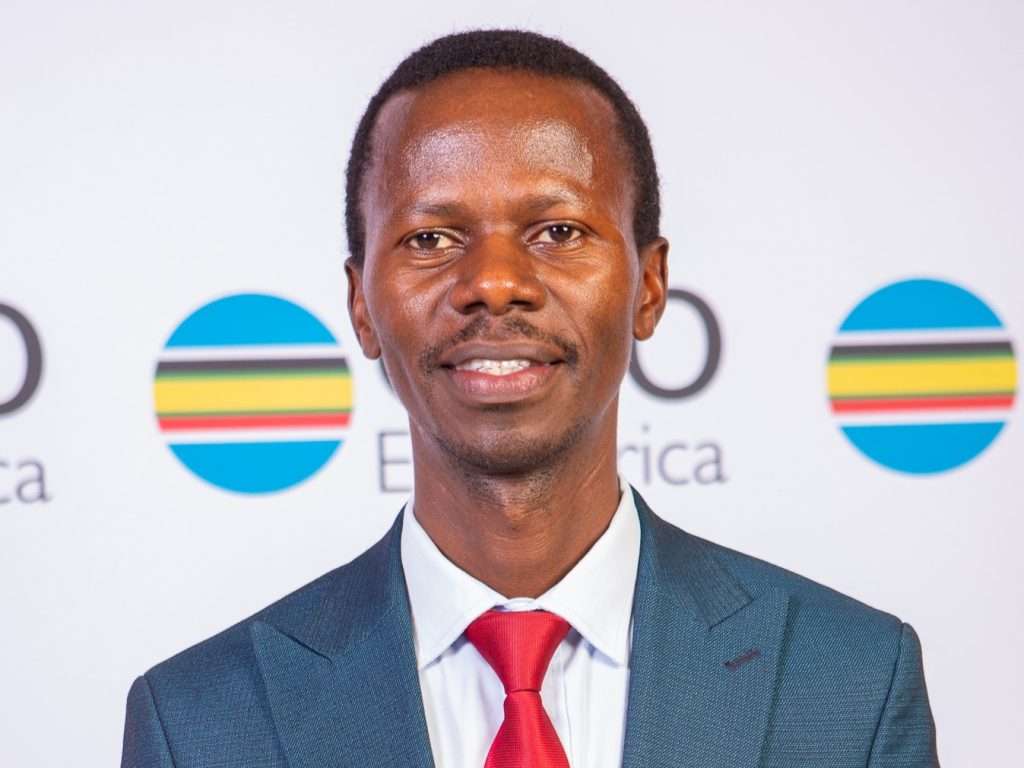
Dr Mwirigi Kiula is the deputy vice chancellor for finance and administration at St Paul’s University.