
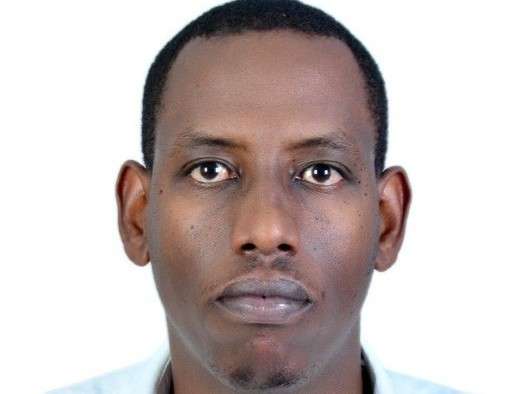
Bank of Kigali’s CIO Eveque Mutabaruka has built his entire career by stewarding transformation programs in different financial institutions, from Rwanda to Botswana and Kenya. In every program, his leadership philosophy is simple: empower first then follow up.
When Eveque Mutabaruka travelled to Botswana in 2021, his assignment was cut out for him.
He was going to join Botswana Building Society, the country’s largest at the time, which held almost all student accounts complete with savings and shares. Unfortunately, the society did not have a license to enable commercial transactions, which had prompted the shift to a commercial bank.
“We were given a mandate to optimise core banking, add some functionality to help the commercial banking transactions, implement Visa issuing and acquiring, and implement a digital channel in two years,” he recalls.
The scope of the project seemed ambitious, but this was not the first time Eveque had been called to work on a project of such scale. Even before he could start working however, he ran into an unexpected challenge. While he had some experience with cards from a previous role, it was not enough for what the project demanded. This would not have been a problem if his team had any familiarity with the card space. But they had none, and they were relying on him completely.
“It was completely new and I wondered how to drive the change without people to rely on. I myself, was not confident in that card space,” he says in a rare moment of vulnerability.
With a two-year deadline and so much to do, time was not on his side and he had to quickly think of a way out.
“The solution I thought of was to have an integrator, not relying on that implementer of the card solution. I then got support from a company in Mauritius on a consultancy basis,” he reveals.
Thanks to his quick thinking, they went live on time and the Bank of Botswana granted BBS Limited a commercial banking licence in 2022.
A career built inside other people’s fires
Eveque’s career in banking has been built in the halls of some of the continent’s premier institutions from the Kenya Commercial Bank (KCB), where he began as a software engineer more than a decade ago, to Bank of Botswana and Bank of Kigali where he is currently CIO.
One defining trait of Eveque’s career is the many transformation programmes he has overseen. In fact, his current tenure at the Bank of Kigali started with a call to help the bank during a moment of transition.
The bank had recently migrated from an older core banking system to a new platform, but the transition had not gone smoothly. Systems were unstable, with branches going down for long periods. Eveque and his team set out to work and soon realised the problem was coming from an underlying database. The only solution was to replace it quickly with a stable database technology.
“Why I say this is a very big highlight is that we had to replace the database when all services were running. We were not allowed to affect digital channels so that we continue serving customers during database migration,” he recalls.
The team used an offline capability to continue serving Banks’ customers digitally while replacing non-performing databases within two days. The migration was done without customers noticing because the digital channels were operating optimally.
Eveque’s highlights have not only been points of celebration but also sources of lessons. For instance, before heading to Botswana, he recalls receiving an assignment to hire 30 engineers in the Bank of Kigali under three months, so that he could kickstart work immediately on digital transformation approved by the bank leadership.
He ended up bringing 28 on board, putting every candidate through rigorous metrics-based testing to move fast without dropping standards. He then had to onboard all of them, which was also a difficult task. The experience taught him the importance of using available tools to improve efficiency and productivity.
Leadership in an ever-evolving world
As CIO at the Bank of Kigali, Eveque heads a big team spread across product management, infrastructure, data management, enterprise operations, banking applications and service management. His work mainly leans on strategy and partnerships.
“I rarely get into operations unless it’s really necessary, otherwise heads of departments oversee that,” he says.
To achieve a cohesive and productive team, Eveque has adopted an empower-first, follow-up-later leadership approach.
“You must empower people first then trust them to deliver. Later, follow up to see if they are delivering according to empowerment,” he says.
He also believes in decision making guided either by data or by the people with practical day-to-day experience. But above that, Eveque believes in offering guidance as the CIO to ensure that the people under him know how to make use of the data they have to achieve their goals.
Eveque is a lifelong student of leadership, drawing lessons mainly from John Maxwell and Myles Munroe, both of whom he calls his mentors and who have no doubt shaped his leadership style.
Over the course of his career, Eveque has had to contend with cybersecurity threats and attacks, which he describes as the biggest challenge of his career yet. What surprises him most is not the sophistication of the threats but how few people around him take the issue lightly.
“Even starting from IT guys, you don’t see that sense of urgency and ownership to feel like, okay, something is wrong here. You need to keep reminding them that a small unpatched server can actually make the whole bank collapse,” he says.
With emerging technologies like AI, he believes the risks are only compounded. Bank of Kigali has already embedded AI into some of its operations, but how to mitigate the risks associated with it remains a live concern.
“We’re all now using AI, but it comes with a lot of uncertainty and risks, exposing the bank more,” he says.
As a leader, Eveque has also had to grapple with what he calls the talent war, a battle for skilled people that has made retention one of his most persistent headaches.
“Because Rwanda is very eager to achieve digital transformation, there is a high demand for good talent. Unfortunately, good employees are offered a lot of money and they resign and you have to struggle filling those positions and training again,” he explains.
Even worse, operations must continue even as organisations scramble to fill vacant roles, train replacements and quietly worry that the new hire might not stay long either.
The CIO’s other side
Eveque’s involvement with transformation programs has followed him beyond his office and into the community where he recently started a foundation to help orphaned children with school fees. The foundation is still in its early stages, with five children as beneficiaries. However, Eveque is hopeful that he can get partners to help him achieve his dream of reaching 300 beneficiaries by 2028. It’s an ambitious projection, he admits, but that does not deter him.
His wife, with whom he has four children, has been the one running the foundation.
“She runs a business so she is more flexible than I am but I offer support,” he says.