
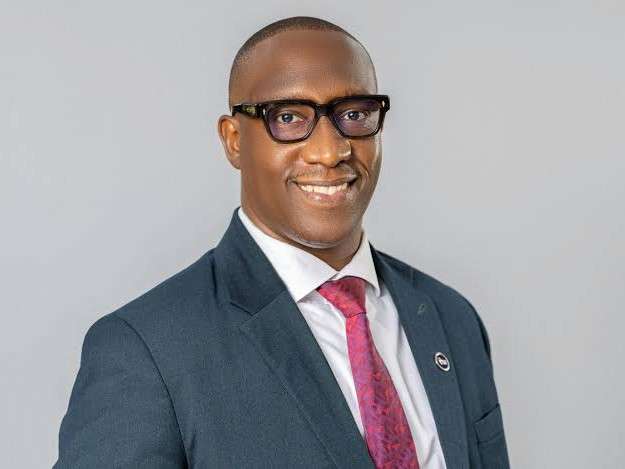
Steven Mwesige takes full CISO reins at Pearl Bank Uganda

post-title

Steven brings more than 15 years of expertise in technology, cybersecurity, and enterprise risk management across various industries. 

Steven Mwesige has been confirmed chief information security officer (CISO) at Pearl Bank Uganda after serving as acting CISO since July 2025.

Steven first joined Pearl Bank in 2018 as an IT security officer and worked for one year before moving to Bank of Africa, Uganda as the IT risk officer. In 2020, he returned to Pearl Bank as manager ICT security and data protection, and was promoted to head of ICT and security governance in 2024.

Earlier in his career, he served as manager and senior tutor at the Institute of Forensics and ICT Security. Before that, he was ICT solutions architect and lead penetration tester at Summit Consulting. He began his career as systems and network administrator at Anti Corruption Coalition Uganda.

Steven holds a BSc in information technology from Uganda Christian University and an MSc in cybersecurity from Royal Holloway, University of London. He also holds an executive MBA in artificial intelligence and blockchain from Eaton Business School.

 

Related articles

2026 Virtual Summit: Tech leaders push AI beyond pilots to impact

While everyday AI usage is surging across the continent, regional enterprises still struggle to turn AI pilot projects into measurable economic returns. At the inaugural CIO East Africa virtual summit, senior technology leaders gathered to map a path beyond the buzzwords. 

MTN Uganda CIO Albert Gitta turns raw data into mobile money magic

Albert Gitta, chief information officer at MTN Mobile Money Uganda, has built a business around over 15 million active customers and the data trail they leave behind. He explains how that data now shapes credit limits, pricing and product design, and why he still sees the biggest cybersecurity risk sitting inside the building rather than outside it.

The CIO's quick-win solution to burnout

Chief information officers (CIOs) across East Africa have too many responsibilities. They must manage large teams, defend against escalating cyber threats, and keep critical systems running without a break. Unfortunately, this high-pressure environment is pushing many CIOs into burnout that can have dire consequences if not addressed.

SportPesa Tanzania head of IT says IT must help businesses achieve outcomes

At the CIO of the future summit held in Dar es Salaam in August, Sportpesa Tanzania CIO Godwin Mbekelu joked that he would want to work eight hours a day because in his field of work, IT professionals rarely have breaks. For Godwin, this is evidence that the IT department has evolved from being a back office function to a critical department that supports businesses to achieve their objectives.

Tech leaders urge CIOs to also become business leaders 

Ten years ago, tech leaders and their teams largely focused on maintaining physical infrastructure. In recent years, however, the tech department has slowly moved to the forefront of business operations as noted by Annet Nanungi, head of IT at JCRC, Sulaiman Mugalasi, CIO at Airtel Money Uganda, and Ivas Kwikiriza, head of business technology at Tropical Bank Uganda.

AI questions and swift buzzer set the pace at inaugural Pitch Parade 

At the inaugural CITO East Africa Pitch Parade at Nairobi’s Capital Club, ten partners had exactly four minutes each to pitch solutions to nearly 100 tech executives. Throughout the night, CIOs were treated to a catalogue of solutions ranging from agentic AI to wealth management solutions.

FNB's Dr Mark Nasila tells CIOs to start asking what customers actually need

Speaking at the CITO East Africa Pitch Parade at Capital Club East Africa in Nairobi, Dr Mark Nasila, chief data and analytics officer at FNB South Africa and author of two books on artificial intelligence, made the case that Africa's relationship with technology needs to change, from adoption to ownership.

Top